
Forgot a few, The LF3528 shown on the left is for the following to name a few.
Isuzu KB/HighLander ’97 up/Crosswind 4JA1 Turbo ‘00-‘05/
Fuso Canter 4D30/4D32 (Primary)/Kia Pregio
Isuzu Crosswind 4JA1 ‘00-‘05/Fuego/Hi-Lander ‘97-‘00/4JB1/4JA1
Isuzu Crosswind/Fuego/4FB1/4FB1 ‘80-‘86/Gemini Dsl
.
Mazda 323 (All)/Astina/Anfra Gas/Mazda 3 1.6 ‘05/Ford Lynx ‘98-‘05
All CIVIC, ACCORD, CRX, FIT, JAZZ
KIA RIO, CINCO, SEPHIA,
All SR20 motors, 1.8 sentras.
And a ton ton more.
The BT223, B7243, LF3335, and B163, B34, LF3604
will fit almost all Toyota Camary, Corrola, Suzuki Vitara, Mazda 3 to 2005. Yaris, Ford Fiesta,
And a bunch more. But now have posting this no PM's about your oil filter for your car. You can cross reference these very easily. Just putting out some useful info for those who might want a better than OEM oil filter.

The Largest Car Forum in the Philippines
- Forums
- Discussions
- Events
- Community
Results 61 to 80 of 3899
-

 ElgrandClubph FB

- Join Date
- Dec 2007
- Posts
- 1,961
April 10th, 2011 04:52 AM #61
-
ElgrandClubph FB
- Join Date
- Dec 2007
- Posts
- 1,961
April 10th, 2011 05:50 AM #62I really don't speak Tagalog but I will try to reply. Originally Posted by dagol

The extended oil change intervals does not come from the extra oil capacity, In my case it's only about 2 liters more total, the stock filter is no longer in place with this system. And frankly it's very common to have these set up's on diesel engines.
Even the none synthetic fiber Fleetguard filters hold 4 to 5 times more debri without become clogged vs a standard filter. This is a giant advantage and also give you extended oil life. A basic Fleetguard is good for a easy 10000 klm to 15000 klm on good old dyno oil before they need to be replaced and you will still have good engine oil analysis.
No crackcase modification needs to be done to utilize this, The other facts are these filters also flow way better than your OEM or filters so even less stress on your oil pump and better oil pressure, They have real anti-drainback valves not the poor fitting cheap ones found on many filters. This keeps everything working as it should.
Works just fine on 1kzte engines here people have imported in and modified there Toyota 4runners with. Same basic set up as the QD32.
Here we do engine oil analysis, you drain out a few ounces mail it off and get it back and it will tell you everything you need to know about how well the system is working. The 1000's and 1000's that have been done on bypass systems show one thing, The oil if far cleaner. It's the reason why they are used in Fleet service vehicles and why people adopt these to personal vehicles. You can add safely up to 2 liters of extra oil capacity to almost any vehicle.
There are some people going 40000 miles to 50000 miles on full synthetic with this set up. That's 80000klm and the oil specs still come back good.
Here is the biggest reason for these systems it' simple it's all about engine wear. The ability to efficiently filter below 5 microns equals 4 times less engine wear. That's why big rigs go millions of miles on there motor.
Also many hear do the same thing with the fuel system as well, we use a 2 micron secondary filter. These will dramatically extend the life of your diesel nozzles and injector pump.
You can also just keep your factory filter in place, and add the bypass filter, your talking less than a liter in extra oil capacity added to your system. Also these act a a oil cooler because they are removed from direct engine heat. Increasing oil capacity is a good thing and does not harm your engine or how your crankcase ventilation system works. I use a oil catch can on mine to keep thing even cleaner.
This works especially well on old dirty non common rail diesels why because you make more soot, a great deal of that winds up in your oil and its in the 20 micron and less catagory.
[SIZE=3]The Dangers of Soot[/SIZE]
The combustion process of diesel engines creates soot. After fuel is injected, combustion occurs with elevated soot levels as a byproduct of the process, and the combustion particulates become trapped on the exposed oil film. The rings wipe the particulates into the oil and the fine particulates aggregate, increasing levels of soot in the oil.
Oil with dispersant additives will generally keep soot in the range of 0.002 to 0.5 microns in suspension; detergent additives prevent the build-up of sludge and act as an acid neutralizer, keeping soot in the range of 0.5 to 1.5 microns in suspension. These anti-wear additives work by providing a sacrificial chemical-to-chemical barrier. As the amount of soot suspended in the oil increases, the performance of these additives decreases. These ranges of particle suspension reveal how important bypass filtration is - and the efficiency of that filtration - to providing the lowest diesel engine wear rates. Yes, wear rates.
Soot Causes Wear
As an oil’s soot dispersant additive level increases, wear reducing additives become less effective. This creates a direct linear correlation between wear and soot concentration; the higher the concentration of soot, the higher the level of wear. Today’s oil manufacturers are extending oil life by holding higher concentrations of contaminants, including soot, in suspension in the oil. They are also increasing fuel economy by reducing oil viscosity and oil film thickness. Therefore, even smaller sized contaminants are becoming critical in items in terms of creating wear. This further necessitates the use of bypass filtration, especially in diesel engines.
Soot is about 2 hardness points less than a diamond, it's like microscopic sandpaper inside your engine and OEM and VIC are not going to do much to cut it. This leads to all kinds of issues and lost compression.
Anything you can do to properly filter your engine oil you should. There is two basic principles in filtration. OEM and Fleet.
OEM= good enough for a average engine life. Manufactures do not want your engine lasting 3 or 4 times longer because they have to sell cars.
FLEET SERVICE= Lowering maintenance cost with providing the longest engine life possible.
SORRY for being so long.Last edited by dvldoc; April 10th, 2011 at 06:03 AM.
-
ElgrandClubph FB
- Join Date
- Dec 2007
- Posts
- 1,961
April 10th, 2011 09:12 AM #63Here's a kit on a 1KZTE engine, He's using a replaceable element and kept his stock filter location. And has his oil return going back to the oil fill cap which is not that uncommon. He just put a T fitting on the oil pressure sending unit to access a output line.
It works just fine on these and extends your oil life and reduces a ton of engine wear. Of course this is not for everyone, A good high quality oil filter can do very well on it's own.


-
Verified Tsikot Member
- Join Date
- Jan 2011
- Posts
- 123
April 10th, 2011 04:17 PM #64You are an Amsoil & Fleetguard avid fan i can see.Is amsoil in Formula 1 like Shell & Mobil which ferrari & mclaren work with respectedly ? Originally Posted by dvldoc
-
ElgrandClubph FB
- Join Date
- Dec 2007
- Posts
- 1,961
April 10th, 2011 07:51 PM #65Not really a fan of Amsoil, I don't use any of their products, Oil and for things like Formula one really have no bearing on Fleet service extended service duration. I am a fan of Cummins Diesel which makes Fleetguard.
Amsoil to give them credit is great oil they are not in Formula 1 but they are in everything from Nascar to every level of Drag racing, circle track, motorcycle, boat, drifting, endurance racing, snowmobile, monster truck, motorcycle drag racing, speedboat, Bonneville salt flat word record speed ect, ect Probably a pretty good indication it's good oil..
This is a U.S based company we are not to much into Formula 1, can't see them spending big dollars to be a sponsor for a race 95% of Americans don't care about, Nascar that's a different story.
Other than that, I find them overpriced for what you get, I am fond of Motul and Rotella T6, I'll be using the Rotella when I change my oil to install my system. my car does not rev to 10000rpms I don't need mobil1 or Amsoil. I need a oil with the right formulation and additional additives for extended oil life and proper wear protection. For me those are the best two oils for diesels.
-
Verified Tsikot Member
- Join Date
- Jan 2011
- Posts
- 123
April 10th, 2011 09:30 PM #66We are going to compare 2 diesel engines.First,a typical 2.5 liter NA diesel engine with 4.5k rpm fitted to vans/light trucks.Oil content is 6 liters.The second engine is a 7 liter turbo diesel engine with 2.5k rpm used for big trucks and buses.Oil content is 30 liters.Try to compare the RPM & the ratio of oil with the engines displacement between the 2 engines. Another good example is the Kubota diesel used in the philippines as Kuliglig.This doesnt have a good oil & air filter at all, but lasts long.This engine has a very low RPM thats why it lasts, while it only uses a wire screen to filter the oil. If you go for a visit in our country,try to ask about Kuliglig.It is use also as a sort of transportation in some parts in the provinces. Originally Posted by dvldoc

-
 Moderator
- Join Date
- Nov 2010
- Posts
- 25,276
April 10th, 2011 10:47 PM #67:pepsi:Interesting discussion here! :popcorn:
Fasten your seatbelt! Or else... Driven To Thrill!
-
Moderator
- Join Date
- Nov 2010
- Posts
- 25,276
April 10th, 2011 10:57 PM #68double post
Last edited by Ry_Tower; April 10th, 2011 at 11:11 PM.
Fasten your seatbelt! Or else... Driven To Thrill!
-
 Tsikoteer
- Join Date
- May 2009
- Posts
- 1,990
April 11th, 2011 02:21 PM #69Huwaw! dumami bigla ang diskusyon dine! nawala lang ako ng isang linggo. badtrip nasira computer ko.
Actually, as for my part i'm not interested in the dual filtration thing. I'm only interested in procuring quality filters plus the oil monitoring gages like the oil pressure and oil temperature gages with the thing inserted in the oil filter base (i dunno what you call that saucer like thingy).
This is a very good thread indeed now that i know where to look for in metro manila area.
-
Verified Tsikot Member
- Join Date
- Jan 2011
- Posts
- 123
April 11th, 2011 02:37 PM #70I just want to open up your minds fellow tsikoteers.I cant stand those 40k-50k change oil intervals to small light duty diesel engines that used the so called dual filtration being claimed obviously by an advertisement being forwarded to us.Only big trucks/buses can achieve this as they have very low rpm and at the same time,more oil on the oil sump. I have opened a lot of diesel in the past and no oil filtration issue have caused an engine failure that i encountered.Mostly overheating is the culprit & of coarse the use of low quality oil Originally Posted by Ry_Tower
-
 Suki ng NLEX...
- Join Date
- Jun 2007
- Posts
- 3,957
April 11th, 2011 03:29 PM #71 Originally Posted by dvldoc
Sir how bout the Mobil 1 turbo diesel truck? How do find it?
-
 Tsikoteer
- Join Date
- Feb 2008
- Posts
- 9,431
April 11th, 2011 03:49 PM #72 Originally Posted by dagol
sir, are the mineral oil of the big 3 considered as low quality oil?
-
Moderator
- Join Date
- Nov 2010
- Posts
- 25,276
April 11th, 2011 04:07 PM #73Sakto lang balik mo, kaka-online lang ata ng tsikot. Originally Posted by miked

Ako naman kasi sa na-experience ko, Vic lang gamit na oil filter pero religious na 5K km PMS na change oil and oil filter, tapos 10K km change fuel filter, tumatagal yung ride ng 200K kms na, malakas pa at matulin yung nga pick-ups dito (non-crdi). Tapos pangit pa dan dito at maalikabok. Walang "B" yan ha. Multigrade na shell rimula X 15w-40 or shell helix diesel HX5 nga lang gamit eh. (Shell lang puwede eh, Originally Posted by dagol
). Kaya interested din ako sa ibang filters na maganda. 
Right now marami rin kaming trucks for delivery and routes kaya if there is something that would prevent costly engine overhaul other than what I already know, I would gladly listen to facts para ma-digest if ok nga. Fasten your seatbelt! Or else... Driven To Thrill!
-
Tsikoteer
- Join Date
- Nov 2009
- Posts
- 3,522
April 11th, 2011 06:19 PM #74Hi Dvldoc im interested to the quality filters you have mentioned here. My question is, what is the appropriate BPV settings should i get?
My OEM Filter is made by Mann with PN# W 920/48, Nissan Part# 15208 BN30A and it says BPV is 1bar (14 PSI)..
Fleetguard L3400 is 9.43PSI, while Baldwin is 16 PSI.
What filter is best for my engine the lower or higher BPV setting??

-
Verified Tsikot Member
- Join Date
- Jan 2011
- Posts
- 123
April 11th, 2011 06:47 PM #75Wala na sa market ang mga low quality oils.Mas masyerte na kayo ngayon dahil mataas na kalidad ng mga langis na ginagamit nyo kumpara noong dekada 80 at 90.Panay overhaul at dukot sa mga diesel engines noon.Every 2k kms nga lang ang change oil intervals noon pero bumibigay pa rin mga makina sa mas maiksing panahon.Masaya na ang owner ng diesel car noon kung umabot ng 200k kms bago ibaba makina.Ok na rin kahit mineral ang gamitin, pero kung di naman problema ang presyo ng synthetic,mas magandang ito ang gamitin nyo para mas mahaba pa ang buhay ng makina ng ride nyo.Kahit partly synthetic lang oki na. Originally Posted by crazy_boy
-
Verified Tsikot Member
- Join Date
- Jan 2011
- Posts
- 123
April 11th, 2011 07:21 PM #76Limitahan mo sa 2k RPM ang mga delivery trucks ninyo at iwasang maoverheat.Nasa mababang rpm lang ang peak torque ng trak na direct injection,naglalaro lang sa 1.5-2k rpm.Kahit lagi nilang isagad ang pedal,oks pa rin.Sa ibaba ng pedal ka maglagay ng pantukod.Wala bang shop dyan na may laser type tachometer? Originally Posted by Ry_Tower
-
ElgrandClubph FB
- Join Date
- Dec 2007
- Posts
- 1,961
April 11th, 2011 08:25 PM #77Hate to say it but your dead wrong, And I mean dead wrong, First could you explain your logic that this works on larger displacment diesel engines but not the ones there? Low rpms' have you seen a 5 star screaming down the highway at 100+ I know I have. There rpms are no different than what any other diesel is. Originally Posted by dagol
By the way bypass filtration has been around since the 1940's
Here we know it works because we use what's called Engine oil analysis, even on or POV's. Bypass filtration is proven period, That's why we have big rigs here with 2 or 3 million miles on them.
You statement that no engine has had a failure due to engine wear, I assume you mean no bears, lifters, cams, journals, piston rings, ect ever wear out then? You mention over heating, do you know carbon build up ie( soot) is the main reason for that, Not to mention cylinder wall being scoored up causing lost compression and power making the engine work harder.
Here's some example of simple EOA anyone can do here for 20USD.
Not hard to go this far with the right oil and filters
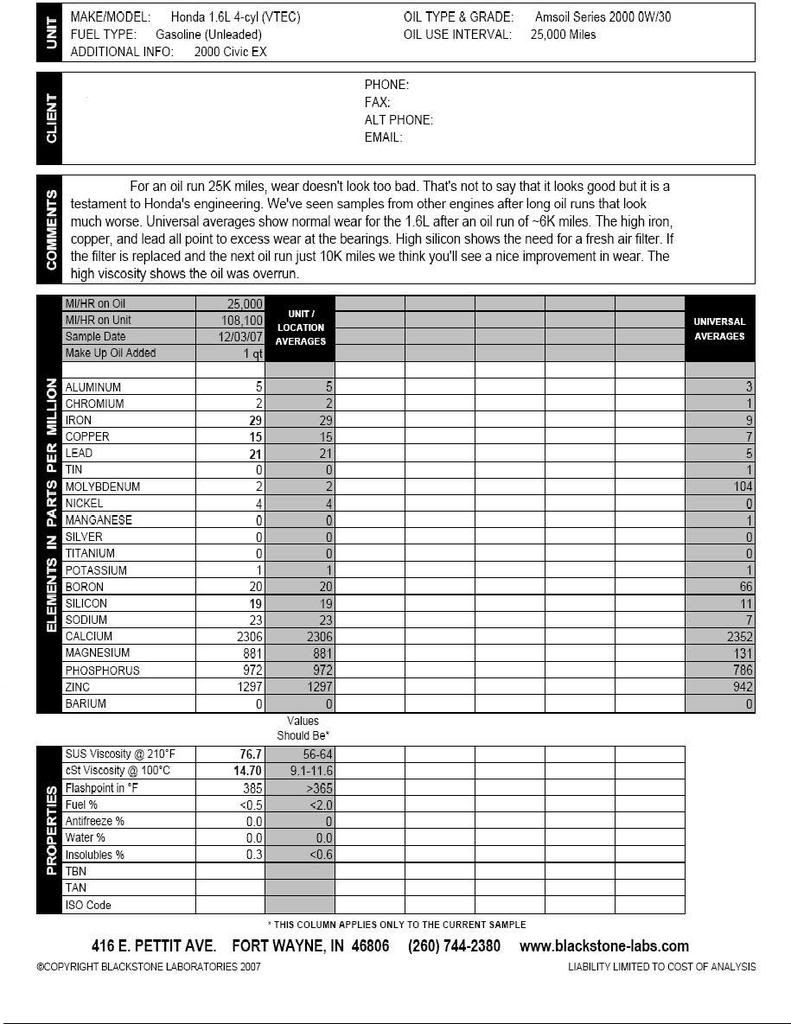

Here's just regular ones.

It's just a simple concept filter below 5 microns and you reduce wear there is no magic to it. Engine have wear period anything you can do to reduce the wear extends it's life and lowers maintenance cost. Never stated engine failure anywhere.
Good article from Fleetguard, If anyone can submit facts that contradict wear shortens engine life please post it up. Yes you can go hundreds of 1000's of kilometers on regular oil and filters, but some of use like to protect our engines further.
http://www.sbmar.com/Maintenance/PDF...Filtration.pdf
-
Moderator
- Join Date
- Nov 2010
- Posts
- 25,276
April 11th, 2011 08:40 PM #78La niyan eh, di puwede tukod, daming paahon, kelangan din ng buwelo sometimes. hehe Originally Posted by dagol
OT: Siya nga pala, bakit red font na gamit mo?Fasten your seatbelt! Or else... Driven To Thrill!
-
Moderator
- Join Date
- Nov 2010
- Posts
- 25,276
-
ElgrandClubph FB
- Join Date
- Dec 2007
- Posts
- 1,961
April 11th, 2011 10:13 PM #80Here is the other big benifit it's cost this is also why it's so popular. For example on my Elgrand a VIC 226 cost me 968P at ACE hardware, and 8L of not even the best oil 1000P.
Doing oil changes every 5000KL 2000P + Labor so around 2300P
My bypass system inital cost was around 5000P for everything including the filters. Won't need to change my oil until at least 40000klm my vehicle burns extreamly clean do to the water injection, lpg, and Oil catch.
My bypass set up filters down to 2 microns effiecently that's VIC CANNOT filter down past 10 microns it's barely 39% effiecient at 20 microns on the second pass. That means it lets 61% of all contaminates circulate right back through your engine that are smaller than 20 microns. And at 10 microns it's letting 96% though because it's only 4% effiencent at 10 microns. Will you get a few 100000k out of that engine sure, will it have more wear than it would if you used a good filter absolutley.
At least the Bosch (made by purolator U.S) is 97.5 % efficient at 20 micron.
So 5000P investment saves me 14000P in oil and 6700P on filters and 1750 on labor. And tons of engine wear to boot.
So 5000P vs almost 22000P and thus one of the reasons Fleet vehicles run these systems.
Not to mention the enviromental savings for oil disposal, these means a lot less to be disposed of.
I plan to do a engine oil sample at the half way point and then at 40000k and mail them back to the states.
http://avt.inel.gov/pdf/oilbypass/oi...inalreport.pdf
http://onlinepubs.trb.org/onlinepubs...ACulpepper.pdf
http://www.kleenoil.ca/pdf/casestudy_CalArk.pdf
http://www.dtsc.ca.gov/PollutionPrev...fact-sheet.pdf
Let's go into the engine oil analysis part of it basically these are the chemicals they look at and what the values tell you about the health of your engine.
This is probably one of the best articles on what is tested in your oil and what these test show as far as wear goes.
http://avt.inel.gov/pdf/oilbypass/oi...s_testplan.pdf

 Reply With Quote
 Originally Posted by dagol
 Pwede nyong pahabain ang change oil nyo kung imomodify nyo ang crankcase ng makina para malagyan ng mas maraming langis at kabitan nyo ng dual filter na yan.I´m not against this dual filter but its not logical to use it with your vans without crankcase modification to raise the ratio of oil to engine displacement.
