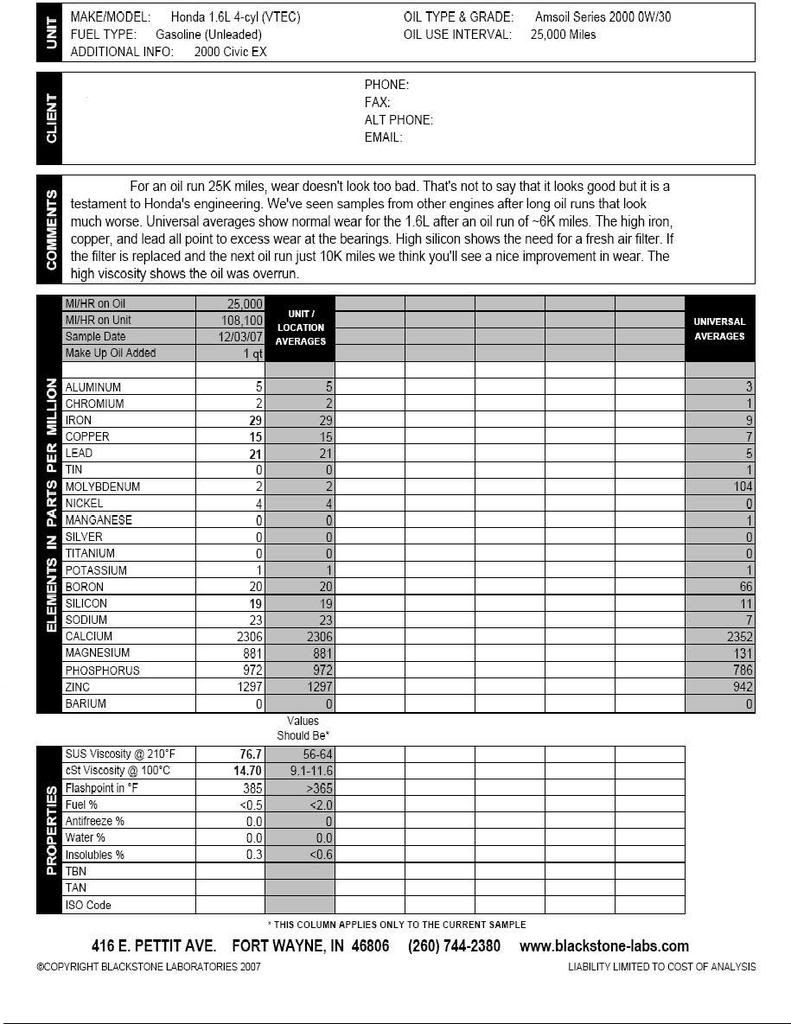
Here's something you might get a kick out of and no it's not a joke they work extreamly well at filtering down even to 1 micron or less.
http://www.frantzoil.com/TOILETPAPER.html
http://www.cumminsforum.com/articles...ter/Page1.html
http://www.cumminsforum.com/forum/ge...-filter-2.html
Crazy thing is they work better than any filter on the market as a bypass filter.

The Largest Car Forum in the Philippines
- Forums
- Discussions
- Events
- Community
Results 81 to 100 of 3899
-

 ElgrandClubph FB

- Join Date
- Dec 2007
- Posts
- 1,961
April 11th, 2011 10:36 PM #81
-
Verified Tsikot Member
- Join Date
- Jan 2011
- Posts
- 123
-
ElgrandClubph FB
- Join Date
- Dec 2007
- Posts
- 1,961
April 12th, 2011 07:03 AM #83Already driven one, My wife's family has several up in Isabela on there farm as well a some really big tractors.
-
Tsikoteer
- Join Date
- Nov 2009
- Posts
- 3,522
April 12th, 2011 07:57 AM #84This is getting ot
 from filters to oils then fleetfuard hater..lolz
BTW sir dvldoc, whats your take on my previous querry? What's the best bypass-valve setting, oem, higher, or lower? Does this really affect engine wear using fleetguard vs oem filter??
-
ElgrandClubph FB
- Join Date
- Dec 2007
- Posts
- 1,961
April 12th, 2011 08:25 AM #85I think some people get the bypass valve mixed up with bypass filters, The bypass valve setting is only there as a safety device. Originally Posted by 12vdc

When differential pressure across the oil filter element exceeds a predetermined value say 10psi the bypass valve opens so oil can continue to flow to the engine, but when the bypass valve is open no filtration occurs but oil still flows. The bypass valve has zero to do with your oil pressure but the internal pressure in the filter when it's trying to flow. It really is for just two things, cold weather starting when the oil is thick and will not flow through the filter element well or if your filter is so dirty it can no longer filter. That's pretty much all it does.
So if your filter has a bypass setting of 10 psi I and your making 20psi of oil pressure your valve is not open and zero filtration is happening. Your perfectly fine going up or down 10psi on the bypass setting, Lower is normally better especially in cold climates which none of you need to worry about even in Baguio it does not get cold enough to really effect anything. We see sub zero temperatures in the states that's when it comes in to play.
Hope that clears it up for you.
-
ElgrandClubph FB
- Join Date
- Dec 2007
- Posts
- 1,961
April 12th, 2011 08:52 AM #86*dagol
Let's clear up engine oil sludge, there are specific things that cause this to occur.
There are several ways for sludge to form in your engine. Water gets into the crankcase through condensation and blowby from the combustion chambers. Water mixed with oil takes on the consistency of thick, pus-colored foam. You'll know it if you see it.
Fortunately, small quantities of water evaporate from the crankcase as the engine warms up and the oil temperature gets above 212 degrees, which it does after a few minutes on a freeway. However, if you only drive short trips, your crankcase never gets hot enough to evaporate any accumulated water, and in such an engine, sludge formation seems certain in its future.
Sludge can also form if the oil gets too hot. At temperatures above 250 degrees, nonsynthetic oil starts to oxidize. Such oxidation thickens the oil and produces acidic byproducts. The process accelerates when the oil temperature hits 300 degrees, and the result is something more akin to tar than oil.
The final cause of sludge is simply the passage of time. Tiny particles of soot get by the piston rings and end up suspended in the oil. So do various acids formed by the products of combustion. Oil contains additives designed to neutralize these contaminants, but eventually, enough of this foul stuff builds up to compromise oil's lubricating qualities. Manufacturers conduct tests to determine this contamination and specify oil-change intervals accordingly. And therein seems to lie the cause of the sludge problems.
Most new oils are designed to help keep the soot particles suspended in the oil in larger particles so they are caught by your filter. This is why just having good oil alone without good filtration is totally useless.
Contamination of lubricating oil by diesel soot is one of the major causes of increased engine wear, especially with most engine manufacturers opting for Exhaust Gas Recirculation (EGR) technology to curb oxides of nitrogen (NO,.) emissions. The diesel soot interacts with engine oil and ultimately leads to wear of engine parts. It's know as soot loading. The soot also raises combustion temps which raises engine oil temps which wears out your oil faster.
How clean do you think his oil is when you have intakes looking like this, and most don't know because they never check.
This is a Nissan Patrol, how many soot particles do you think sneak past the oil rings and into the oil. Remember if your filter is not efficient like a VIC then your just liquid sandpapering your internals.
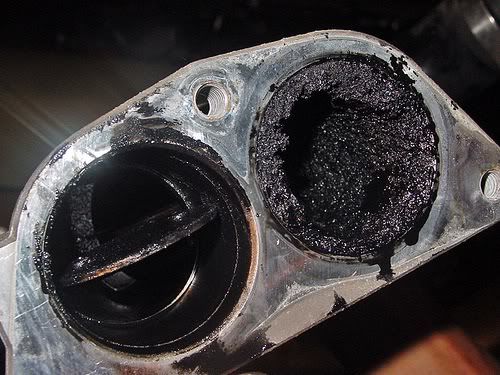
Filtration matters just as much as the quality of oil you use for longer engine life you can't have one without the other to have maximum benefits.
Oil catch can is one of the best investments you can make on any vehicle, the recirculation of crankcase dirty oil laden air is one of the worst things for your car or truck. Even a cheap 100P inline fuel filter place in the tube to the PVC valve or connector on a diesel will keep almost all of that from being pushed back through your intake and increasing how much soot goes back into your combustion chambers.
-
Tsikoteer
- Join Date
- Nov 2009
- Posts
- 3,522
April 12th, 2011 09:24 AM #87Im doing a guesswork because im in the market for my replacement filter. Originally Posted by dvldoc
Im thinking that if i will use the lower BPValve setting, valve will open more often during high RPM causing more unfiltered moments. I just cant say how accurate that is because i donk now the pressure happening inside the filter, but im basing my assumption to the OEM BPV setting. Anyway thanks for clearing up things
-
ElgrandClubph FB
- Join Date
- Dec 2007
- Posts
- 1,961
April 12th, 2011 09:37 AM #88Like I said the bypass valve is only a safety device your filter is a full flow filter which means it filters 100% off the oil, The bypass valve will only come into play if your filter was clogged and then it would bypass filtration and just circulate the oil.
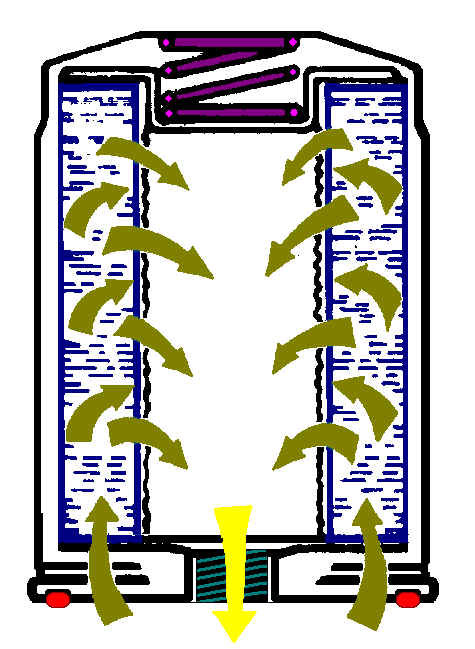
This is the basic flow of a oil filter. The small holes on the outside are the in, the center is the out. The bypass valve is on the top, if the filter get's clogged it pushes down on the filter element and blocks off the in so basically what's in your pan is what is circulating. A lower value BPV setting just means it will protect you from a clog sooner or a oil pressure spike due to lack of flow in the filter. Being a tropical climate unless you neglect the heck out of your oil changes it should never clog.
-
 Moderator
- Join Date
- Nov 2010
- Posts
- 25,276
April 12th, 2011 10:56 AM #892 things for our common sense;
a.) good quality oil (multigrade or semi-syn) + good quality oil fliter (OEM, Bosch, Vic) = very good protection, long engine life (above 300,000 kms)
b.) good quality oil + an even better oil filter = an even better protection and longer engine life
*dvldoc = much better if you can post the micron filtering capacity of each oil filter (based on verifiable lab test) you can get your hands on so that we can see what can filter the best. It would benefit tsikoteers more.
It is worth noting that there are other things to consider in wear and tear of engines. How often do you crank the rig from a cold start. Meaning at least 2 hours being unused. Afterall, mostmanufacturers agree that it is during start-up that wear and tear is mostly occuring, not when oil is already circulating. This is part of the criteria, among others, to consider when categorizing the use of the car as normal or severe.
Fasten your seatbelt! Or else...
This is part of the criteria, among others, to consider when categorizing the use of the car as normal or severe.
Fasten your seatbelt! Or else... Driven To Thrill!
-
 A pain to maintain
- Join Date
- Jul 2008
- Posts
- 7,119
April 12th, 2011 11:41 AM #90*dvldoc Originally Posted by dvldoc
Is this a typo? Following earlier posts I think the valve should be open when the filter is clogged. Funny read re: TP filters. Have you tried that yourself? I'm thinking it might just put filter manufacturers out of business.
-
Tsikoteer
- Join Date
- Nov 2009
- Posts
- 3,522
April 12th, 2011 12:21 PM #91On the mann filter, the upper part has this spring and hole with rubber flaps pushing against the spring. Originally Posted by dvldoc
From my understanding, if the filter is clogged/ pressure is more than the BPV setting, that upper valve will open. This is contrary from closing/ blocking the inlet which you described causing totally blocked inlet and "no flow".
AFAIK the lower part is where the anti-drain back rubber is, same with BPV it is unidirectional and acts only when engine is stopped-when pressure is coming from the outlet going to the inlet (oil flow by gravity)..
I'L do some research on this but im completely sold out with fleetguard.. The lower BPV setting would not matter to me now because i change oil every 10k. Here's what i got, its the real deal but no box, just blister pack. Deym cheap, the FS 1/4 the price of OEM.

-
ElgrandClubph FB
- Join Date
- Dec 2007
- Posts
- 1,961
April 12th, 2011 12:38 PM #92 Originally Posted by Ry_Tower
The anti drain back valve keeps you from dry starting, that's it's job. It's one of the most important parts of the filter. Without an anti-drainback valve, oil must flow through and refill the oil filter before proper oil pressure is reached, the anit-drainback valve allows optimum oil pressure to be reached much quicker by keeping the oil filter filled with oil.
Well not going to do every filter because I just don't have time. But here's a good clue, plain cellulose element filters have the lowest filtering ability and dirt holding capacity. Resin treated ones have much better cleaning and the microglass version much higher.
Different filter makers also use different standards of efficiency and can be a bit murky on what test they used, ie is it multipi pass or single pass and what microns. You can email any filter maker and they will give you the rating of a particular filter. That's what I do. You can also find a lot on the net.
All filters have to undergo SAE (Society of Automotive Engineers) tests to verify that they meet the vehicle manufacturer's specifications. There are two tests available for automobile engine oil filters. All filters must be tested with the J806 test, but the new J1858 is much more meaningful. Currently the J1858 test is optional. Really, it's a way for high-end filter manufacturers to show off their great filters.
The SAE J806 test uses a single-pass test, checking for contaminant holding capacity, size of contaminant particles trapped, and ability to maintain clean oil. As an amendment of the J806 test, the multi-pass test also looks for filter life in hours, contaminant capacity in grams, and efficiency based on weight. The efficiency of the filter is determined only by weight through gravimetric measurement of the filtered test liquid. Typical numbers for paper filter elements are 85% (single pass) and 80% (multi-pass).
The SAE J1858 test provides both particle counting and gravimetric measurement to measure filter capacity and efficiency. Actual counts of contaminant particles by size are obtained every 10 minutes, both upstream (before the filter) and downstream (after the filter), for evaluation. From this data filtration ratio and efficiency for each contaminant particle size can be determined as well as dust capacity and pressure loss as a function of time. Typical numbers for paper element filters are 40% at 10 microns, 60% at 20 microns, 93% at 30 microns, and 97% at 40 microns.
Cummins diesel has it's own standards and it's 96.6% * 20 microns for it's engines. 98.7% at 35 microns. They have there own standards. Cummins makes Fleetguard. Baldwin are very close to Fleetguard in their standard but are just short on there specification but still a dang good filter.
But there are many good over the counter filters, like Purolator, (Mobil1 & K&N) are the same filter, Bosch are a good filter, Wix are great and I keep them on hand.
But if you want specific specs on a filter just email the company, there are different filter medias between filters, some are strait cellulose, some treated cellulose, some cellulose synthetic mix, and some microglass and then multi layer microglass and cellulose. Like I said a lot of different kinds. But OEM filters tend to be the cheapest crap out there.
-
ElgrandClubph FB
- Join Date
- Dec 2007
- Posts
- 1,961
April 12th, 2011 12:50 PM #93 Originally Posted by 12vdc
Some filters have a combo anti drain back valve / bypass valve some are also at the top some bypass valves are on the bottom. Here's the way yours most likely works.
 When filter elements are clogged, the pressure builds up and pushes the top plates opening the bypass valve. When the bypass valve open, the oil flowed back to engine without filtration,
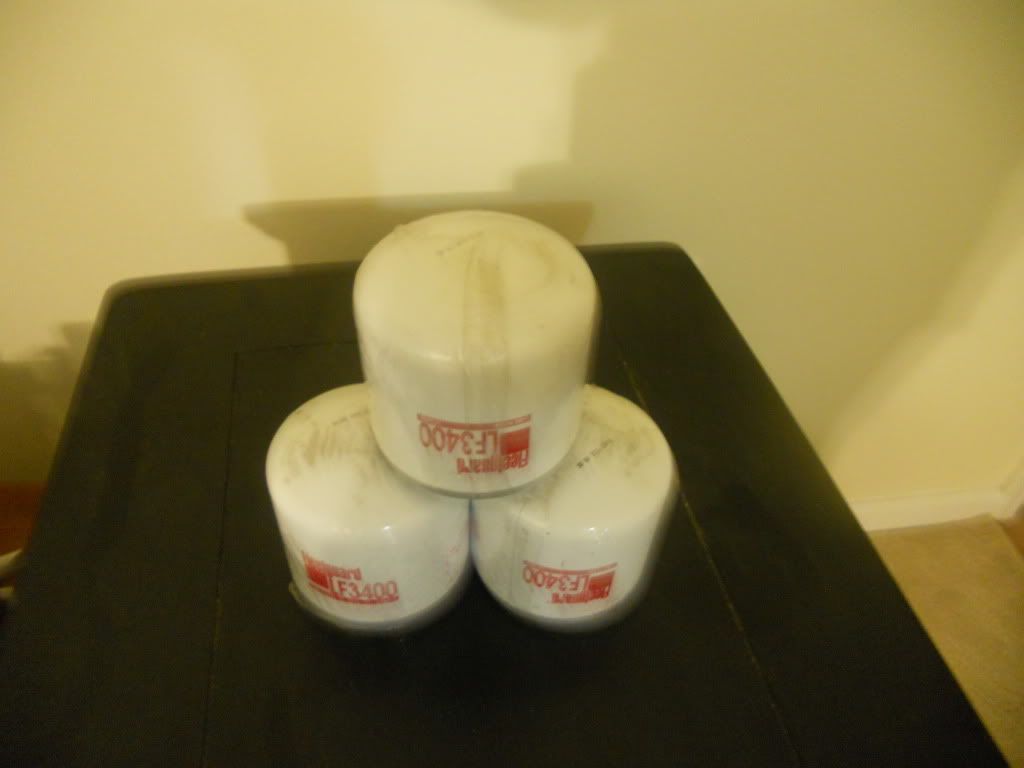
The LF3400 fits the NAVARA and mulitple other vehicles with the 3/4 16 thread and has a 9.4psi BPV. I got like 6 cases of those hanging out in my storage got them for a killer deal so I had to buy em.
I have have only seen the TP oil filters they are messy as hell to change that is their downside for me. What is your fuel filter part number, Might look into seeing if I can score some. If you can do me a favor 12vdc let me know if the Navara has space for a little bit taller filter like 1".
By the way the Fleetguard fuel filters is a 10 micron element your factory is more like 40 microns. So a hell of a upgrade. Oh yeah how much for each filter?
The LF3400 I have are also from the France factory, I guess that's just were this particular one is made. .
Last edited by dvldoc; April 12th, 2011 at 01:22 PM.
-
Verified Tsikot Member
- Join Date
- Jan 2011
- Posts
- 123
-
Tsikoteer
- Join Date
- Nov 2009
- Posts
- 3,522
April 12th, 2011 02:11 PM #95LF3400 php650 (one shop at 400+ cant verify though if real deal) But what amazes me is FS19594 at 500php wc CASAs Man is selling at 2350 Originally Posted by dvldoc

I cant find the equivalent for primary fuel filter but im sure its the same used in TD42 Patrols and older Frontier - WiF sensor not included.

Lotsa space on the secondary, but tight down in the primary. Maybe mounting it elsewhere will fit my planned upgrade..
Heres the pic from my file (lazy me its so hoott otside), taken during my aircon drain-hose mod.

-
 Tsikoteer
- Join Date
- Feb 2008
- Posts
- 9,431
-
ElgrandClubph FB
- Join Date
- Dec 2007
- Posts
- 1,961
April 12th, 2011 02:37 PM #97* DAGOL
I would also like to mention I am a ASE Certified Master Mechanic and have been doing this for almost 20 years with a ton of specialty certs and training. I also run a company that deals with automotive performance. I only deal in facts not marketing BS, I am the first one to bust on things like that.
This thread is about Bypass filtration and the benefit of good filtration to reduce engine where. And also about quality oil filters no matter the brand. Don't know why your hung up on Fleetguard, you do know they are made by Cummins Diesel for Cummins right. So why not bash them as well since they have some of the highest industrial standards for their engines and their filtration. You most likely never heard of them before this thread.
Maybe I am taking you wrong since I don't speak Tagalog but looks like I am not. If you have a formal automotive background to speak of please state it. I am very well know here as around the world. That's why Shops like Bermmia Diesel and Speedlab are two of my Vendors.
Let get back on topic and not do the annoying quote wars thing. This is a good technical thread so lets keep it that way. It's got 4 stars for a reason.
-
ElgrandClubph FB
- Join Date
- Dec 2007
- Posts
- 1,961
April 12th, 2011 02:45 PM #98 Originally Posted by 12vdc
Good info, looks like you guys can also fit a LF689 Filter as well. But I was asking did you have extra room for the oil filter,
Overall Height: 4.22 (107)
Largest OD: 3.80 (97)
The WIX is
Height: 3.790 Outer Diameter Top: 3.660
And the LF3400 is
Overall Height: 3.62 (92)
Largest OD: 3.68 (94)
So do you think you can squeeze 1" more of filter in there?
And those are the real deal filters, I am surprised only that price, still double what I get them for whole sale but not a bad price.Last edited by dvldoc; April 12th, 2011 at 02:47 PM.
-
Tsikoteer
- Join Date
- Nov 2009
- Posts
- 3,522
April 12th, 2011 03:18 PM #99* dvldoc. Dont mind those dogs, in this world there are things w/c will always contradict with your thougts/ ideas. Whats important is the good topic where we can all benefit, its just maybe some are irritated with the name Fleetguard because it sounds like a flee powder..
In tagalog" wagmona pansinin yan mga aso, baka natakot sa fleetguard dahil akala nila ay fleece guard..
BTT.. I thought it was the fuel filter youre askin.. 1" as in 1 inch? Even doubling up the lenght of the OE filter would not bang into any component.. I'd get a pic for you on this later.
Thats another good idea, increasing the filter size means larger volume and more free-floww.. Any recommended Fleetguard part number for the extra size??
-
Tsikoteer
- Join Date
- Feb 2008
- Posts
- 9,431
April 12th, 2011 03:51 PM #100for me, its always good to have 2 sides so that the conversation will have more facts. anyway, everyone will be learning from the 2 sides naman
dvldoc, its very difficult to look for an oil catch can that has a nipple size of 18mm.

 Reply With Quote
 Originally Posted by dvldoc