
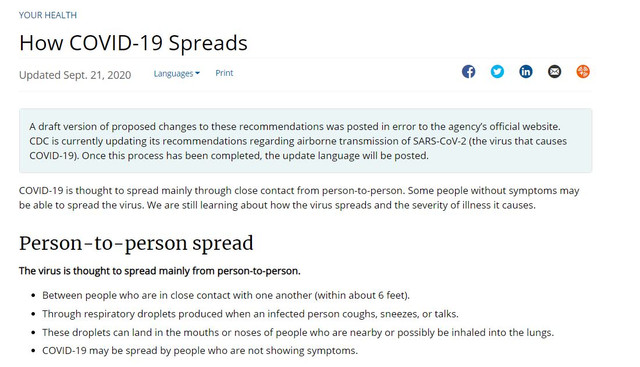
Why remove the aerosol transmission? Tagal na yan ah, di ba proven na yan? Although if I remember correctly sa Pinas eh sinasabing aerosol lang sa hospital settings. Maybe they don't want people to panic and just coop up on their house.Originally Posted by Monseratto

Sent from my Mi 9T Pro using Tapatalk

The Largest Car Forum in the Philippines
- Forums
- Discussions
- Events
- Community
Results 17,901 to 17,920 of 39250
-

 Night stalker

- Join Date
- Jul 2009
- Posts
- 10,310
September 22nd, 2020 12:11 PM #17901
-
 Tsikot Member Rank 4
- Join Date
- Nov 2005
- Posts
- 45,927
September 22nd, 2020 12:46 PM #17902amazing those people don't know dangerous ang UV Originally Posted by Monseratto
-
Tsikoteer
- Join Date
- Jul 2013
- Posts
- 2,450
September 22nd, 2020 12:58 PM #17903Kasi hindi nila nakikita kaya akala nila, walang epek. Originally Posted by uls
I dabble in welding sorts of things around the house and have experienced effect of UV rays from weld arc. I bought an automatic darkening helmet to make sure it doesnt happen again.
-
Tsikoteer
- Join Date
- Jul 2013
- Posts
- 2,450
September 22nd, 2020 01:03 PM #17904His people needs a classroom lesson on systems thinking. Originally Posted by uls
At the very least, very disconnected ang actions.
Classic example yung allowing workers to return to work. Pero bawal pa din ang public transportation. Even highschool students will identify the problem with that decisions.
-
 Verified Tsikot Member
- Join Date
- Feb 2019
- Posts
- 4,291
September 22nd, 2020 04:00 PM #17905And I thought baguio is covid free or maybe just a few cases.

Sent from my SM-N910C using Tapatalk
-
 Moderator
- Join Date
- Nov 2010
- Posts
- 25,276
September 22nd, 2020 04:02 PM #17906So kung si PNoy eh college student council, ito palang admin na ito eh one step lower pa. Originally Posted by Lew_Alcindor
Sent from my SM-N960F/DS using TapatalkFasten your seatbelt! Or else... Driven To Thrill!
-
Tsikot Member Rank 4
- Join Date
- Nov 2005
- Posts
- 45,927
September 22nd, 2020 04:11 PM #17907di mo alam kung di alam ng mga tao sa gobyerno na pag pinauwi nila mga positive mahahawa ang community
or alam nila pero wala sila magagawa
and if they don't do thorough contact tracing those infected people will infect others and so on
di naman kailangan maging einstein para magets yan
so meron ka nga 100 labs capable of processing 30K tests per day
tapos?
para ano?
para malaman gaano kadami tao may virus
yun lang
--
point ko bakit di nila naisip i-priority ang quarantine centers and contact tracing at the same time as testing capacity
nag focus lang sa testing capacity (back in March/April/May)Last edited by uls; September 22nd, 2020 at 04:16 PM.
-
 Social Dementia
- Join Date
- Sep 2003
- Posts
- 25,189
September 22nd, 2020 04:25 PM #17908Dengvaxia anyone?
Study finds lower rates of COVID-19 in areas that have had dengue fever outbreaks. | Daily Mail Online
If proven correct, this hypothesis could mean that dengue infection or immunization with an efficacious and safe dengue vaccine could produce some level of immunological protection' against the coronavirus.Last edited by Monseratto; September 22nd, 2020 at 04:27 PM.
-
Tsikot Member Rank 4
- Join Date
- Nov 2005
- Posts
- 45,927
September 22nd, 2020 04:53 PM #17909kung ganun halos lahat ng tao sa Pinas may panlaban sa SARSCOV2 Originally Posted by Monseratto
di lang tayo meron previous dengue outbreak
we're so dengue endemic we have outbreaks every year
why are we even waiting for a SARSCOV2 vaccine?
-
Social Dementia
- Join Date
- Sep 2003
- Posts
- 25,189
-
Social Dementia
- Join Date
- Sep 2003
- Posts
- 25,189
-
Social Dementia
- Join Date
- Sep 2003
- Posts
- 25,189
September 22nd, 2020 06:46 PM #17912Europe Coronavirus Cases: Mass Testing Only Goes So Far - Bloomberg
Six months on, with the virus surging again, authorities can point to dramatically expanded testing capacity. Britain alone carried out some 1.3 million tests in a recent week -- a 20-fold increase from early April.[France and Spain, Covid hotspots, have likewise increased their capabilities.
The ramp-up is helping authorities identify thousands of infected individuals, a key step toward curbing the pathogen without resorting to economically devastating lockdowns. But cracks are emerging. The mass testing is straining labs, slowing results and complicating the contact tracing that’s crucial to contain the virus. And many with the disease are ignoring rules on self-isolation.
“That warps everything,” said James Naismith, a professor of structural biology at Oxford University. “Testing is only useful if it’s paired with rigorous contact tracing and isolation.”
In France, the government made tests free and widely available, recently ratcheting up the total to 1.2 million a week. That’s led to “gridlock in access to tests, especially in some large cities where the virus circulates a lot,” Health Minister Olivier Veran said Thursday.
Until recently, more than 99% of tests were coming back negative in some nations -- a far cry from positive rates of as much as half during the spring. Nowhere has the turnabout been more pronounced -- or the political heat more intense -- than the U.K., which lagged behind other European countries in testing early on but has now been doing more of it than any of its continental neighbors.
-
Tsikot Member Rank 4
- Join Date
- Nov 2005
- Posts
- 45,927
September 22nd, 2020 07:21 PM #17913true 2nd wave na UK and the rest of Europe not far behind
--
mas delikado pag dating ng taglamig
people spend more time INDOORS during winterLast edited by uls; September 22nd, 2020 at 07:25 PM.
-
Social Dementia
- Join Date
- Sep 2003
- Posts
- 25,189
September 22nd, 2020 07:27 PM #17914Japanese firm launches world's first UV lamp that safely kills coronavirus | The Japan Times

UV lamps have been widely used as an effective means of sterilization, notably in the medical and food-processing industries. But conventional UV rays cannot be used in spaces where there are people, as they cause skin cancer and eye problems.
Ushio’s new lamp, however, emits UV rays with a wavelength of 222 nanometers, as opposed to the conventional 254-nanometer wavelength, making them lethal to germs but benign to humans.
At this particular wavelength, the firm said, UV rays cannot breach the surface of the skin nor the eyes to bring about cancer-causing genetic defects and other damage.
-
Night stalker
- Join Date
- Jul 2009
- Posts
- 10,310
September 22nd, 2020 07:39 PM #17915According to the news yesterday. Meron 43 new cases sa Baguio. Karamihan eh galing inuman. Yung inuman daw na isa lang baso na umiikot sa lahat. Kaya canceled muna pag bukas nila sa tourism at aayusin pa ang ibang guideline. Originally Posted by Deestone
Sent from my Mi 9T Pro using Tapatalk
-
BANNED BANNED BANNED
- Join Date
- Sep 2015
- Posts
- 13,917
September 22nd, 2020 07:40 PM #17916tingnan nyo mga mataas na covid sa quezon city. Karamihan sa pseudo qc.
-
 Tsikot Member Rank 8
- Join Date
- Oct 2002
- Posts
- 21,433
-
Tsikoteer
- Join Date
- Mar 2008
- Posts
- 54,644
September 22nd, 2020 08:02 PM #17918i read the link. Originally Posted by Flipo
i just got confused.
can anyone make an accurate summary?
-
Verified Tsikot Member
- Join Date
- Mar 2010
- Posts
- 2,275
September 22nd, 2020 08:44 PM #17919Doc may post si Mons earlier sa taas that CDC na nagsasabing airborne ang coronavirus. Originally Posted by dr. d
This post was an update, binawi ng CDC yung earlier claim nila at error daw yun.
24 Oras - UPDATE: Nitong Lunes lamang, binawi ng US CDC... | Facebook
Sent from my ASUS_Z017DA using Tsikot Forums mobile app
-
Social Dementia
- Join Date
- Sep 2003
- Posts
- 25,189
 Originally Posted by Monseratto

 Reply With Quote


