
The Largest Car Forum in the Philippines
- Forums
- Discussions
- Events
- Community

Results 8,881 to 8,900 of 39250
-
 Verified Tsikot Member

- Join Date
- Oct 2006
- Posts
- 6,509
April 11th, 2020 07:20 AM #8881
-
 pissing gasoline
- Join Date
- Jan 2005
- Posts
- 3,773
April 11th, 2020 07:38 AM #8882from the article Originally Posted by Yatta

At least eight strains of the virus are being tracked by researchers around the world, using genetic detective work to show how the virus spreads.
The virus appears to mutate very slowly, with only tiny differences between the different strains and that none of the strains of the virus are more deadly than another, experts say.
They also added it does not appear the strains will grow more lethal as they evolve.
Scientists also said that despite conspiracy theories falsely claiming the virus was made in a lab, the virus's genome shows it began in bats.
-
 Tsikoteer
- Join Date
- Oct 2010
- Posts
- 2,551
-
Tsikoteer
- Join Date
- Mar 2008
- Posts
- 54,644
April 11th, 2020 08:08 AM #8884mutation is always occurrng around us. it is probably a reason why we have more than one strain of some viruses. some writers believe it is one basis for species-jumping. Originally Posted by BratPAQ
if the mutation results in a more virulent form, or a form that's more easily spread, that's bad for us. we probably recognize these more, as they can result in increased mortality and morbidity, and in epidemics. it can also result in the extinction of this strain, as it may kill its victim more effectively before it spreads, burning itself out.
if the mutation results in a less virulent form, that's good for us.
sometimes, the mutation does not significantly affect virulence at all.
in these latter two, we probably do not get to recognize the mutations readily, as they do not result in a significant increase in patient morbidity/mortality.
statistically speaking, only a few mutations result in "stronger" strains.
much more mutations result in "weaker" strains or in no significant change at all in virus behavior.
overall, this entire sum of mutations, may be called "evolution".
my opinion.Last edited by dr. d; April 11th, 2020 at 09:09 AM.
-
 Tsikot Member Rank 4
- Join Date
- Nov 2005
- Posts
- 45,927
April 11th, 2020 08:48 AM #8885ganito
sa HIV muna tayo
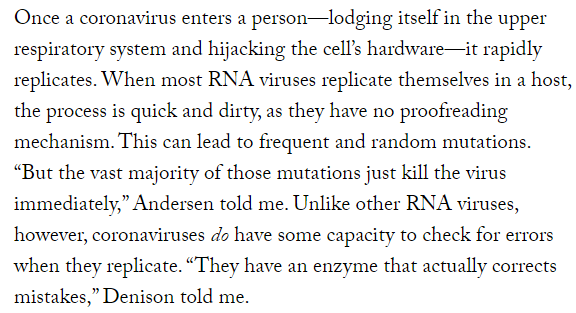
HIV is a RNA virus
RNA viruses are notorious for making mistakes when they produce new particles coz they lack a proofreader
that's why people with HIV have to take 3 or more antivirals (called antiretroviral cocktail) at the same time coz HIV quickly becomes resistant to 1 drug
even if people with HIV already take 3 drugs they need to keep monitoring every few months to see if the virus is developing resistance and need to change drugs
that's why there are dozens of HIV drugs in the market
this SARSCOV2 is also a RNA virus
pero the good news it has some kind of proofreader so it's more stable
kaya huwag na masyado takotLast edited by uls; April 11th, 2020 at 09:03 AM.
-
Tsikot Member Rank 4
- Join Date
- Nov 2005
- Posts
- 45,927
April 11th, 2020 08:56 AM #8886kaya more than 30 years na wala pa vaccine laban sa HIV
since mas stable ang sarscov2, sana makagawa ng vaccine sa madaling panahon
--
sana mali ako dito

i only recently learned mas stable ang sarscov2 compared to other RNA virusesLast edited by uls; April 11th, 2020 at 09:01 AM.
-
Tsikoteer
- Join Date
- Mar 2008
- Posts
- 54,644
April 11th, 2020 09:11 AM #8887i'm so takot na takot! Originally Posted by uls
i haven't gone out of the house since the start of the lockdown.
many of those doctors who died, and many more whose names aren't in the front pages, are my friends. we all share the same epidemiologic background.
-
Tsikot Member Rank 4
- Join Date
- Nov 2005
- Posts
- 45,927
April 11th, 2020 09:13 AM #8888when a virus jumps to a new species they need to quickly adapt to the new environment in order to survive Originally Posted by dr. d
they're going up against a new immune system so there's evolutionary pressure to adapt
eventually the virus will come up with a random mutation that makes it suitable to the new environment
kumbaga optimized na siya
so when it goes to other hosts within the same species there's no more need to mutate a lot
it's like the virus is saying "hey, i'm good... i'm comfortable... no need to change"
-
Verified Tsikot Member
- Join Date
- Feb 2020
- Posts
- 420
April 11th, 2020 09:20 AM #8889Good for you. Originally Posted by dr. d
I’m always out in the house.
And I’m not a doctor.
Sent from my iPhone using Tapatalk
-
Tsikot Member Rank 4
- Join Date
- Nov 2005
- Posts
- 45,927
April 11th, 2020 09:21 AM #8890may nabasa ako this sarscov2 has been around longer than a few months
maybe even years
it has been refining itself
from bats to an intermediate species to humans
it probably didn't jump from bats directly to humans
like MERSCOV jumped from bats to camels to humans
it needed an intermediate host to put pressure on it to mutate further hanggang nagkaroon ng mutation na kaya kumapit sa tao
no need for a lab to create it --- nature can do that very well
-
Tsikoteer
- Join Date
- Mar 2008
- Posts
- 54,644
April 11th, 2020 09:26 AM #8891yespo. Originally Posted by uls
at times, we talk as if we are giving the virus a personality or a thinking brain.
in truth, they are only so many random mutations, all occurring at the same time or one after the other. only those that result in overall increased survivability, get recognized.
we call it "natural selection" and "evolution".
i am sure, there are definitions that differentiate one from the other...Last edited by dr. d; April 11th, 2020 at 09:29 AM.
-
Tsikoteer
- Join Date
- Oct 2010
- Posts
- 2,551
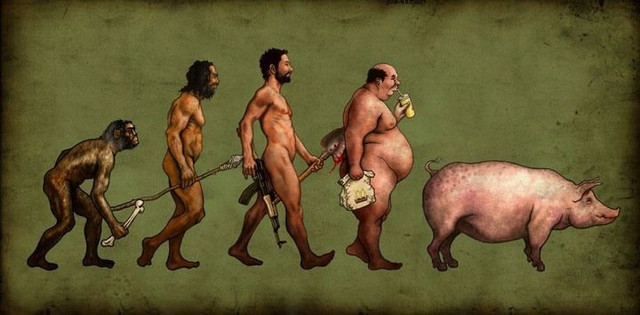
April 11th, 2020 09:37 AM #8892This is how I understand natural selection and evolution. Originally Posted by dr. d
Natural Selection

Evolution
-
Tsikoteer
- Join Date
- Mar 2008
- Posts
- 54,644
April 11th, 2020 09:42 AM #8893so...
nasaan tayo...
somewhere between stage 3 and stage 4 of evolution...?
active kasi yung firearms and DIY pages dito, at maraming contributors sa foods threads...
at wala namang naked and afraid page (stage 2)...
heh heh.Last edited by dr. d; April 11th, 2020 at 09:45 AM.
-
 D' Oiler
- Join Date
- May 2006
- Posts
- 4,353
April 11th, 2020 09:46 AM #8894Coronavirus found in air samples up to 13 feet from patients... kaya mahirap ngayon ma-ospital sa may mga Covid19 patients.
Coronavirus found in air samples up to 13 feet from patients | Inquirer News
WASHINGTON — A new study examining air samples from hospital wards with COVID-19 patients has found the virus can travel up to 13 feet (four meters) — twice the distance current guidelines say people should leave between themselves in public.
The preliminary results of the investigation by Chinese researchers were published Friday in Emerging Infectious Diseases, a journal of the US Centers for Disease Control and Prevention (CDC).
They add to a growing debate on how the disease is transmitted, with the scientists themselves cautioning that the small quantities of virus they found at this distance are not necessarily infectious.
The researchers, led by a team at the Academy of Military Medical Sciences in Beijing, tested surface and air samples from an intensive care unit and a general COVID-19 ward at Huoshenshan Hospital in Wuhan. They housed a total of 24 patients between February 19 and March 2.
They found that the virus was most heavily concentrated on the floors of the wards, “perhaps because of gravity and airflow causing most virus droplets to float to the ground.”
High levels were also found on frequently touched surfaces like computer mice, trashcans, bed rails, and doorknobs.
“Furthermore, half of the samples from the soles of the ICU medical staff shoes tested positive,” the team wrote. “Therefore, the soles of medical staff shoes might function as carriers.”
Airborne threat?
The team also looked at so-called aerosol transmission — when the droplets of the virus are so fine they become suspended and remain airborne for several hours, unlike cough or sneeze droplets that fall to the ground within seconds.
They found that virus-laden aerosols were mainly concentrated near and downstream from patients at up to 13 feet — though smaller quantities were found upstream, up to eight feet.
Encouragingly, no members of the hospital staff were infected, “indicating that appropriate precautions could effectively prevent infection,” the authors wrote.
They also offered advice that bucks orthodox guidelines: “Our findings suggest that home isolation of persons with suspected COVID-19 might not be a good control strategy” given the levels of environmental contamination.
Aerosolization of the coronavirus is a contentious area for scientists who study it, because it is not clear how infectious the disease is in the tiny quantities found in ultrafine mist.
The World Health Organization has so far downplayed the risk.
US health authorities have adopted a more cautious line and urged people to cover their faces when out in public in case the virus can be transmitted through normal breathing and speaking.
Read more: Coronavirus found in air samples up to 13 feet from patients | Inquirer News
Follow us: *inquirerdotnet on Twitter | inquirerdotnet on Facebook
-
Tsikoteer
- Join Date
- Oct 2010
- Posts
- 2,551
April 11th, 2020 09:50 AM #8895 Originally Posted by dr. d
Dahil lockdown ngayon, nasa stage 4 na tayo ng evolution.
-
Tsikoteer
- Join Date
- Mar 2008
- Posts
- 54,644
April 11th, 2020 09:52 AM #8896even before, Originally Posted by Gumusut_Amige
we would advise patients to go home ASAP, for fear of hospital-acquired infection.
it cuts into our income, but it really is better for the patient.
when we identify bacteria that are resistant to all the antibiotics in town, it's "probably a contaminant from the hospital floor or tabletop".
heh heh.
-
Tsikoteer
- Join Date
- Mar 2008
- Posts
- 54,644
April 11th, 2020 09:54 AM #8897by the end of the month, Originally Posted by glenn_duke
several will be in stage 5...
back in the day,
our running club had a term for anyone who had a waistline of 34 or more...
"slob."
heh heh.
just reminiscing.Last edited by dr. d; April 11th, 2020 at 09:58 AM.
-
Tsikot Member Rank 4
- Join Date
- Nov 2005
- Posts
- 45,927
April 11th, 2020 10:00 AM #8898natural selection is the mechanism
evolution is the overall terminology
-
a creature wants to survive
the environment wants to kill it
the environment puts evolutionary pressure on the creature to produce a survivable version
like say you got these short legged humanoids who can't run very fast in an environment where there are predators
minsan chamba nagkakaroon sila ng mga anak na matangkad slender mahaba legs na kaya tumakbo nang mabilis (mas may survival advantage)
so over time pakonte nang pakonte ang mga short legged kasi nagiging pagkain sila ng mga predator
ung mga long legged sila nakakatakas at nag reproduce so eventually long legged na ang dominant
-
Tsikoteer
- Join Date
- Mar 2008
- Posts
- 54,644
April 11th, 2020 10:15 AM #8899some african tribes have kinky hair and short stature. great for surviving in the woods.
some african tribes have long stature (and long hai). an advantage, if one lived in the wide open spaces.
guess what advantage pale skin color has (not necessarily african) in certain conditions.
-
Tsikot Member Rank 4
- Join Date
- Nov 2005
- Posts
- 45,927
April 11th, 2020 10:18 AM #8900in countries far from the equator where they don't get a lot of sun Originally Posted by dr. d
pale skin is an advantage para maka produce ng vitamin d

 Reply With Quote
 Originally Posted by Yatta



