
I don't think agree dyan ang mga hospital na puno na ang mga ward ng Covid-19 patients at mga doktor at nurse na overworked. I don't think some health workers would resign dahil sa over work kung hype lang ito. Ang daming kahit hindi Covid-19 ang sakit hindi matanggap sa hospital, some of them namamatay sa paghahanap ng hospital na tatanggap sa kanila.Originally Posted by Deestone

Maybe ask them again kung hype nga ito after magkasakit ng isa sa pamilya nila at mangailangan ng hospital.
Sent from my Mi 9T Pro using Tapatalk

The Largest Car Forum in the Philippines
- Forums
- Discussions
- Events
- Community
Results 17,121 to 17,140 of 39250
-

 Night stalker

- Join Date
- Jul 2009
- Posts
- 10,310
August 26th, 2020 06:30 PM #17121
-
Night stalker
- Join Date
- Jul 2009
- Posts
- 10,310
August 26th, 2020 06:33 PM #17122If my memory serves me right you already said that. That for the virus to be successful hindi nya dapat pinapatay ang host nya to maximize ang infection. Originally Posted by uls
Sent from my Mi 9T Pro using Tapatalk
-
 Tsikot Member Rank 4
- Join Date
- Nov 2005
- Posts
- 45,927
August 26th, 2020 06:51 PM #17123as more and more people see and experience first hand mild/asymptomatic infection, meron realization that the virus isn't as deadly as feared Originally Posted by Deestone
and people are starting to question if the atmosphere of fear that was created (and still being maintained) was really necessary
i don't subscribe to the Gates-Fauci-Big Pharma conspiracy theory
i'm not saying this is the common cold or flu (it is deadly to the elderly and those with existing health problems)
but people are starting to entertain the thought that all this was an overreactionLast edited by uls; August 26th, 2020 at 07:01 PM. Reason: "is" to "was" really necessary
-
 Social Dementia
- Join Date
- Sep 2003
- Posts
- 25,189
August 26th, 2020 07:35 PM #17124 Originally Posted by uls
Age makes the difference...
Coronavirus in Spain: More cases among young people and a lower death rate: How the coronavirus epidemic has changed in Spain | Society | EL PAIS in English
DOH: Majority of COVID-19 cases are from working age group | Inquirer NewsAge. In the new normality, more young people are becoming infected with the coronavirus. The reports that are produced by the Carlos III institute, which include diagnoses from all methods, and not just PCR tests, confirm a significant fall in the average age of new positives. For example, the report issued on April 3 by the research institute showed the average age of those diagnosed as infected as between 50 and 59. However, the latest report, published on August 6, shows an average of 30 to 39 years old. Spanish Health Minister Salvador Illa has recently stated that the average age of new contagions is 40, whereas during the peak of the pandemic it was over 60.
Hospitalizations. In line with this fall in the severity of cases being detected in the new normality is the number of people requiring hospitalization. Since the start of the epidemic up until June 21, the average in Spain was at 50% of cases. This was very high, but is explained by the fact that during the worst part of the epidemic in Spain the majority of cases were going directly to the emergency room. Now, however, the average is at 4.5% given that many asymptomatic cases are being detected, and given the lower average age, they are less serious.
“Ang bulk pa rin ng number ng cases natin ay nasa productive age group. Nandoon siya sa 20 years old until about 59 years old,” she told reporters in an online media forum.
(The bulk of our cases are in the productive age group, which ranges from 20 years old to 59 years old.)
“Ito ‘yung working group natin kasi sila ‘yung lumalabas, nagta-trabaho, babalik sa pamilya, magkakasakit, mai-infect ‘yung iba,” Vergeire added.
(This is the working group. They are the ones who leave their house to go to work, then go home and infect other family members.)Last edited by Monseratto; August 26th, 2020 at 07:44 PM.
-
 Darker and Bigger
- Join Date
- Oct 2002
- Posts
- 40,599
August 26th, 2020 07:39 PM #17125That they're ****ing stupid and should get the covid-19 and die a painful death and world will be a better place without them. Originally Posted by Deestone
Sent from my iPhone using Tapatalk
-
Tsikot Member Rank 4
- Join Date
- Nov 2005
- Posts
- 45,927
August 26th, 2020 07:51 PM #17126 Originally Posted by Monseratto
Re: Spain
yeah kaya mababa deaths ngayon coz younger people usually recover and ang mababa hospitalization rate coz fewer infected need to be confined
first paragraph:
akala mo ibang virus
If an expert was presented with data from the coronavirus epidemic in Spain in two blocks – from the start until June 21, when the lockdown ended, and from that date up until now – they would struggle to determine that they represented the same pathogen. The age of those being infected, the areas worst affected and the death rates are completely different between the two data sets.
-
Tsikot Member Rank 4
- Join Date
- Nov 2005
- Posts
- 45,927
August 26th, 2020 08:10 PM #17127 Originally Posted by Monseratto
most new PH infections are age 20 to 59 -- no mystery there coz yan ang age group na allowed lumabas ng bahay
since karamihan mild and asymptomatic mababa ang number of deaths -- no mystery there too
ito tanong ko --
karamihan ng households sa Pinas multigenerational
working age pinoys live with seniors so they infect seniors
why aren't we hearing reports of large number of deaths among seniors?
considering that there are 4000 to 5000 new cases per day in the working age group madami dapat nahahawang senior
-
maybe...
madami nga nahahawang senior and they're the ones who get hospitalized and since doctors have gotten so good at treating covid konti lang namamatay
maybe...Last edited by uls; August 26th, 2020 at 08:14 PM.
-
Tsikot Member Rank 4
- Join Date
- Nov 2005
- Posts
- 45,927
August 26th, 2020 08:17 PM #17128or maybe very thoughtful and conscientious ang working age group they do everything not to infect seniors they live with
Last edited by uls; August 26th, 2020 at 08:23 PM.
-
Social Dementia
- Join Date
- Sep 2003
- Posts
- 25,189
August 26th, 2020 08:38 PM #17129Article interesting comparison to PH cases.
Why is Spain once again on the frontline of the pandemic?
Spanish authorities argue the rise in confirmed cases is partly because the country has ramped up testing.
Spain has tested more than 5.3 million people, or around 11.5 percent of its population, since the start of the pandemic.
But many of its main neighbours have an even higher testing rate—Germany has tested 12.2 percent of its population, Italy 12.8 percent and Britain 22.1 percent.
Some have suggested that social norms that stress physical contact and encourage families to live in larger, multi-generational households have encouraged contagion in Spain.
But these norms are also prevalent in Italy, which has a far lower virus growth rate.
So why has the pandemic worsened in Spain? Experts say a backlash against the strict lockdown which began in mid-March and was only fully lifted on June 21 is partly to blame.
At the height of the lockdown people could only go outside to buy food or medicine, seek medical care or go to work if they could not do so from home.
Exercising outdoors was not allowed until early April and for weeks children were not allowed outside at all.
This "severe" lockdown created a "desire to make up for lost time" once the measures were lifted that sparked COVID-19 outbreaks, said Salvador Macip, an expert in health sciences at Catalonia's Open University.
The authorities introduced rules on social distancing and wearing masks after the lockdown ended without stressing the need to remain "very careful", he added.
Jorge Ruiz Ruiz, a sociologist at the Institute for Advanced Social Studies, a public research institute, echoes this view.
"Months of total isolation was perhaps not the best strategy to promote social responsibility," once restrictions were lifted, he said.
-
Tsikot Member Rank 4
- Join Date
- Nov 2005
- Posts
- 45,927
August 26th, 2020 08:48 PM #17130something we already talked about here

as usual this thread is ahead of the media
hehe
-
Darker and Bigger
- Join Date
- Oct 2002
- Posts
- 40,599
August 27th, 2020 07:58 AM #17131Covid-19 News: Live Updates - The New York Times
CDC were given order by the higher ups to stop testing those people without symptoms.
Mas advance tayo sa US sa protocol. [emoji23]
Sent from my iPhone using Tapatalk
-
Darker and Bigger
- Join Date
- Oct 2002
- Posts
- 40,599
August 27th, 2020 08:11 AM #17132Wow! Dami na reports about airplane transmissions.
Konting mistakes lang like binaba yun mask to exposed the nose or removing mask while using the bathroom. Kahit naka mask buong flight except those small mistakes, nahahawa na.
Sent from my iPhone using Tapatalk
-
Tsikoteer
- Join Date
- Mar 2008
- Posts
- 54,644
-
Social Dementia
- Join Date
- Sep 2003
- Posts
- 25,189
August 27th, 2020 08:37 AM #17134No test=no cases Originally Posted by shadow
Sent from my Mi 9T Pro using Tapatalk
-
 Tsikot Member Rank 8
- Join Date
- Oct 2002
- Posts
- 21,433
-
Darker and Bigger
- Join Date
- Oct 2002
- Posts
- 40,599
August 27th, 2020 09:32 AM #17136Early Release - Asymptomatic Transmission of SARS-CoV-2 on Evacuation Flight - Volume 26, Number 11—November 22 - Emerging Infectious Diseases journal - CDC Originally Posted by boybi

Ito daw yun seat plan, naka n95 buong flight except nun gumamit lang ng restroom na ginamit din ng positive.
Yun nahawa eh nag self quarantine ng 3 weeks before the flight
Sent from my iPhone using TapatalkLast edited by shadow; August 27th, 2020 at 09:35 AM.
-
Tsikoteer
- Join Date
- Mar 2008
- Posts
- 54,644
August 27th, 2020 10:02 AM #17137just looking at it, Originally Posted by shadow
i fail to see a pattern.
-
Tsikot Member Rank 8
- Join Date
- Oct 2002
- Posts
- 21,433
August 27th, 2020 10:48 AM #17138It's just the result of 1 study. I thought meron news about many infections during flights. Originally Posted by shadow
I have been monitoring airline news, but haven't read any news about passenger infections during flights.Signature
-
Darker and Bigger
- Join Date
- Oct 2002
- Posts
- 40,599
August 27th, 2020 11:56 AM #17139Meron ka ba scheduled travel this year? [emoji3] Originally Posted by boybi
Sent from my iPhone using Tapatalk
-
Tsikot Member Rank 4
- Join Date
- Nov 2005
- Posts
- 45,927
August 27th, 2020 12:00 PM #17140Abbott gets emergency use authorization for their rapid antigen test
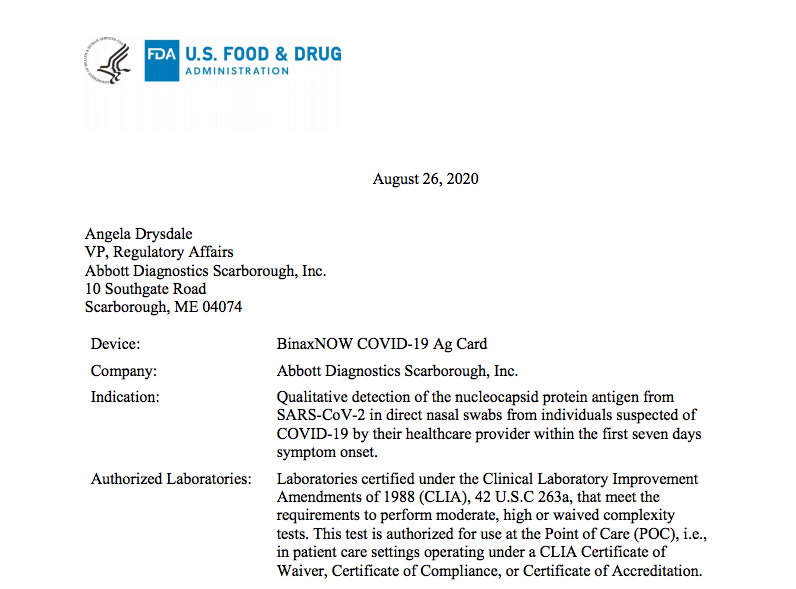
this is the test
it's lateral flow like rapid antibody test but it detects viral antigen not antibodies
it uses a swab
:format(webp)/cdn.vox-cdn.com/uploads/chorus_image/image/67301521/Virus_Outbreak_New_Tests.0.jpg)
ok ito
you don't need a PCR lab
the test looks for SARSCOV2's nucleocapsidLast edited by uls; August 27th, 2020 at 12:38 PM.
 Originally Posted by Deestone

 Reply With Quote
