
I have been holding back for years just to see who would actually bring up some simple facts.
First.
You really should actually read the documents you've quoted.
On the NASA, DOT, etc. front you are comparing apples to oranges. The NASA studies were looking at injecting lots of hydrogen into engines. That works and has an impact. These HHO generators don’t do that–they make about 1 liter of HHO per minute. If you have a 2 liter engine running at 3000 rpm that means you are chugging through 12,000 liters of air and fuel. How is 1/12,000 of that possibly going to change the results by 50-150%? It simply defies all logic. Hydrogen has great potential as a storage medium for energy but that is not what is going on with HHO.
And on modern computer controlled cars the computer will only let you lean it out so far before it shut you down. These test were done on old carb vehicles.
Please, please explain the math of how many liters even the best of these bubblers can produce add up to the very basics of the math. Even if you you could produce 5 liters per minute it still will not add up. Just stating logic.
And if you bother to look at the set up it has zero to do with a HHO bubbler, In fact they are using water and methanol, Big surprise that that will lower emissions ehh??An experimental program using a multicylinder reciprocating engine was performed to extend
the efficient lean operating range of gasoline by adding hydrogen. Both bottled hydrogen and
hydrogen produced by a research methanol steam reformer were used. These results were
compared with results for all gasoline. A high-compression-ratio, 7. 4-liter (472-in. 3) d i s placement
production engine was used.
Page 28, also notice it's taking up half the room, They used a tank of Hydrogen not a little bubble, Which begs the question why not just add a tank of hydrogen with a regulator to achieve the same thing with real output versus the small amount HHO kits produce.
Notice on Page 25 the amounts of water/methanol were used, The combined amount equals that of 1.5gph water injection nozzle.
Also note no bubble is used, It's essentially a water / methanol mix tank heated to steam and re-introduced into the engine compared against bottle hydrogen. Am I wrong?
http://www.waterfuel123.com/resource...N-GASOLINE.pdf
Performance of methanol reformer. -The methanol reformer system was designed as a research tool to check and verify the concept of steam reformation of methanol as an efficient way to produce hydrogen. The size, weight, and location of components with respect to the engine were dictated by the desire to observe and measure the factors influencing the overall system performance. Certain control problems occurred. Instabilities originated either in the engine or the reformer system and were passed on to the other component, which changes a stable condition into an unstable one. For instance, if the engine surged because of misfire at lean operation, oscillations in the exhaust flow rate and the manifold pressure also occurred. Since the exhaust flow was used to heat the catalyst, these flow oscillations caused oscillations in the reformer-product flow rate. The reformer-product flow rate was partially controlled by the manifold pressure, so manifold instabilities augmented any existing reformer-product flow instabilities.
Guess what when you inject methanol in your vehicle it reverts to steam at 143F i.e it makes hydrogen. And it's one of the reasons I hammer this subject because that's a basic fact that nobody seems to know. Guess what it will not increase your mpg 40% either. But it will let you run your car leaner.
Please read
http://www.anl.gov/PCS/acsfuel/prepr...03-02_0103.pdf
Seriously does nobody know steam reforming is one of the main ways to make hydrogen?
You would do far better with the bubbler to use pure methanol vs water anyways.Fossil fuel reforming, hydrogen reforming or catalytic oxidation, is a method of producing useful products, such as hydrogen or ethylene from fossil fuels. Fossil fuel reforming is done through a fossil fuel processor or reformer.[1] At present, the most common fossil fuel processor is a steam reformer. This conversion is possible as hydrocarbons contain much hydrogen. The most commonly used fossil fuels for reforming today are methanol and natural gas[2], yet others as propane, gasoline, autogas, diesel fuel, methanol and ethanol are also being looked into for reforming.[3] During the conversion, the leftover carbon is released into the atmosphere.[4] On an industrial scale, it is the dominant method for producing hydrogen. Small-scale steam reforming units are currently subject to scientific research, as way to provide hydrogen to fuel cells.
From NASA in 2002, why does nobody quote this document?
http://www.methanol.org/pdf/JPL_DMFC.pdf
Less Voltage is needed to electrolyze methanol than to electrolyze water at the
same current density, as indicated by these plots of data from an experiment with a prototype
methanol electrolyzer and a commercial water electrolyzer.
A mix of water and methanol with a molar concentraation ratio (water:methanol) of 1.3 - 1.5 pressured to approximately 20 bar aand heated to a temperature of 250C - 280C creates hydrogen.
For example, if an engine running on gasoline has a compression ratio is 10:1, the cylinder pressure at top dead center (TDC) is
p_{TDC} = (1 bar) \times 10^{1.4} = 25.1 bar
Instant hydrogen generator, and makes way more than any bubble does. We have people pushing 14gph to 60gph of meth through there engines with it leaned out to the jagged edge for max perofmance. Guess what no 40% fuel savings to be had with that either. I get about 5% better mpg on my explorer injecting a 50/50 mix of water/alcohol with a 2gph nozzle which produces more hydrogen than any bubbler on the market so were is the magic?
I'm not trying to kill your experiment but if your going to go through all the trouble of the whole HHO thing you should know that that is the least effecient means of making hydrogen there is. And using water is a bigger waste of time. You could double the amount of hydrogen you produced with methanol and you would still not see the huge gains claimed by these kits.
Just FYI for those who actually want to read all the facts.

The Largest Car Forum in the Philippines
- Forums
- Discussions
- Events
- Community
Results 221 to 240 of 429
-

 ElgrandClubph FB

- Join Date
- Dec 2007
- Posts
- 1,961
September 24th, 2009 07:29 PM #221
-
Verified Tsikot Member
- Join Date
- Sep 2009
- Posts
- 52
September 24th, 2009 08:52 PM #222My test work was not decided by NASA, SAE, or any other sources as indicated in my post, just my basic understanding on the subject and using water as a source of the hydrogen, which can certainly be sourced from others, that i undrstand. The decision to use water as souce of the hydrogen is mine, and does not stop me from sourcing hydrogen from others. The informations you posed are noted.
-
Verified Tsikot Member
- Join Date
- Sep 2009
- Posts
- 52
September 24th, 2009 10:38 PM #223This is addendum to my latest post. I discussed the positive side of a post on using methanol as raw material with my wife, a Chem . Engr. and retired Inst. in one of the Univ. I also recall, reforming was a project inlne that did not push thru for some reasons being in the energy business in the past. "Here we go again" she said, and unless I break my own rules, then i can use methyl alcohol or other hydrocarbon compounds.
My current rules are; reduce dependence on fossil fuel, use water as material for electrolysis, and to add, also the properties of commonducted hho. Production of welding torch and cooking top by using HHO was already in-line. The idea of using other materials other than water was already excluded earlier, but nothing wrong reconsidering.
Hence, I have decided to stick to water, and that relatively small amount of HHO. This is getting interesting. I will get back my form on this project. On personal leave for a while.
-
ElgrandClubph FB
- Join Date
- Dec 2007
- Posts
- 1,961
September 25th, 2009 04:35 AM #224I'm glad you also note the tiny amount that is injected being almost useless. Originally Posted by niky

It seems impossible to get the hard questions answered. Once again * philmagi. How many liters does your system make?
How do you get past this fact.
You really did not give a answer, it's pretty much a constant dance around any of my points.If you have a 2 liter engine running at 3000 rpm that means you are chugging through 12,000 liters of air and fuel. How is 1/12,000 of that possibly going to change the results by 50-150%? It simply defies all logic.
There is a reason these systems cause HP loss on the dyno on most vehicles it's because the vehicle is run lean, and your injecting almost unmeasurable amounts of hydrogen and oxygen (once again HHO does not exist) OBD-2 cars will pick up the knock though the knock sensors and pull timing causing a lose in HP.
If running your engine lean improves your gas mileage, then why aren’t automakers make all their engines run lean? The answer is that it does horrible, horrible things to the engine! The engine and valves can be permanently damaged, and cost you a pretty penny. This can even cause engine knock. To prevent these problems, automakers set the engines to use the proper amount of gas in order to improve engine reliability and longevity. Think about this for a second…is it worth destroying your car just so you won’t have to pay as much for gas? Actually, if you’re getting ready to ditch your car and get a new one, maybe it’s worth it to set the gas/air mixture in your car to make it lean. But if you want to actually use your car for more than a year, than hooking up an HHO device to your engine could cost you a lot of money.
Can you give us the liters per minute of your system? And how at even 3000rpms your going through over 9500 liters per minute. So how is adding 1 lpm to 2 lpm to this massive amount of air going to dramadicaly affect the combustion prosses, emissions, and add a sufficient amount of octane to fight off detonation induced by leaning out the factory fuel curve?
Just courious were the logic is on this one.
-
BANNED BANNED BANNED
- Join Date
- Apr 2007
- Posts
- 850
-
 enthusiast
- Join Date
- Mar 2007
- Posts
- 855
September 25th, 2009 09:13 AM #226[ame="http://www.youtube.com/watch?v=nc5NvC9akRM"]YouTube - Hydrogen Combustion Leaning Proof[/ame]

-
 State Alchemist
- Join Date
- Jan 2003
- Posts
- 2,407
September 25th, 2009 10:32 AM #227Haha. I'm betting that it won't get pass the proposal stage. Even high school students can prove that HHO bubblers work but will be the least efficient way of separating hydrogen from oxygen in water. Imagine how many mL of hydrogen per minute your getting using a 12V battery. Originally Posted by ghosthunter
I've seen some SAE and even that really old NASA paper regarding hydrogen fuel on ICE but not using the bubbler.
But come to think of it, if it is that easy to get so much hydrogen, wouldn't the oil companies be the first to benefit from this "technology". Water is much easier to get than oil, right?
-
Verified Tsikot Member
- Join Date
- Sep 2009
- Posts
- 52
September 25th, 2009 11:47 AM #2281.0 Hi! I have stated my case clearly on this HHO project, it is a hobby and is under observation, no serious legal/technical/commercial implications yet. I have set objectives and standards to govern the undertaking. Those concern that I will be wasting my time, effort, and money in my undertaking, rest I assured that i will know the limits as well as when to give up, thank you. It is simple response to the initial post inquiring if anyone is in this HHO, and he would like to see it.
2.0 Since the subject on methyl alcohol (methanol) was brought out, allow me to show below the list of those I scanned earlier from resources before embarking into this HHO project on fuel economy. I do not recommend them here, and I leave it to the reader on how to go about them. They are as follows but not limited.
a) fix car - tune up/repair/tires/etc; b) driving habit; c) Plan trip; d) Acetone as additive; e) Acetone-boric acid as additive;f) xylene (xylol, currently used in fuel oils, can be found in hardware, the say); g) torco-TP7 as additive; h) popular Combo used by Americans AXG7 - acetone/xylene/torco combinations; i) ethyl alcohol - you are fully aware of this; j) methyl alcohol - deliberated by NASA and by a forum menmber; k) induction coii across power supply line; L) magnet around the fuel line;) special oil lubricants; m) various additives into fuel from big oil companies and private groups); signal sensor enhancer without the HHO; n) steam; 0) straight hydrogen input; m) HHO with enahncer, and many more out there.
I simply decided to work on the last item (m) for all the reasons I have, and a hobby. However, to those who are in business, if service is good and client satisfied, why not, it is mutual. Of course there are consideratiions in the selection from capital recovery, operation, maintenance, repair, ets, and continuing comsumables to be acquired in the market.
Something that strikes me in this undertaking, I developed a microtorch with about 1/2 in yellow flame and longer bluish flame after the yellow flame almost hard to see but burns paper at almost 2 1/2 inches away at 1/2 lpm HHO gas output (i do simple measurement method to obtain gas output). Also, I can pass my fingers slowly without feeling the heat, but cuts small steel wire when flame pointed at it directly, I am trynig to find the reason why this is so. Of course it is different when appied in minute quantity in the car , which I am all out to find. There are in the market for sale commercial hho welding/cutting torch and single/double cooking tops.
When my undertaking works, I will find the expert to explain in technical terms why it is working so others will have something at least to start with, if ever.
-
Verified Tsikot Member
- Join Date
- Sep 2009
- Posts
- 52
September 25th, 2009 04:37 PM #229Since this thread is under the topic "run car on water", perhaps it is worth for those who would want to go deeper into the subject to reasearch on some words or phrases used which may help further understand:
1. Is it really "running the car on water", or just that water is readily available and one of the sources of hydrogen?
2. Are they teaching all in high/college physics about what really is happening in electrolysis of water?
3. What is hydrogen? What is HHO (sometimes called Brown's gas, Rhodes gas, oxyhydrogen, hydroxy, etc.? Is hydrogen the same as HHO? What is diatomic and monoatomic hydrogen? What is para or otho atomic hydrogen?
4. They say hydrogen is not that stable, and looks for a pair?
5. Why is it that even todate, molecular physicists are still arguing on what is hho gas? Is HHO a steam, true gas, or a plasma not taught in school.
6. They say HHO produces the hottest flame in this planet? What temperature is that?
7. There is still argument that HHO implodes wen ignited in confined space and back to is original liquid water state, creating vacuum? other say it explodes? Which is which?
8. What is the flame propagation speed of HHO compared to other fossil fuels, as basis in saying the former is about 7-10 times faster than the latter?
9. They say HHO is about 3 time more powerfull than gasoline, by weight?
10. They say that 1 gallon of water in atomic energy is eqivalent to about 2.5 billion barrel of crude oil, and how is this?
11. They say HHO improves combustion efficiency of fossil fuel, cleans carbon deposit, improves the octane number, and help cools the engine?
12. Hydrogen is number 1 in the periodic table as taught in high school on what criteria?
13. They say hydrogen is the simplest element known that storage is critical, why? They say that it is so simple that it will look for slightesr crack or weakness in a storage tank? They even say it can go thru steel of poor quality?
14. The say that HHO in its original form is extremely dangerous to compress and store?
15. They say HHO can be used in under water welding, without the addtional oxygen?
16. Why is it that car manufacturers are not integrating the HHO system in there standard models?
17. They say HHO welding can fuse steel pipe against cement wall?
18. They say HHO will transform silica sand into agate? Even, that new elements may be created with HHO flame.
19. What in hydrogen steel enbrittlemant?
I am still researching on these, some will be proven in the ongoing hho project. I am not taking above statements hook-line-sinker. No. But of course whatever the answers for all the above queries, it all boils down to the question, "is it working for what it is intended for?"
-
ElgrandClubph FB
- Join Date
- Dec 2007
- Posts
- 1,961
September 25th, 2009 05:20 PM #230Wow one more useless video which shows a tiny change in AFR, Which is read by a output from a sensor that is simply being fooled with a resistor or potentiometer. Originally Posted by ehnriko
Thank god no other piece of technology depends on youtube vids.
THERE IS NO SUCH THING AS HHO! NO SUCH CHEMICAL BOND EXIST.
Last edited by dvldoc; September 25th, 2009 at 05:24 PM.
-
 Verified Tsikot Member
- Join Date
- Sep 2009
- Posts
- 44
September 26th, 2009 11:30 AM #231Hello! I'm in Texas and within the past year become intimately familiar with HHO. Yes, you are correct, it's actually H2 & O2. Since they are mixed together the term HHO has become the chosen term throughout the Internet to refer to this very explosive gas combination.
First, I became involved when a member of our local car club began installing one of these "HHO" units on his car. I scoffed at him and explained to him why this absolutely would not work. In detail I showed him the relationship between the energy value of the "HHO" he would produce compared to the energy it would take to make it. Clearly, not even close to a break even point. This individual, a retired Physics professor, looked at me and told me, "You are wrong!" I then told him that the very physics books he was teaching from told me that I am right. He then said something to me I will never forget, "Like I keep telling everyone, the books are wrong!"
Since I made some of these in high school, only to make hydrogen balloons for the fireball effect (yes, I'm lucky to be alive), I fabricated a simple yet somewhat productive unit to prove my point. I had a 67 VW Beetle that was peaking at 42 miles per gallon. Everyone that knows me knows how hard I have worked to break past the 42 mile per gallon barrier, but the little car has no more mileage to give even at slower speeds. After installing this quickly fabricated HHO generator in the car I made some mileage runs. All were consistent at 45 miles per gallon! Instead of proving my point, I was blind sided with one reality. Never argue with a retired physics professor!
I've been studying this and it's not just the HHO (or H2 & O2), but many other factors too complex to go into detail here. Yes, there is a significant at times increase in mileage. No, it's not all from the gas but a combination of factors. So Faraday's Law remains intact and valid concerning the BTU value of the HHO created from water compared to the power robbed from the engine to pull the amperage. Simply put, mileage increases due to several factors and some simple testing under controlled conditions would prove this out.
One thing to consider is definitely the moisture. The higher lever of moisture would net some improvements in mileage. That being said, a friend and myself did many tests on moisture alone compared to HHO, and there is a higher percentage of improvement in mileage using HHO compared to only using a moisture bubbler. This I believe is due to the affect the HHO gas has in the combustion chamber when mixed with gasoline or diesel. If my theory is correct, the improvement in mileage would not be seen in a vehicle fueled by Natural Gas or Propane. Diesels see a higher net improvement in mileage than do gasoline fueled vehicles. Every test done at a pollution station in Houston Texas show more than a 100% reduction in hydrocarbons which support my theory. The primary fuel burns hotter and somewhat faster when a small amount of HHO is introduced into the mix. A vehicle with one bad cylinder was equipped with an HHO generator. The engine never made 2 hours at highway speeds without oil fouling number one cylinder. With the HHO the plug never fouled. What's more, if the fouled spark plug is reinserted into the engine uncleaned, the plug was clean after only one day of driving. This is related to the reason we see a mileage increase. Not only did the spark plug not foul, the motor oil leaking into the cylinder was now combusted and turned to fuel further increasing mileage. This is why when one of these units are installed on a very worn engine the results tend to be even better.
Another factor to consider is amperage. It is very unproductive to increase amperage even if it increases HHO production. On the 67 Beetle when I increased amperage beyond a certain point mileage began to drop. There is a "flywheel effect" in any engine where it will run at ease with a small load nearly free. Once you crank up the amperage and the engine loads up, mileage figures drop. I found that if the engine is idling and you suddenly turn on the unit there should be no drop in engine RPM or heavy loading of the engine. If you keep the amperage in this range where the engine at idle pulls it freely, mileage will be best. Every engine has a different "flywheel effect" zone depending on size or gasoline/diesel.
This is a lot of work and expense that I gone through to save money on fuel many say. But for me it was never about fuel savings, but curiosity on the mechanics of these systems. Most HHO systems I've seen on the Internet will never work properly. But a proper unit should generate better mileage and reduced exhaust emissions if run conservatively. As a former "nay sayer" on this I have to say "Give it a try before you condemn it." Remember, BTU values of hydrogen may apply in the Faraday formula to determine efficiency. But in an internal combustion engine we are creating an increase in volume that pushes a piston that may not be entirely dependent on BTUs of energy released. You can run an engine on compressed air alone and the engine manufacturers do this to seat the piston rings.
Hope this clears up the topic of why so many see mileage improvements where none appear possible. Depends on the engine, of course, and the way the HHO is applied. Be advised this is potentially dangerous as the gas is explosive. If a unit is making one liter of HHO per minute and the engine backfires, the explosion will be more than significant. I've never had an accident myself taking every precaution. However, several friends have blown the tops off of tool boxes by accident testing these on engines without flashback preventers. You could be burned badly or even killed doing this wrong. If that happens law makers tend to pass laws limiting the average person's access to these units. Don't ruin it for the rest of us by being careless.
Glad to be here by the way. I've been to the Philippines once even staying in Manila for 6 months. Might be traveling there again in the next few months.
-
enthusiast
- Join Date
- Mar 2007
- Posts
- 855
September 26th, 2009 12:26 PM #232Your bias is manifested by your quick judgement. Originally Posted by dvldoc
You think the car uses PWM, EFIE or any electronic pots to "trick or fool" (2 words not in my vocabulary) the engine???
The car is a Carbureted Pre-OBD car, basically - it's still Old Schooler. The LED lamps around the engine bay are indicators only for the KML lines which is used to enhance the electron flow within the chassis ground of the whole vehicle (pseudo science from Tesla :-)) .
Oh yes, A friend from Normay has the cheapest way to inject water mist in a diesel engine. It's also in (guess what) "YOUTUBE". I havent tried it yet, but I will soon.
Why I chose to use the Charade?. simply because it is still a free car... Free in the sense that it is not bounded by any OBD infrastructure which makes any product under it - ENSLAVED by it's after sales and service program.
Any external improvement I will put can be seen immediately without fooling any computer thats managing the engine or fuel map. Old School approach. Improve the air feed - you get instant results, improve the fuel feed - you get instant results. No ECU dictating what the engine wants to do naturally.
If I would touch an OBD1 or OBD2 - a different approach will be needed.
Then I will have to employ my other local friend who makes his own MEGA Squirts... probably one of the first also in Philippines... also available in guess what again (YOUTUBE). I still have to convince that guy to stay in the Philippines...
anyway... here are more from Pseudo Scientists??... :-) not.
[ame="http://www.youtube.com/watch?v=M38GWfMUvg4"]YouTube - WaterVaporizer[/ame]
[ame="http://www.youtube.com/watch?v=fsCwGxNs4O0"]YouTube - lancer run[/ame]
-
 Tsikoteer
- Join Date
- Oct 2002
- Posts
- 29,354
-
Verified Tsikot Member
- Join Date
- Sep 2009
- Posts
- 23
September 26th, 2009 12:38 PM #234Using water in vapor or steam form as supplemental fuel to improve engine performance and reduce pollution is an old and suppressed technology. Using a carburetor that will vaporize gasoline very well that allow a car to run more than 150miles per gallon of gasoline is an old and suppressed technology. Why suppressed? Some people just do not like that you'll get fuel from almost free resource like water. Some people do not want you to use gasoline/diesel/lpg/kerosene efficiently that it will significantly alter their business plan.
Technically, anything can be use as fuel and the only requirement is that you have to transform your raw fuel material to something that your current engine design can take. Water can be used as a supplemental fuel for your gasoline/diesel/lpg/kerosene engines. The minimum requirement is that you have to convert liquid water into vapor for better mixing with your primary fuel and the required air.
With current internal combustion engine design in our cars, it will only accept vapor mixed with air as fuel. The challenge for us is how to manage the conversion process to vaporize our liquid fuel. Car manufacturers did not give you their best designs for fuel efficiency and only give you a system that do not do well. That is why you do not get a car that can run 40km for every 1 liter of gasoline no matter how you lighten your foot on the accelerator pedal on a highway. Car manufacturers already solved the fuel efficiency problem long time ago but did not release it for public use. Search the US patent database if you want to know and want documented tests and results of these designs. Just don't be lazy reading, the truth is out there in the open.
If you have something to contribute on how to make use of water as fuel or as a supplemental fuel for your gasoline/diesel/lpg/kerosene, please share your ideas. Each car needs some improvement to reduce the pollution it produce everytime we use it. We all share the same air and share the same planet. When someone is helping reduce the pollution from their cars or combustion engine, be intellegent enough to recognize that he is helping you breathe some less polluted air. He is also giving you ideas that does not cost you an arm and a leg and that you can use these ideas and knowledge from hard work of experimentation to improve your car and minimize expenses on fuel. We need more people to participate and do their part in stopping the pollution from our cars.
When you have nothing to contribute yet, better listen and stop claiming anything as scam when you have not tested it yourself first hand. You're not helping that way. We have seen and do these experiments first hand, we use water as fuel, we do electrolysis of water and make use of its output as supplemental fuel to improve engine performance and at the same time reduce pollution. We no longer change our engine oil, the longer we use our car, the better it will perform. When you have not done anything like it before, better start doing something now and don't be surprised later when you unlock your car potential that it perform better like never before. This is not a scam, we live with these technologies everyday, we are able to help hundreds of cars improved their performance and reduce fuel consumption and pollution.
When the fuel prices went up, who are left behind? People who have no access to these improvement like using water as supplemental fuel and people who instantly dismissed the technology. We were not greatly affected by the fuel price increase for we have improved our fuel efficiency and our cars performed better than before. The facts are out there in videos. The technology is out there in the open. It is for you to act now and do your part.
The only scam here is people who claim something does not work and yet they themselves have not tried it first hand.
-
 I... see... RED!
- Join Date
- Jun 2007
- Posts
- 2,840
September 26th, 2009 01:16 PM #235the only way to improve performance using water ATM is if you use it to cool the intake gases, such as in water-methanol injection... which has been around since WW2.
But on pure water?

Magdrive ka ngayon and you will definitely run your car in water.
-
Verified Tsikot Member
- Join Date
- Sep 2009
- Posts
- 23
September 26th, 2009 01:54 PM #236You can use water in your car and improve the engine performance in so many ways that is limited only with your imagination.
-
ElgrandClubph FB
- Join Date
- Dec 2007
- Posts
- 1,961
September 26th, 2009 02:18 PM #237Once again the you tube show zero data in fuel economy, It shows the same thing over and over. How about 1 of you HHO guys answer this simple question I have ask at least 2 so far.
I'll just quote myself
It's a simple question with simple math yet not one person can explain why such a tiny amount will make such a huge difference. So Mr. Youtube how many liters per minute do these systems you keep putting up put out and what is there method of measurement.These HHO generators don’t do that–they make about 1 liter of HHO per minute. If you have a 2 liter engine running at 3000 rpm that means you are chugging through 12,000 liters of air and fuel. How is 1/12,000 of that possibly going to change the results by 50-150%?
I have already showed you injecting methanol in a internal combustion engine produces more hydrogen they your bubbles but you have seem to ignore all these technical facts. If one method produces more hydrogen than what your keep showing but yet there are no magical claims of super fuel efficiency.
You guy choice to ignore any real facts or even bother to read over them and stop and think.
On this quoteUhmm I think I have been doing that on a global scale for years. After all I'm not the Devil for no reason. Maybe you should check out a simple search for water injection on youtube.Oh yes, A friend from Normay has the cheapest way to inject water mist in a diesel engine. It's also in (guess what) "YOUTUBE". I havent tried it yet, but I will soon.
Water / Methanol injection is on 100000's of vehicles world wide, I should know I put a lot of them there.
* vernieg Oh you do make me laugh.
My friend I have been reducing the emission on cars but up to 80% for many many years, Including the Philippines. Those emission test I posted are from one of my customers. Incase you missed it here we go againWhen you have nothing to contribute yet, better listen and stop claiming anything as scam when you have not tested it yourself first hand. You're not helping that way. We have seen and do these experiments first hand, we use water as fuel, we do electrolysis of water and make use of its output as supplemental fuel to improve engine performance and at the same time reduce pollution. We no longer change our engine oil, the longer we use our car, the better it will perform. When you have not done anything like it before, better start doing something now and don't be surprised later when you unlock your car potential that it perform better like never before. This is not a scam, we live with these technologies everyday, we are able to help hundreds of cars improved their performance and reduce fuel consumption and pollution.
Improving performance, hmm I think I also have been doing that with real measurable numbers all over the planet.
I'm going to give you guys a simple means to go by since testimony and copy and paste is most HHO's only means of proof.
Fact Water/alcohol injection makes more hydrogen gas than your bubblers. Fact It makes more power especially on turbo diesels
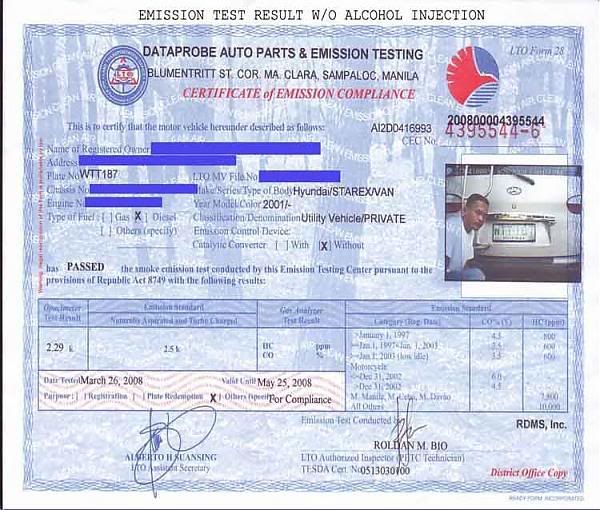
Fact I reduces emmisions more than anything on the market today.
With all these facts know we still do not make the crazy claims of 40% better fuel economy. You guys probably believed old Dangle with his water powered car LOL.
You can use propane fumigation and get way better results vs a hydrogen bubbler and it would produce a lot more gas. Feel free to prove anything I say wrong point by point at any time.
Not one of you can provide a legitimate fuel usage test, Dyno or emissions test. Let me show you how it's done and to keep it simple I do one from the Philippines.
Get your self a vehicle, Install your product/Kit
Check the effects of your system on the dyno tune the vehicle for best results. Put up the actuall dyno results!!!!!
Note how the licence plate is the same no need to scam or con like HHO sites.
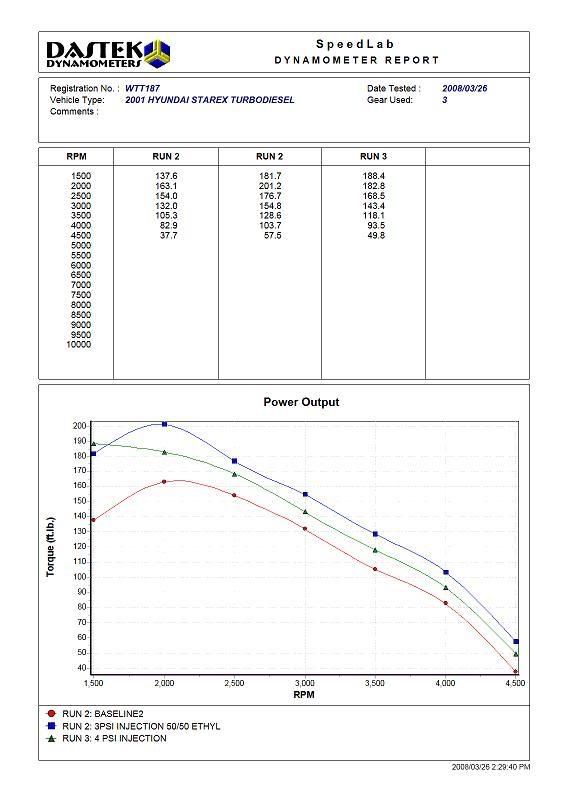
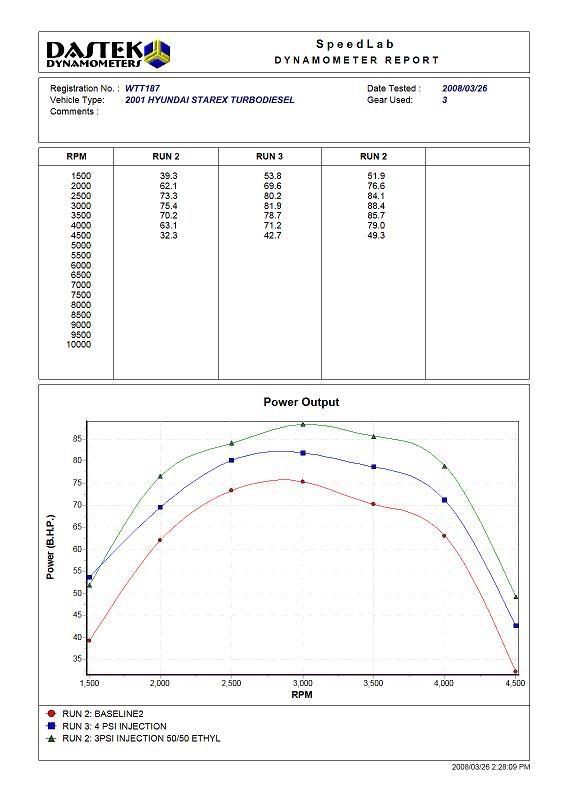
Next you do a emission test to see how efficiently the vehicle is operating.
Your item off
Your product on
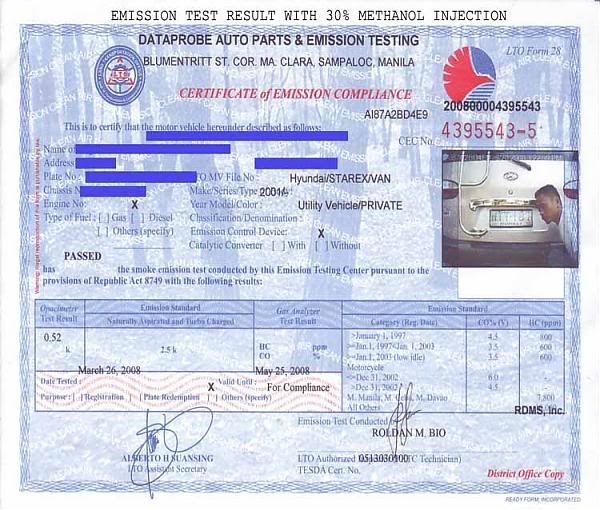
Want to play the youtube card here you go, How about no black smoke at full throttle.
Note the licence plate and the actual vehicle being tested not testimonial.
[ame="http://www.youtube.com/watch?v=0wGcJ94wtQ0"]YouTube - STAREX DYNO ALCOHOL INJECTION[/ame]
This is just a example of how you can post of some facts. Why is it that after 6 years of HHO post you cannot find one legitimate dyno or emission test or computer measurment of fuel use?? I challenge anyone to find one period. You know what * vernieg and ehnriko I'll shoot you 500P for everyone you find if you can find them by the 1st. And that's sad in itself it takes that long to look.Last edited by dvldoc; September 26th, 2009 at 02:25 PM.
-
ElgrandClubph FB
- Join Date
- Dec 2007
- Posts
- 1,961
September 26th, 2009 02:19 PM #238Want to see how you measure if your car uses less fuel here's a sample on a 1.9TD VW OBD-2. These system are very cheap and if a 18 year kid can get one and do it why have none of these companies selling these kits able to do it???
Water alcohol off

Water alcohol on

Seriously how hard is that?? 6 years and you can't present simple tech facts like this to the world. Or answer basic questions. Try not to forget about the amount of what your bubble produces vs how much air the engine is consuming, I need to remind you guys of this again because you cannot answer the quetion.
Here's anouther example. Old Pajero picking up 27% increase in hp and 20% increase in torque please explain even with these gains why fuel economy reported by the owner is only about 10% better? No HHO kit can even come close to these numbers Period. You can't better economy if you can use less fuel at a lower load to produce the same power level that is a Fact you guys can't wrap your minds around.
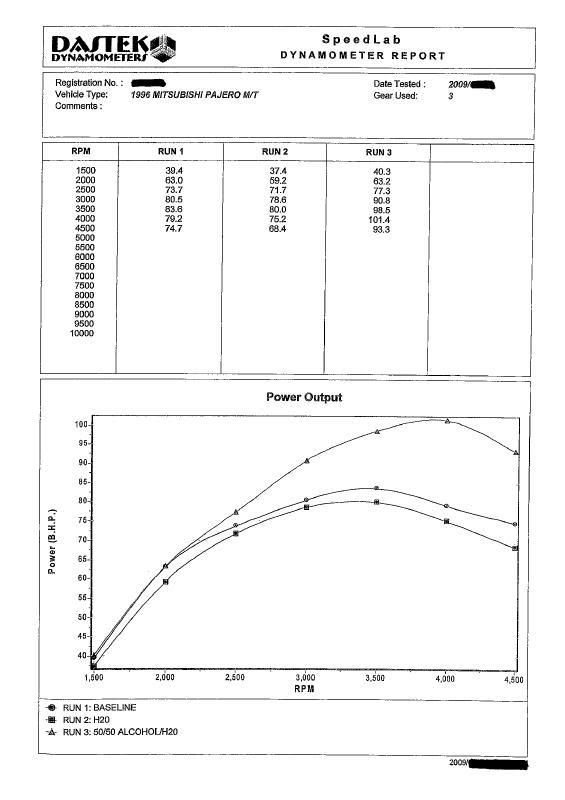
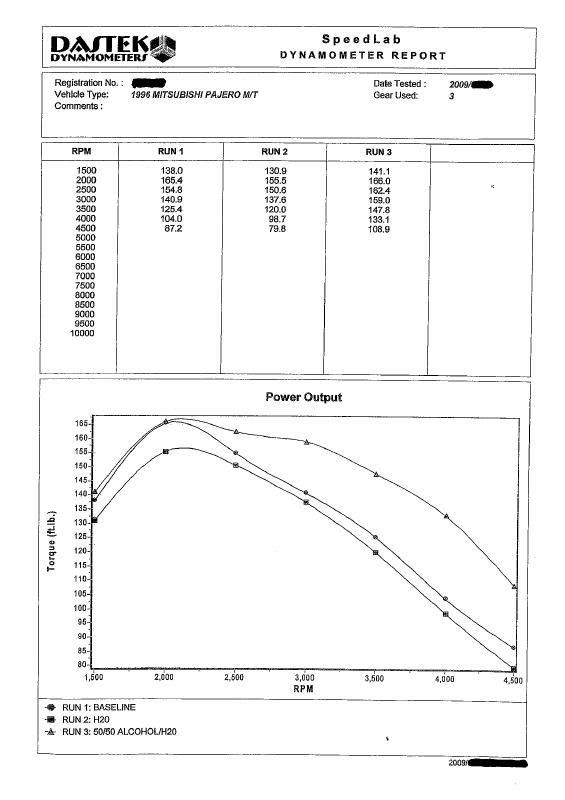
Here is the emission test for that vehicle. I challenge you to produce any non common rail turbo diesel that is lower.

You guys like to talk about being green and making less emissions when the means has been around since the 1930s and it's already proven.
-
ElgrandClubph FB
- Join Date
- Dec 2007
- Posts
- 1,961
September 26th, 2009 02:22 PM #239This works.

This works

This is junk. There is a reason auto makers are going with the above not bubble.

-
ElgrandClubph FB
- Join Date
- Dec 2007
- Posts
- 1,961
September 26th, 2009 03:00 PM #240Re HHO Project
Hi! Here is the exhaust emission test report om my Nissan Exalta, A/T. 1.6 Li with the HHO on done by Bosch Emission Test Center Alabang,14 Sept, 2009, 16:46 hrs. Just copied the print for Ph 50 without the original LTO report that could cost Ph 400. Besides, even if I did have the LTO form compared to just the print, one will not know the difference, or my truthfulness.. Its my car's exhaust, and result is only for those in this project and curious. I really don't have to put one on anybody. I have another reason fot the test. I am still in Manila and took the opportunity.
Methodology:
Disabled battery cable and electronic fuse this am for at least 30 min to reset the ECU, loaded car with petrol shell super unleaded, and to ofc QC (heavy traffic), bak to Alabang in the afternoon but proceed to Calamba via slex and bak to Alabang Bosch Emmission Test Center.
Travel - 120.8 km inclusive of 55 city driving.
Test Results - CO, 0.045 % vol (std for new car 3.5 %, 4.5 % for older car); CO2, 14.87 % vol; and HC, 57 ppm by vol (std is 600 ppm). Watch for the unburned C (Carbon monoxide, CO) tomorrow.
Any reason this Tamaraw FX got better results on the CO levels and crushed your claimed HC ppm with no HHO just a rebuilt engine? This is why people have a hard time believing testimonial vs actual proof.

Last edited by dvldoc; September 26th, 2009 at 03:08 PM.

 Reply With Quote
 Originally Posted by niky

![Water as Fuel / HHO Technology [Merged Threads]](https://play.google.com/intl/en_us/badges/images/generic/en_badge_web_generic.png "Google Play")