
Ghosthunter/KersMcrae
Ref on party list to improve traffic conditions is a good idea. It has tremendous fuel economy impact if willed. Just to add three major conditions:
There must be a master plan for metro manila. There is no master plan for each city to participate. Each to its own. The followng must be established for faster traffic flow, not waste fuel:
a. Geometry of road sytem - Major issue to include signages, main transmission net work w/o loading/unloading just cars keeps on moving from one point to another (could be skyway net work), secondary net for distribution like loading and unloading (could be ground level). This is like hi-tension power lines where wire tapping is not allowed, and to distribution lines to the users to hook in the residential service power entrance.
This is large legal, technical, and financial due diligence study, engneering, procurement, consruction, and operation. Bangkok, thailand - when I was thre in 1991, all these were just starting and check Bangkok now.Wow!
b.Policies, Rules and regulations - we have enough of this and maybe additional for new infrstructurs.
c. Implementation - This is a major concern, but with political will, it can be resolved.
philmagi

The Largest Car Forum in the Philippines
- Forums
- Discussions
- Events
- Community
Results 181 to 200 of 429
-
 Verified Tsikot Member

- Join Date
- Sep 2009
- Posts
- 52
September 14th, 2009 01:36 PM #181
-
 enthusiast
- Join Date
- Mar 2007
- Posts
- 855
September 14th, 2009 04:28 PM #182
[ame="http://www.youtube.com/watch?v=kIZVx-2bvCk"]YouTube - Water Welding under 16A of 12VDC power[/ame]
-
enthusiast
- Join Date
- Mar 2007
- Posts
- 855
September 14th, 2009 04:38 PM #183Here's another fun video...
[ame="http://www.youtube.com/watch?v=TVZ_rpkwCTs"]YouTube - ehnriko's Dry Cell Making really explosive Steam[/ame]
-
enthusiast
- Join Date
- Mar 2007
- Posts
- 855
September 14th, 2009 04:48 PM #184This is an essential part for ICE that uses HHO/ Hydroxy gas for combustion enhancement.... even without it, a strong ignition will increase the performance of your engine.
[ame="http://www.youtube.com/watch?v=MLVPwKjXZWA"]YouTube - Mr. X Ignition Enhancer[/ame]
-
enthusiast
- Join Date
- Mar 2007
- Posts
- 855
September 14th, 2009 05:58 PM #185In this video, the car I am using also uses a sort of Heat Exchanger... it's just a copper coil attached to the exhaust manifold, the input port is actually the engine breather... so it sucks oil vapor... super heats it, I measured the temp with an IR gun, it read error.
Anyway, the re-heated fumes goes through the coil and into a receiver dryer - combines with my hydroxy (aka hho) gas... sucked by the engine vacuum, but regulated with a valve.
The idea was inspired by GEET... the hydrogasifier seems to also come from the GEET idea by Panthone. I couldnt afford having some welding jobs done on my tail or exhaust pipe - so I just fastened the copper coil outside the pipe but made it in a manner that there is more surface area contact. Keeping it beneath the heat shield also aids in heating it.
[ame="http://www.youtube.com/watch?v=4qo1lnEbPLA"]YouTube - Hydrogen Enhanced Daihatsu Charade with Engine Fumes Vortex Reformer[/ame]
-
 ElgrandClubph FB
- Join Date
- Dec 2007
- Posts
- 1,961
September 14th, 2009 06:05 PM #186More good info on the HHO scam.
http://www.popularmechanics.com/auto...o/4310717.html
http://www.aardvark.co.nz/hho_scam2.shtml
This has been discussed on many times over. Here's a good thread on it.
86 pages of bogus science facts and nobody can provided any real hard data besides testimony, not one emission test, dyno, computer measurement of Injector Pulse width to prove less fuel is actually being used. Nothing.
http://aardvarkforums.co.nz/forums/v...er=asc&start=0
Enough key strokes wasted on this subject for me. These threads all end the same on every forum no real results.
-
 Tsikoteer
- Join Date
- Jun 2009
- Posts
- 1,463
September 14th, 2009 07:24 PM #187I just browsed this link. Sorry to say this but it seems like a "debate from the street" instead of a (healthy) discussion thread.More good info on the HHO scam.
http://www.popularmechanics.com/auto...o/4310717.html
http://www.aardvark.co.nz/hho_scam2.shtml
This has been discussed on many times over. Here's a good thread on it.
86 pages of bogus science facts and nobody can provided any real hard data besides testimony, not one emission test, dyno, computer measurement of Injector Pulse width to prove less fuel is actually being used. Nothing.
http://aardvarkforums.co.nz/forums/v...er=asc&start=0
Enough key strokes wasted on this subject for me. These threads all end the same on every forum no real results. Debate, if put into Pinoy context: "Which came first, egg or chicken?", something like that. :hysterical:
Personally, I dont want to be left behind as an outdated, old-school fellow when this tech (or scam for now) would be refined and perfected in the near future.
OT: Im aware that our government dont have this kind in its "vocabulary".
RP: Refurbished = Modern, e.g. PNR, AFP (Alms Forces) hardwares.
Other countries: Modern=Advance & State-of-the-Art, e.g. Maglevs, stealth aircrafts.
Keep posting sir philmagi, others. Originally Posted by philmagi


-
Verified Tsikot Member
- Join Date
- Sep 2009
- Posts
- 52
September 14th, 2009 10:35 PM #188Re HHO Project
Hi! Here is the exhaust emission test report om my Nissan Exalta, A/T. 1.6 Li with the HHO on done by Bosch Emission Test Center Alabang,14 Sept, 2009, 16:46 hrs. Just copied the print for Ph 50 without the original LTO report that could cost Ph 400. Besides, even if I did have the LTO form compared to just the print, one will not know the difference, or my truthfulness.. Its my car's exhaust, and result is only for those in this project and curious. I really don't have to put one on anybody. I have another reason fot the test. I am still in Manila and took the opportunity.
Methodology:
Disabled battery cable and electronic fuse this am for at least 30 min to reset the ECU, loaded car with petrol shell super unleaded, and to ofc QC (heavy traffic), bak to Alabang in the afternoon but proceed to Calamba via slex and bak to Alabang Bosch Emmission Test Center.
Travel - 120.8 km inclusive of 55 city driving.
Test Results - CO, 0.045 % vol (std for new car 3.5 %, 4.5 % for older car); CO2, 14.87 % vol; and HC, 57 ppm by vol (std is 600 ppm). Watch for the unburned C (Carbon monoxide, CO) tomorrow.
Tomorrow, will do similarly with the car without the HHO. Will reset the ECU. Wed morning, will be leaving for minesite back Fri. This result is for my car, you have to have yours.
By the way HHO system works well for all fossil fuels like gasoline, diesel, biodiesel, ethano blend, and even lpg. Tucking co is using HHO on their trucks, US truckers have been using it drom east ot west coast for the past years, ets. The LPG will take sometime untill carbon deposits are removed by the effect of HHO, according to researchers.
". . . they say that the bumbee is not supposed to fly according to the laws of aerodynamics due to the ratio of its wing span to its weight. Ignorant of the scientific facts, the bumble bee goes on flying anyway. . ." - anonymous
Hey, I took the mileage too and I think there is somethimg wrong with the station dispenser, or just my calculator. Its just that its incredible. Can't say it here and perhaps should be done twice, three times again and again. You have to try on your car.
philmagi.
-
ElgrandClubph FB
- Join Date
- Dec 2007
- Posts
- 1,961
September 15th, 2009 03:25 AM #189More strong proof
Why is it when you ask a HHO person for the actually print out of the emission test they cannot seem to produce it. Testimonials are worthless if you want to prove your point. As I stated and you proved me write that you would not provide a system on vs system off example.
To show you how easy that is here is a example with water injection which destroys HHO on emission reduction because unfortuatly you do not even know the temps required for hydrocarbons to form in the combustion process, but when your reducing EGTs by 200F to 250F it's easy to see why it works yet there are still no rediculous claims of 40% better KPL.
You want someone to buy your point try providing some real evidence.
Example
System off
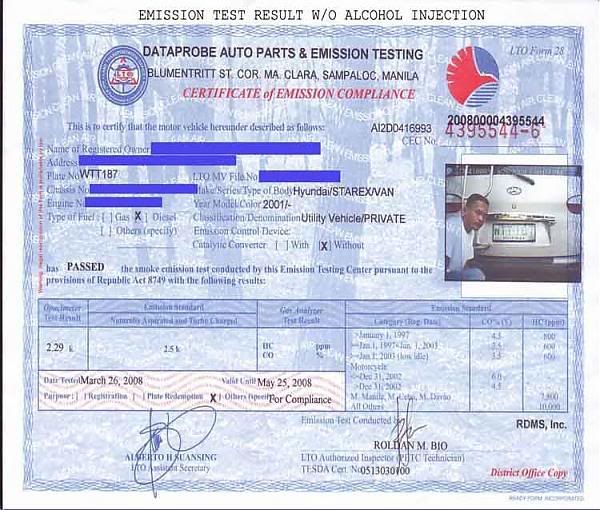
System on
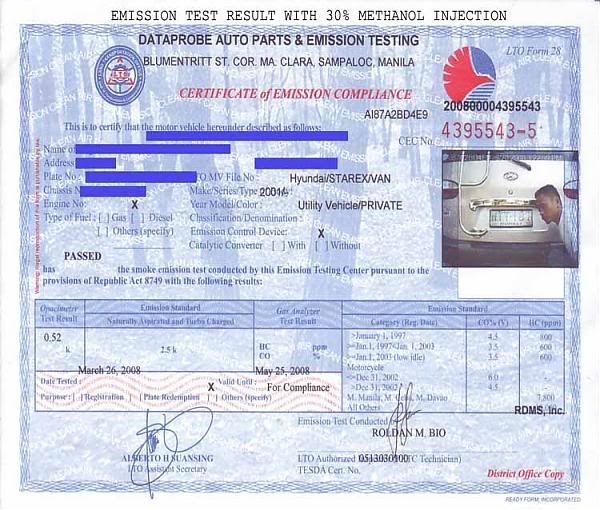
Seriously how how is that????? There are internet cafes everywere so simple to scan in a document and post it. 12 year old kids do it every day.
-
ElgrandClubph FB
- Join Date
- Dec 2007
- Posts
- 1,961
September 15th, 2009 04:55 AM #190Still waiting for the actual system on then system off emission test with the numbers you just put down. Now that you posted numbers your kinda pinched on providing the actual certificate.
By the way.
When you guys stop using bad science and myths maybe we can believe in your credibility. Originally Posted by philmagi
The bubble myth you quoted kinda proves my point about not knowing facts.
http://en.wikipedia.org/wiki/Bumblebee
Myths
Flight
According to 20th century folklore, the laws of aerodynamics prove that the bumblebee should be incapable of flight, as it does not have the capacity (in terms of wing size or beats per second) to achieve flight with the degree of wing loading necessary. Not being aware of scientists 'proving' it cannot fly, the bumblebee succeeds under "the power of its own ignorance".[25] The origin of this myth has been difficult to pin down with any certainty. John McMasters recounted an anecdote about an unnamed Swiss aerodynamicist at a dinner party who performed some rough calculations and concluded, presumably in jest, that according to the equations, bumblebees cannot fly.[26] In later years McMasters has backed away from this origin, suggesting that there could be multiple sources, and that the earliest he has found was a reference in the 1934 French book Le vol des insectes; they had applied the equations of air resistance to insects and found that their flight was impossible, but that "One shouldn't be surprised that the results of the calculations don't square with reality".[27]
Some credit physicist Ludwig Prandtl (1875–1953) of the University of Göttingen in Germany with popularizing the myth. Others say it was Swiss gas dynamicist Jacob Ackeret (1898–1981) who did the calculations.
In 1934, French entomologist Antoine Magnan included the following passage in the introduction to his book Le Vol des Insectes:Tout d'abord poussé par ce qui fait en aviation, j'ai appliqué aux insectes les lois de la résistance de l'air, et je suis arrivé avec M. SAINTE-LAGUE a cette conclusion que leur vol est impossible.This means:First prompted by the fact of aviation, I have applied the laws of the resistance of air to insects, and I arrived, with Mister Sainte-Lague, at the conclusion that their flight is impossible.Magnan refers to his assistant André Sainte-Laguë who was, apparently, an engineer.
It is believed that the calculations which purported to show that bumblebees cannot fly are based upon a simplified linear treatment of oscillating aerofoils. The method assumes small amplitude oscillations without flow separation. This ignores the effect of dynamic stall, an airflow separation inducing a large vortex above the wing, which briefly produces several times the lift of the aerofoil in regular flight. More sophisticated aerodynamic analysis shows that the bumblebee can fly because its wings encounter dynamic stall in every oscillation cycle.[28]
Another description of a bee's wing function is that the wings work similarly to helicopter blades, "reverse-pitch semirotary helicopter blades".
Bees beat their wings approximately 200 times a second, which is 10–20 times as fast as nerve impulses can fire. They achieve this because their thorax muscles do not expand and contract on each nerve firing, but rather vibrate like a plucked rubber band.Last edited by dvldoc; September 15th, 2009 at 05:01 AM.
-
BANNED BANNED BANNED
- Join Date
- Nov 2008
- Posts
- 1,383
September 15th, 2009 05:30 AM #191Matagal na itong HHO Scam sa US when I stayed there 5 years ago. Ngayon lang umabot dito.
Hindi na nga pinapansin dyan, parang Laos na.
Mga Unsold units siguro ang tinutulalk sa atin.
Just Google: HHO SCAM, and you will get a lot of results.
-
Verified Tsikot Member
- Join Date
- Sep 2009
- Posts
- 52
September 15th, 2009 11:34 AM #192HHO Project
I am not here in this forum to prove a point, convince, and/or be credible to anyone, just relating my experince in this project when installed properly. I am not selling or buying. I an still learning, and all your comments are noted. Thank you and pls do so continue, for there is always a positive side of our discussions.
Test Emission Results:
Beleive or not beleive, will post the other result as promised. I give the benefit of the doubt to those curious, and check it properly themselves.
Bumblebee Myth
There are always two sides of the coin. Precisely, that when man is not able to expxlain the facts in the manner he understand it like in the olden days and even at present, it does not necessarily reflect that factcs do not exist. The problem will be when man uses his capability to understand or not as a basis on what ought to be or not. While there are those scoundrels and scams out there, let it not blind us of the vertuous men out there too. We can go on, and on with the discussion philosophically will stop till the second coming of Jesus Chrst.
Hence,
My credibilty is not decided by the persons on both sides of this screen, to put it in another way one forum member said. My credibilty is hard earned wth coulple of beneficition plants we designed, installed, revised, and operated including megawatt thermal power plants for the past 50 years. Nobody is thaking that away from me. I am not sure myself if the HHO project is worth that all, finding out myself that it is not that friendly user. I am doing it myself to find out its merits for why many says it works, and many says it does not work, hmm . . . I post them here to ask for help. Water is most abundant in this planet earth. I beleive there is always a positive side to our discussions. I am in full physical contact on HHO system and find out myself. I am not giving up yet.
Philmagi
P,S - Why is it that car manufacturers are not integrating HHO in there standard model? A good question I think. Is there any conflict of interest? I really don't know. You have to try it yourself and its simple and find out. It is not much if your are spending Ph 50,000-100,000 per year on gasoline. If you do it, it will cost you relatively a trickle.
Hey I am not a priest or pastor. I like you guys out here, and I said "like" not "love", i am not that yet. AS I said earlier, I am new in forums and my children are gigling in the way I am doing it. I hope I am catching up right.
same...
-
Verified Tsikot Member
- Join Date
- Sep 2009
- Posts
- 52
September 15th, 2009 12:13 PM #193Hi! I indestand not necessarily accepting it yet in your undertaking. I have work worked on supper boilers and produced suprheated steam at high pessures and tamperatures. Please "Mollier diagram" or psychrometri chart on the properties of steam. W design our exhust gas system including heat recovery to ensure it is abobe the dew point of water but not below the max aloowable damage the regular steel being used. The temperatue of the exhaust pipe end up to the manifold is limited to 250--750 deg F. Originally Posted by ehnriko
Super heated steam in boiler can go as high as 400 deg at high pressure. Production gas in a water tupbe boiler is a no-no situation. We or I did not notice production of hydrogen gas for that matter, except supper heated steam.
Are you using iron wool in your hydrogen reformer installed at your tail pipe at relative very low temp? How often do you replace your iron wool, if any all? Is it that your using a rare metal when in water produces hydrogen gas, (checK the internet on this)? Or, is it only steam that your are producing not HHO and steam?
philmagi
-
Verified Tsikot Member
- Join Date
- Sep 2009
- Posts
- 52
September 15th, 2009 03:16 PM #194ehnriko, Originally Posted by philmagi
Hi! To be more precise, we feed super heat steam at 80-90 bars (1 bar = 14.7 psi), 400-600 deg C to two 7.5 MW steam turbines to produce gen volatge of 1460 Volts, and step it up to 34 KV. I didnt notice hydrogen gas either hho, h2, or any of its radicals. Will call the plant we installed sometime ago, and request to conduct a simple test on the steam produced if has any of the hydrogen gas in any form to be combustible enough. Will scrubb the steam to devoid of all moisture and to retain any gas, if any at all, and ignite it. I cant promise you yet but will try my best. Will update you if you have an email add.
Philmag
-
ElgrandClubph FB
- Join Date
- Dec 2007
- Posts
- 1,961
September 15th, 2009 05:28 PM #195You seem to duck and dodge all efforts to get you to post the actual emission test. I'll put it in simple terms, are your going to post the actual ones yes or no?
You might want to look me up on the forum before giving me your technical babble, I know a whole lot more about this matter than you might know not to mention I am a ASE certified master Mechanic of over 15 years. So most of your techno babble falls on a deaf ear because I actually know how the combustion process works and how the cars ECU actually works. And know oh so well about how introducing a extra fuel source via the intake and adding water to that mix.
Here is my bet. You will not produce a actual copy of your emission testing just number once again are all but worthless when it comes to proof. How about a dyno run to show that your system adds zero power to a vehicle.
Here's more facts your getting wrong.
Wrong, how do you not know this? the average EGT's on a gas engine are around 800F to 1000F, Turbo diesels get as high up as 1300F to 1400FThe temperatue of the exhaust pipe end up to the manifold is limited to 250--750 deg F.
By the way how much water is produced for every gallon of gas or diesel burnt?? Surely you know this.
Also for you HHO wanna be's. Hopefully you do know your fuel also provides a second function (cooling) yes that right it's a major part in keeping your EGT's down. Once you start pulling fuel and adding something such as hydrogen, or propane injection your EGT's go up. When your EGT's go up then your emissions go up, that is a simple fact. Especially in a diesel this can lead to a blown head gasket or toasting the turbo.
You cannot safely remove more than 25% of your factory fueling without a supplement fuel source that provides cooling such as alcohol/water injection. Adding a gas that burns at a high temp does not promote lower hydrocarbon production. Enjoy early fouling of your spark plugs and 02 sensor failures, There is a reason these guys have to spoof there 02 sensors besides tricking the computer it's because it keeps the check engine light off telling you your 02 sensor has gone south.
Not that these DIY system even produce enough hydrogen to do anything of signifigance to begin with.
Here is anouther fact, if you need to search the internet for hours and hours and there not be a single legitimate emissions test, system on system off, not a single dyno test system on, system off, not a single simple computer reading of Injector pulse width modulation to show a actuall reduction in fuel usage when the system is on.
All are so simple to do but you will not find a single one on any HHO thread on the planet, if that does not prove a point then keep drinking the kool add. The fact it still needs to be asked for over and over again and is never produced should tell everyone something.
The whole HHO industry was started out as a means to defraud people, water4gas is a prime example of that.
The US is cracking down on these claims now because so many have been scammed out of there hard earned money.
http://www.ftc.gov/opa/2009/02/dutchman.shtm
Hmm wonder why the Texas Attoney General has filed suit agaist these scam artist.
http://water4gas.com/debunk/texaspage.htm Get a clue people it's a scam.
** HHO is often said (by the fringe) to be "atomic" hydrogen and oxygen, rather than the mixture of H2 and O2 that it really is. There is no evidence that an electrolyser gives off anything but the common, expected mixture (assuming you don't do the usual, safer, gathering of the gases seperately) . How would one H stay separate from another H?
Please answer some of the hard questions instead of tap dancing around them!!
Anyone feel free to show one legitimate dyno, emissions test, rolling road test that shows fuel use reduction ect.
Here's how simple it is to prove your using less fuel when the system is on.
Water injection off

Water injection on

Even though this vehicle picked up over 20hp to the wheel it would be just a stait lie to state it gained 30% or more in fuel economy. Now how can something that actually makes you loose HP increase your fuel economy.
I challenge you to dyno your vehicle with the system on vs off, will it happen of course not. We already know the answer to this one, power goes down. Feel free to pop by speedlab in QC they have done dyno test on these before and the results have been the same every time.
I've added up to 60hp and 90lbs of TQ to turbo diesel vehicles there with no changes to the vehicle with what I sell and even with that you will see only around 10% to 15% max better fuel economy.
The vehicle I speak of was featured in Topgear Philippines and throughly road tested and dyno tested. But to claim the ridicouls claims of 30% to 50% better mph is just not fact.
The other simple fact that makes HHO'ers sound ridicoulous THERE IS NO HHO gas!! They need to go back and get a chemistry book.
Why will no HHO or water powered car ever allow a independent test of there vehicle. Put 2 gallons in the tank take a trip down the Highway until you run out of gas with the system off then do it with the system on. You can bet you will not make it anymore than 5 to 10 miles more. Have a credible board member like old Ghosthunter in the passenger seat. Hell I'll pay for the gas and both your time. Will this ever happen NO! Why because the claims are false. No HHO person has ever excepted the challenge to provided creditable proof or testing.
The bottom line is:
1) these HHO devices cannot convert enough electrical energy into mechanical energy to perform as the sellers claim;
2) all tests of these devices show them to be worthless;
3) the laws of physics mandate a loss of energy, every time, without exception, when HHO devices are used;
4) not all of the sellers and promoters of the scam know it's a scam, until they put one in their own cars and discover it's a scam;
5) if they worked, new cars would already have them installed;
6) and finally, something that is clearly too good to be true almost always is.
-
Verified Tsikot Member
- Join Date
- Sep 2009
- Posts
- 52
September 15th, 2009 09:05 PM #196dvidoc,
Below is the emission test results of my 2002 Nissan Exalta Gradeur without the HHO system today by Bosch Emission Test Center, Alabang. The methodology was the same as in the previous one. But before anything else allow me to sate the ff:
1. My car is not running on HHO, but gasoline. HHo sytem is only to enhance combustion.
2. Regarding my inquiry on the hydrogassifie", the lower temperature referred to is in the exhaust pipe from exhaust manifold down. I understnad fully the higher temperatures in the flame spectrum in the conbustion chamber. It is our business to conduct combustion test to obtain combustion parameters in our selection of boiler design for oil/coal thermal power plant firng furnace. In gold refinery furnace design using auto/industrial/crude fuel oil, we understand higher flame temperatue to melt the netal or not. The flame temperature in the combustion chamber is much more than what we are discussing in the car exhaust pipe where, I supposed the "hydrogassifier" is located. So, I stop here to discuss more on combustion parameter of fossil fuel, as there more space required to do that. What I am saying is not here or there and is not helping in this HHO inquiries, is it?
3. Regarding your expertise, I will remember and include in our personnel file to tap it if needed, and if you will honor us.
4. On the posting of test emission results in LTO form - no, no, no and Iwill not to do that to prove credibilty/honesty. I will not be dictated by the way you are ordering me. No amount of postings of notes including this post or that LTO form you are telling me to do will prove that the HHO system works or not. Many says it does not work, and many says it works all around the world . . .hmmm. Only way to find is to physically find out, and is simple and cheap using local materials
5. On the technical jargons I used as you say, will simplify some more.
Anyway the results are shown here below, but somethig weired seems to happen. Also included is the test results of an original 2002 CRV under emssion test at teh same time.
Yesterday on Exalta with HHO: CO, 0.045% vol; CO2; 14.87% vol; HC, 57 ppm vol.
Today on Exalta w/o HHO: CO, 0.004% vol; CO2, 15.12% vol; HC, 25 ppm.
On 2000 CRV: CO, 0.128% vol; CO2, 13.59% vol; HC 169 ppm vol.
Comments:
The group at the test center said that i return after days to give time for the computer to learn. They were looking for a catalytic converter that I dont have. They also notice the tail pipe is prestine and told to wait till the original exhaust smoke stain returns. The sr guy in shop suspects that the ECU is contuously mapping yet. Others say it days, not hours. I really dont know.
I forwarded the results to my group in the US just now, including fuel comsunptions. The HHO has also the abilty to clear carbon deposits, I was told. What complicates it is that I consumed more gasoline than that with the hho but showing results like a hi-breed.
I hope one day we we meet and spend that PH 800, otherwise spent for the LTO forms.
Philmagi
-
ElgrandClubph FB
- Join Date
- Dec 2007
- Posts
- 1,961
September 16th, 2009 05:32 AM #197I know what HHO is, have you not read anything I have posted, apparently not because you have never answered a single question. I know your car does not run on it because it is a physical impossibility
I have put forth multiple questions that you are completely unable to answer or just cannot comprehend, it's pretty clear to everyone but you on that one..
Once again what proof is it that you claim to have a emission test done either with our without tho system on if you cannot even simply provide the actual test. The fraud with these kits and claims are far reaching.
Who in gods earth tries to convince the world something works and cannot even provide actual proof. Would you by a header if it did not give you better flow? A intake if it gave no better flow, a computer that provided no better performance?
I know you will not post any real results that is my point, None of you guys pushing this junk ever will. I do more with tuning cars all over the world in 1 year than you will deal with your entire life. Any real mechanic or tuner knows these systems are pure junk no matter how much you want to claim they are not.
You don't know the basics about cars but are still giving out wrong information.
Here's anouther prime example.
Once again your totally wrong on (Exhaust gas temps) do you even have a EGT gauge to uses? Were do you think the probe is mounted to measure EGT's at?? It is after the exhaust manifold not in the combustion chamber, Duhh, how do you not know that. The only time your going to see EGT's under 400F is at idle yet you don't know that. Using data loggers to measure EGT's is part of what I do for a business so your preaching to wrong person. You can't fool the old devil on any of this stuff.Regarding my inquiry on the hydrogassifie", the lower temperature referred to is in the exhaust pipe from exhaust manifold down. I understnad fully the higher temperatures in the flame spectrum in the conbustion chamber.
There are 10000's of post on this issue in the US, is it not strange that in 6 to 7 years of post not one person can provide real results.
HHO is the closes thing to a automotive cult that I can think of, no matter how much facts you through at them they just don't want to listen. They dodge the hard questions, and never provide any real proof.
You even got the EXHAUST GAS TEMPS wrong from the inventions claim and you want the forum to take your advice.
The invention provides for a gas saving device and method for dissociating water into its constituents hydrogen and oxygen gases by utilizing the heat energy of the hot exhaust gases of an engine between temperatures of 710° F and 950° F in an efficient method.
This scam is not knew, and almost 3 years of these guys taking the invention of somebody else have not provided any real proof.
http://www.rexresearch.com/celis/celis.htm
The original invention came out in the 1970's
http://www.freepatentsonline.com/3957460.html
Oh how these facts get in the way.
-
Verified Tsikot Member
- Join Date
- Sep 2009
- Posts
- 52
September 16th, 2009 01:19 PM #198dvidoc,
Let me qualify myself. I am not buying/selling/pushing the HHO device. My entry to this form is simply that I have an HHO system in my two cars and apparently and in answer to the original query, and which may need some improvement. I fabricated them all my self from local materials using the internet info and piecing them togther. The "hydrogen time line" dates back from antiquity, and is deliberated in the academe centuries ago. Recorded its use as a fuel/enhancer in the ICE and patented in the 1920's, and continuous to the present time.
I have an HHO microtorch for demo purposes before my family, and on my way to a single HHO cooking top next month, all because of what I am learning from HHO as use in my car, a more difficult application to address, though I have been getting positive/negative results. The idea, also from the internet and company producers over the world.
"I DO NOT CLAIM PROPERTY TO THE USE OF HYDROGEN AS A FUEL NOR ENHANCER IN ANY PPLICATION"
On the query on gassifier location, I understand the lower tail pipe low temperature and could vary in car type/models.These are the reasons I asked about the production of hydrogen just like that in the gassifier. I also undestand the EGT location and its intentions, and various internal engines.
However, I have this feeling that our exchanges are not getting healthier and not growing. I will take the initiative to stop our discussions once and for all with the following quotes for all readers in this forum:
". . . the problem is not when the computer thinks like man, rather when man thinks like a computer. . ."
". . . even the dull and ignorant too have stories to tell. . ."
". . . only with open mind can we make this world a happy place to live in and grow. . . ."
Thank you to all once again.
philmagi
P.S. - To those interested to discuss the project, I have my private message (PM). Just sate the venue and time.
To Ghosthunter - I tried your suggestion to switch off the HHO, with the sensor signal enhancer on. I did that during heavy traffic at low rapm/load and getting modest improvement, though inconsistent. I am afraid and hesitant to try it at higher speed and rpm, as I gathered not to lean the AFR (could be done on the dashboard) too much w/o fuel saving device like HHO, to avoid ovrheating. I am going to Baguio City, and will try cautiously.
To dvidoc - I am inviting you personally to see and try my car (though ugly and crude syatem using local materials) with the HHO system for constructive discussion, not for challenge/bet or anything else that could lead to ill feelings, otherwise we better not meet at all. We put previous discussions on the side. "The fruit of the pudding is in the eating" Pls send me reply thru PM.
Same
-
ElgrandClubph FB
- Join Date
- Dec 2007
- Posts
- 1,961
September 16th, 2009 01:43 PM #199As always you dodged all relevent questions if you understand these areas of a vehicle then you don't show it. (I understand the lower tail pipe low temperature and could vary in car type/models) umm what??
A typical 4cly gas engine will be around 350F to 400F at idle that's just a simple fact.
Ask yourself why would anyone fly all the way to the Philippines to be shown something they know does not work and has see almost every kit out there and who has debunked and proven that these don't work on the dyno, streets, and via emission testing.
Do you even have a AF ratio gauge in your vehicle?
Do you have a EGT gauge?
Do you have any sort of equipment to scan or tune?
Can you even provide the forum with a picture of your car or kit?
How about a simple picture of just the emission test you claimed to just had done?
Showing someone bubbles in a bottle proves nothing to anyone who knows about cars.
How about you click on my profile and check out my post and you will see why it's pointless to argue your case. The old devil know so much on this subject. There's a reason I'm a SEMA member in the US my friend. And a reason why HHO and the rest of these junk devices have never appeared at any major automotive aftermarket event. It's because they would be laughed out the door by the other legitimate vendors.
Well this topic has been done to death so I'll just let it die, All these threads end the same anyways.
-
 Tsikoteer
- Join Date
- Oct 2002
- Posts
- 29,354
September 16th, 2009 03:41 PM #200As long as your "signal enhancer" setting runs fine in low speed, it should be fine at higher speeds. Even if your engine runs lean, it won't lead to any engine damage as long as you don't leave it running like that too long. I have played enough with my car's S-AFC for years ago to know. Originally Posted by philmagi

 Reply With Quote
 Originally Posted by philmagi
![Water as Fuel / HHO Technology [Merged Threads]](https://play.google.com/intl/en_us/badges/images/generic/en_badge_web_generic.png "Google Play")