
Originally Posted by oj88

+1000! Learned my lesson the hard way. Sinabihan na ako when i had the PM done na 50% na lang so time to change battery. Sabi ko tatagal pa yan. 2 months later yun ayaw na magstart.

The Largest Car Forum in the Philippines
- Forums
- Discussions
- Events
- Community
Results 61 to 80 of 89
-

 Tsikoteer

- Join Date
- Oct 2002
- Posts
- 10,819
July 2nd, 2018 12:39 AM #61
-
 Verified Tsikot Member
- Join Date
- Dec 2014
- Posts
- 1,254
July 2nd, 2018 02:20 AM #62 Originally Posted by Vodka
It doesn't need to be technical as it should be 12v when engine off or 14v when engine is running. If casa can tell you na 50% na lang ang battery life, I can't see a reason for them to not display it the way where anyone can understand it. Again with the technological advancement, they can simply place a battery icon in the dash like the one we have in our cellphone where you can simply see the battery life. Or simply place a flashing red battery icon on the dash to warn you that you need to change the battery na.
As for the counter would have been a cool feature as well.
-
Verified Tsikot Member
- Join Date
- Dec 2014
- Posts
- 1,254
July 2nd, 2018 02:41 AM #63Thanks for the info sir about new gen cars. Pero it's too technical for someone like me na mag drive lang alam Originally Posted by Janemar
 Again it doesn't need to be technical as that like what I said on my previous post.
As for the economic of turning the engine on and off like comparing the longevity of of the starting system vs how much fuel you can save, if you choose the latter, parang it defeat the purpose of you having a peace of mind na mag sstart lagi ang car mo anytime and anywhere especially in a emergency situation.
Nakatipid ka nga ng gas, di mo naman mapatakbo sasakyan mo in an emergency situation or nasa dulo ka ng pilipinas at kelangan i tow sasakyan pabalik ng manila kasi nasira isang part ng starting system mo. Imagine how much expense and hassle will that give you.
-
 Tsikot Member Rank 2
- Join Date
- Mar 2004
- Posts
- 10,309
July 2nd, 2018 07:53 AM #64Actually older cars used to have batter voltage meters on the instrument cluster ... Maybe years of study made them remove it since most drivers weren't paying attention to it ... Same thing with the engine temperature gauge ... Many modern cars just have an icon that changes color from blue (cold) to off (normal temp) to red (overheat) ... On some cars there are those fuel economy meters which aren't that much useful here ... Maybe it's used often in other countries ...
-
Tsikoteer
- Join Date
- Mar 2008
- Posts
- 54,619
July 2nd, 2018 07:59 AM #65nung unang panahon, lahat ng jeep, merong ROX brand voltmeter and/or ammeter. generator kasi noon, at hindi alternator. to monitor generator function. Originally Posted by Walter
generators and electromechanical voltage regulators, then, were not as reliable as the next-level solid-state alternators.
old-timers knew how to use these instruments. ...today, how many drivers know...?
personally, i like the analog gauge for my temp indicator.
it's more useful a warning and diagnostic tool, than the idiot light that calls your attention when your car is already overheating, and not when it's about to.
econ lights are nice, but don't pay too much attention to them, and lose your concentration to the traffic in front of the car.Last edited by dr. d; July 2nd, 2018 at 08:21 AM.
-
 Verified Tsikot Member

- Join Date
- Jan 2016
- Posts
- 6,813
July 2nd, 2018 10:44 AM #66this made me incomfortable also before. but Originally Posted by dr. d
aren't cars supposed to be smart these days, they even post warning messages to say check this and that. so maybe it will say, check your cooling system instead of your car is already overheating
-
Verified Tsikot Member
- Join Date
- Jul 2016
- Posts
- 939
July 2nd, 2018 11:35 AM #67[QUOTE=dhisky;2981098]Thanks for the info sir about new gen cars. Pero it's too technical for someone like me na mag drive lang alam
Again it doesn't need to be technical as that like what I said on my previous post.
As for the economic of turning the engine on and off like comparing the longevity of of the starting system vs how much fuel you can save, if you choose the latter, parang it defeat the purpose of you having a peace of mind na mag sstart lagi ang car mo anytime and anywhere especially in a emergency situation.
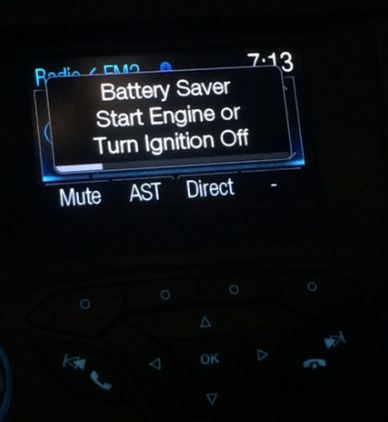
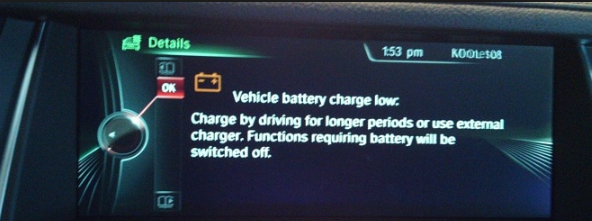
New cars meron na rin low batt warning. Upgrade ka na lang if you want that feature.
Sample message below, sana it's not too technical for you...
Ford's Battery Saver Mode - warning messages and chimes + all accessories will be forced to off.
BMW
ADD ko lang,
Regarding faulty stater,
If MT, use kadyot method to start.
If AT, use 2-wire method to start.
It's not the end of the world.
Lahat may risk, diskarte mo na lang, how you'll maintain your car...
-
 Tsikot Member Rank 2
- Join Date
- Jan 2009
- Posts
- 6,450
July 2nd, 2018 11:44 AM #68At most, a voltmeter can only work as a redundant system for the "battery not charging" idiot lamp. For the most part, when you turn off the ignition and switched to ACC, you can get a reading between 11.5 to 12.5 V. Getting an 11.5V reading doesn't mean that the engine will not start the next time or that the battery is bad. Conversely, getting a 12.x V also doesn't mean the battery is healthy. Factors such as other accessories running at the time of measurement, ACC circuit resistance and even voltmeter accuracy won't give you a proper reading. And even if everything is working ideally, it won't account for the real condition of the battery. Originally Posted by dhisky
I agree that the car battery is vital to a vehicle's operation. However, it is not critical that it can cause an accident or pose a danger to the vehicle's occupants if it suddenly goes flat. The car will keep going using it's own electrical power plant. As earlier stated, having it tested during the vehicle's PMS is more than enough precaution so it doesn't happen.
On the other hand, a fault in the charging system WILL eventually cause you to stall in the middle of the road or highway.... that's why it gets its own warning light. As soon as it lights up, you only have anywhere between several minutes to around an hour running on battery reserve, depending on how many accessories you have running (ie. Headlights, A/C, radio, etc.). It is basically just enough to look for a repair shop or a place to park safely to address the problem.
If you notice, most of the idiot lamps often translates to vehicle self-preservation and occupant safety.
Car manufacturers have tried putting oil replacement reminders based on mileage and engine operating time. But even if the feature was developed by the brightest minds, there's still tons of rants and complaints online about oil sludge forming even if the car's oil-change reminder hasn't lit up or is still indicating way below 100% oil life.
Tip: Don't rely too much on instrumentation and use it as an excuse to do a proper PMS.
-
 Tsikoteer
- Join Date
- Dec 2009
- Posts
- 3,006
July 2nd, 2018 12:47 PM #69Tip: dont rely too much on the casa as well, all cars have warranty period
To have an instrument as simple as a voltmeter to monitor a battery is a smart choice
To complement it with a portable jumpstart equipment is even wiser
No system is smarter than a human being which built the system
So read your manual, adapt good driving habits and youll save life and money in the long run
Knowledge is the key in thrifty car ownership
Sent from my GT-P3110 using Tsikot Forums mobile app
-
Verified Tsikot Member
- Join Date
- Jul 2017
- Posts
- 286
July 5th, 2018 08:12 PM #70ung car battery madali lang madischarge compared sa mga solar battery. main purpose lang kasi nyan for starting the engine. starting the engine needs a lot of charge from the car battery. ngaun kung frequent ka mag start and stop engine ng car mo without charging it manlang tendency madradrain battery mo. ung battery once na madrain malaki chance nyan madead cell kalaunan.
Sent from my RNE-L22 using Tapatalk
-
Verified Tsikot Member
- Join Date
- Feb 2017
- Posts
- 210
August 1st, 2018 12:27 PM #71Based on the replies in this thread I am still confused if it is more cost efficient to idle or to turn the engine on and off.

Can someone enligthen me and eliminate the components that doesn’t actually cause wear?
Battery - verified wear/strain/stress
Starter - I read that it is reliable but reality speaking is it going to wear fast?
Alternator - this charges the battery right and it can be remedied by using smart charger
Just in case the components below needs to be repaired or replace, is it going to cost a fortune?
Starter motor carbon brush - no idea
Solenoid contacts - no idea
Starter pinion gear - no idea
Ignition coil - no idea
-
Verified Tsikot Member
- Join Date
- May 2018
- Posts
- 611
August 11th, 2018 12:08 PM #72I actually agree with John Cadogan's viewpoints here:
The truth about engine stop start systems | Auto Expert John Cadogan | Australia - YouTube
On wear and tear, fast forward to 6:51 on the video, but better watch it in its entirety.
-
Tsikoteer
- Join Date
- Mar 2008
- Posts
- 54,619
August 11th, 2018 12:33 PM #73starter brushes are cheap. less than 500 (or is that 250?) bucks, last time i bought (years ago! heh heh). in ordinary use, well... i haven't yet replaced my brushes in over 12 years. but if you do, don't forget the labor charges. they vary... Originally Posted by danegoesonline
starter solenoids are more expensive. about 1K siguro, depending.
pinion gear... it's matibay. i wouldn't worry about it.
ignition coil? it's probably not affected by frequent offing and oning.
i used to turn my engine off during long stoplight waits. but i found out my battery died after a shorter period, something like just a few weeks after the warranty lapsed. short drives kasi ako, mostly. binawasan ko na ang stoplight offs.
-
Verified Tsikot Member
- Join Date
- Feb 2017
- Posts
- 210
August 11th, 2018 12:59 PM #74If I use my engine off/on 2-3x/day I will make sure that I will run the engine longer to charge the battery enough.
For starter, I think it will not wear that fast but just incase I’ll save for a new starter.
Nonetheless, experience will be my greatest teacher. I hope after a couple of years when I back read this thread I won’t be disappointed.
-
Tsikot Member
- Join Date
- Aug 2018
- Posts
- 2
August 11th, 2018 01:07 PM #75Another question related to battery. Coding ako yesterday so kinailangan ko magstay sa office ng matagal. I accidentally left the parklight on po for about 16hrs. My battery was not drained pero may chance po bang sandali ko na lang magagamit yung battery? Hyundai Accent 2016 model po.
Thank you!
-
Verified Tsikot Member
- Join Date
- Feb 2014
- Posts
- 2,773
August 11th, 2018 01:15 PM #76 Originally Posted by Catcavill
i keep all my battery receipts so i could track battery lifetime
there was one time i had to go abroad for 2 months so i just left the car and no one started it for 2 months. needless to say it got overdischarged
guess what, that particular battery lived just as long as the others. so apparently there's another failure mode that kills the battery faster than sulfation from overdischarging would
-
Verified Tsikot Member
- Join Date
- Aug 2018
- Posts
- 17
August 12th, 2018 01:33 PM #77Ok lng yan... battery and starter lng mabilis masisira sau Originally Posted by danegoesonline
-
Tsikoteer
- Join Date
- Nov 2009
- Posts
- 1,756
August 22nd, 2018 11:46 AM #78better says,
5-mins or less - dont off the engine. (sayang yung mga wear & tear lalo sa engine)
6-10-mins - better off the engine lalo na kung madalas mangyari (save more fuel)
more than 10-mins - Absolutely off the engine (almost a liter na ang consumption nyan)
-
Verified Tsikot Member
- Join Date
- Sep 2018
- Posts
- 5
September 14th, 2018 08:34 PM #79I would not recommend you doing the stop/start method specially if you are using a small or weak battery.
Battery
- will wear faster as it does not get charged properply since you keep on using its reserve charge and cranking amps
Starter
- would wear out faster since you are burning up the windings faster.
- you are also over working the bendix drive ad the starter solenoid
On board electronics
- since you mentioned that you are a grab driver means you are using a new car... with lots of electronics and sensors. Weakening the battery may cause loss of current in your electrical system causing failures.
My simple advise would be to just lower your a/c setting to a good not to hot temp to lessen fuel consumption and drive very mildly. It will also help leghthen the life of your compressor, your engine, and your wallet.
-
 Tsikoteer
- Join Date
- Oct 2012
- Posts
- 27,624
September 14th, 2018 08:49 PM #80battery.... is warranted naman. motolite Originally Posted by Iskokikoy
starter... wear and tear.... windings won't burnt out that fast. solenoids are cheap
electronics have protection circuits... any electronics failure recently?
Sent from my SM-N960F using Tapatalk
 Originally Posted by oj88

 Reply With Quote
