
SR-71 Blackbird display during a recent visit to Lackland AFB, TX.


The Largest Car Forum in the Philippines
- Forums
- Discussions
- Events
- Community
Results 241 to 260 of 279
-
 Tsikoteer

- Join Date
- Jan 2006
- Posts
- 12,398
-
 FXT
FXT
- Join Date
- Dec 2005
- Posts
- 2,421
June 12th, 2006 08:09 AM #242iba nga ata ang definition natin sa magazine-fed. sa akin kahit na internal yung magazine (clip), magazine-fed pa rin. tsaka wag kang matakot, that was 15 years ago (and never looked back), i probably won't know what to do with a rifle nowadays. Originally Posted by flagg

i think you're right about sir badkuk's inquiry, mali nga ata pagkaintindi ko. anyway, the main reason why mas accurate ang bolt-action, kasi walang recoil, mas stable as you said. as for gas-operated sniper rifles, i think the M25 is one of them.
-
 Social Dementia
- Join Date
- Sep 2003
- Posts
- 25,189
-
Tsikoteer
- Join Date
- Jan 2006
- Posts
- 12,398
June 12th, 2006 03:15 PM #244As far as I know, they're in transition to the new cammies. The Marines have already done it with their own design. The AF will probably go with whatever the Army decides on.
-
Tsikot Member Rank 4
- Join Date
- Oct 2002
- Posts
- 1,842
June 12th, 2006 05:09 PM #245
Have you guys played Heroes of the Pacific in PS2?
Very nice game if you guys love the stories of WWII
I love using the P38 on bombing runs
-
Tsikoteer
- Join Date
- Jan 2006
- Posts
- 12,398
June 12th, 2006 10:37 PM #246It's a P-38 Lightning although I'm not sure which model. But, the red trim around the roundels would indicate a paint scheme of circa 1943 (P-38H or P-38J model). Speaking of games, my favorite pc games are my WW2 flight sims:

Last edited by Jun aka Pekto; June 12th, 2006 at 10:51 PM.
-
Tsikoteer
- Join Date
- Jan 2006
- Posts
- 12,398
June 12th, 2006 11:05 PM #247One good reason why I still play MS Combat Flight Simulator 2 is the sheer customization. The F6F Hellcat above is customized with the sharkmouth from VF-27 of USS Princeton (CVL-23 which was sunk during the Battle of Leyte Gulf, October 1944).
With CFS2, I can change my plane in mid-flight (on quick missions). Here, I substituted an F4U Corsair (VF-17 "Jolly Rogers") for the Hellcat.

Another customization is the N1K2 Kawanishi Shiden-Kai. It's in the markings of the 343rd Kokutai which composed of many of Japan's remaining naval aces late in WW2:

Last edited by Jun aka Pekto; June 12th, 2006 at 11:20 PM.
-
Tsikoteer
- Join Date
- Jan 2006
- Posts
- 12,398
June 13th, 2006 01:01 AM #248I knew I saw the paint scheme of that P-38 somewhere. Yup. I collect model kit box art too. This one's an old Otaki 1/48 scale Ki-61 Hien. 1943 would also be the year the Ki-61 started tangling with P-38's in large numbers:

Last edited by Jun aka Pekto; June 13th, 2006 at 01:04 AM.
-
 Spoiled Rotten
- Join Date
- Feb 2006
- Posts
- 3,177
June 13th, 2006 06:11 AM #249I remember reading somewhere that the P38 did very well in the Pacific cuz it was lots faster than the Japanese planes (though these were more maneouvrable).
In the European theater, it was pulled out cuz the German planes, especially the FW190s, were just as fast and more maneouvrable pa.
My fave WW2 plane:

Focke-Wulf 190 This is marked according to my fave unit JG-26 Jagdgeschwader 26. JG26 planes are identified by their yellow cowlings. This particular plane # 13 belonged to "Pips" Priller - 101 kills.
Another feature I like: BMW-801 model radial engine.Last edited by Flagg; June 13th, 2006 at 06:14 AM.
-
Tsikoteer
- Join Date
- Jan 2006
- Posts
- 12,398
June 13th, 2006 07:10 AM #250The early models were cursed by compressibility problems and the plane was complicated to fly, especially for newbies. But there were instances where P-38 pilots outmaneuvered (and shot down) even FW-190's. It wasn't really pulled out of the ETO. P-47's and P-38's were diverted more and more to ground attack while P-51's took up the long-range escort and air superiority duties. Originally Posted by flagg
Anyway some accounts and little known info about P-38's and quite good reading:
P38 Accounts
The P-38 is a favorite because my dad actually witnessed a dogfight between Zeros and P-38's over Manila Bay (while he was catching fish) where the P-38 ace Macdonald may have been present.
Also some of the most savage air battles between P-38's and Japanese aircraft took place in the Philippines starting with the Leyte landings.....Last edited by Jun aka Pekto; June 13th, 2006 at 07:17 AM.
-
Tsikoteer
- Join Date
- Jan 2006
- Posts
- 12,398
June 13th, 2006 07:32 AM #251Some notable excerpts from "P-38 Accounts" (in response to Adolf Galland badmouthing the P-38 in his memoirs):
1) Adolf Galland has never been accused of being the standard of objective
writing, or public speaking. A fine pilot and tactician, Galland frequent wrote
and spoke about things, of which, he had minimal firsthand knowledge and
understanding. About 15 years ago he got into a discussion with several
former P-38 pilots about his comments in the First and the Last. Pressed,
he admitted that his comments were not so much his own, but those of
some of his pilots. He also admitted that a well flown P-38 was a very
dangerous foe. One of the P-38 pilots involved in this discussion is still alive
today and a personal friend.
2) Any P-38 pilot was eager to encounter an Me 110. They were very easy
kills for the Lightning.
3) From the P-38J-25-LO on, the Lightning was likely the finest fighter package
flying in 1944. It offered versatility unmatched by any other fighter in any
theater, flown by any nation. There was virtually no mission beyond its means.
4) In terms of range, a properly flown P-38J or L (this means using the correct
power and propeller settings) out-ranged the P-51D by as much as 200 miles.
5) The Japanese considered the P-38 to be a far greater adversary than the
P-47 of the P-51.
6) The TRUE maximum speed of a P-38L was not the much published 414 mph.
This reflects Military Power, not War Emergency Power. In WEP, a clean P-38L
could exceed 440 mph. The P-38J with its lower rated engines could pull speeds
in the low to mid 420's.
7) At corner speed, any P-38 model could EASILY out-turn any fighter in the
Luftwaffe inventory.
8) The P-38L could out-climb the P-51D and Fw-190D by better than 30%.
9) Most Luftwaffe pilots felt that it was suicide to make a head-on attack
against a P-38. The P-38's four .50 caliber MGs and one 20mm cannon
concentrated in a 30 inch circle was devestating.
10) The P-38 was the only fighter in the ETO that could be flown into an
accelerated stall at 1,000 ft. without fear of torque-rolling into an
unrecoverable attitude. Nothing in the ETO could stay with a P-38 down
in the tree tops. Absolutely nothing.
I should give 10 reasons why the P-38 a problematic fighter, to balance the
scales a bit.
1) Early models had only one generator. Suffer a failure of the associated
engine and you were in deep trouble, especially at high altitudes where the
battery had been cold-soaked and produced inadequate power. Without power,
it became impossible to control the Curtiss Electric propellers, which would go
into feather.
2) Models prior to the P-38L-5-LO had terrible heaters and defrosters.
3) Models prior to the P-38J-25-LO lacked dive flaps and were dangerous
to dive at speeds beyond Mach .68. This allowed German pilots to escape
in a steep dive and P-38 pilots were reluctant to follow.
4) At high altitudes, P-38s prior to the P-38L-1-LO tended to suffer engine
failures. This was related to a poorly designed intake manifold, intercooler
over-efficiency and poorly formulated avgas.
5) The lack of automatic engine controls in early models.
6) Poor roll response in early P-38's. Roll rate in later models with
hydraulically boosted ailerons was outstanding.
7) The P-38 required nearly twice the man-hours to maintain the fighter.
It also consumed 80% more fuel than a P-51D for a given distance.
8) Access to engines and systems was poor due to the tight fitting
cowling and crowded booms.
9) Unreliable turbocharger regulators in early models.
10) Poor rear vision, especially below .
The P-38 was not without serious problems. However, as a combat
plane it was among the very best. Galland was wrong, and he knew it.
Perhaps there was something about a big twin out-flying his 109 that
caused him to refuse to acknowledge what he KNEW to be true. Of
course, that is just speculation. Nonetheless, the fact that Galland could
not stand up to the challange of the P-38 pilots indicates that he was
being less than honest in his memiors. Another fact, that he himself barely
escaped with his scalp from a lone P-38L, should settle any arguments.
That P-38, by the way, had to break off due to fuel limits being exceeded.
The U.S. pilot was from the 364th FG. Galland was flying a Fw-190D.
Galland avoided discussing this event unless pressed hard.
My regards,
C.C. JordanLast edited by Jun aka Pekto; June 13th, 2006 at 07:38 AM.
-
 Tsikot Member Rank 3
- Join Date
- Sep 2005
- Posts
- 1,218
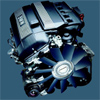
June 13th, 2006 09:15 AM #252Ayaw mo ng ME-109 with its Daimler-Benz engine? Originally Posted by flagg
I've heard the same story from my old man and neighbors (the old ones) from Navotas ... though nobody was able to ID the Japanese types. Originally Posted by Jun aka Pekto
Galland also slandered Belgian pilots he encountered during the Blitzkrieg: Years ago I've read a letter in an aviation magazine (Air Classics) disputing Luftwaffe aces' scores, and in particular Galland's. I've submitted a copy of the letter to the author of one of the early websites dedicated to Adolf Galland. In dispute is arguably the most important kill for a fighter pilot, his first, and in Galland's case his 2nd, too. The writer, a WWI Belgian ace, raised valid points.
-
 Tsikot Member Rank 3
- Join Date
- Sep 2005
- Posts
- 582
June 14th, 2006 03:49 PM #253Interesting discussions about the Philippine military:
Ideal new rifle for the Philippine Army
Scout Ranger snipers
Ideal multirole fighter for the PAF
Dream ships for the PN
Philippine Marine snipers
-
Tsikoteer
- Join Date
- Jan 2006
- Posts
- 12,398
June 15th, 2006 01:11 AM #254I forgot all about the Philippine Defense Forces Forum. They were down for a long time last year. But, I still have an account there.
I'd probably stick with missile-armed Fast Attack Craft for the PN. Their small size makes them easily dispersible among the Philippine islands. Anything bigger is just a target waiting to be shot at. One thing I'd like a FAC to have is hydrofoil capability for even more speed.
Aircraft is a tough choice. For COIN, some Argentine Pucaras would be nice. For Air Defense, it's a coin toss between any number of smaller multirole aircraft such as the Gripen and Rafale.
Edit: looks like they totally revamped the site....Last edited by Jun aka Pekto; June 15th, 2006 at 01:18 AM.
-
Spoiled Rotten
- Join Date
- Feb 2006
- Posts
- 3,177
June 15th, 2006 04:29 AM #255My dad, being the usual uzisero Pinoy that he is (and I proudly am Originally Posted by Jun aka Pekto
), said they used to climb up to the roof to watch the dogfights. They were nice to watch daw cuz, aside from the excitement, all the tracers flying around were like fireworks. Also, what made it even better for him was to watch all them Zeros being shot down.
He's seen lotsa terrible things then, but some great things, too. Here's one of em:
When they were fleeing to Laguna, my dad saw a convoy of 3 USAFFE trucks on the highway. Unfortunately for them, a Japanese plane spotted them, too. Lucky for the USAFFE boys, they saw the plane come in for a strafing run and they all took cover... except for one crazy American with a BAR (I assume it was a BAR cuz my dad said it was a machinegun with no belt).
You guessed it, he climbed on a truck's roof and sprayed that plane. The plane got him... but he got the plane, too. It crashed and blew up in a field, just like the movies daw. Amazing, you can't help but admire the guy.
The trucks were a mess, and our Buick got hit, too. Buti nalang running board lang... 3 hits. It's times like those you know God is around.
Back to the planes:
I'm not saying the P38 was a bad plane, just that it was a little outclassed for air superiority hence the ground attack role in Europe. One very distinct advantage it did share with the Mosquito was its great durability cuz of the two engines.
The Me110 was a large twin-engine night-fighter... more for hunting bombers than actual dogfighting.
Sir straight, Benz yung Bf109 e... ehehe.
-
Spoiled Rotten
- Join Date
- Feb 2006
- Posts
- 3,177
June 15th, 2006 04:38 AM #256Re our AFP:
I think we should first go back to basics....
1.) Bullets and shells that actually fire.
2.) Combat boots & maybe 3 sets of uniforms.
3.) Living quarters in the Camps.
4.) Decent Medevac (no prob kung UH-1, basta gumagana).
5.) Sufficient field supplies.
6.) Decent field communications.
7.) Most important: stop partnering rebels/bandits in moneymaking schemes.
Sobrang basic, but sorely lacking.
-
Spoiled Rotten
- Join Date
- Feb 2006
- Posts
- 3,177
June 15th, 2006 04:59 AM #257I think this was the incident that led to him being grounded for the rest of the war. After all, it wouldn't do to have the boss of Fighter Command shot down... Originally Posted by Jun aka Pekto
Dunno much about Galland's comments regarding P38s. AFAIK, what made it hard to kill was it's durability and speed. However, since medyo matched speed nila ng FW190, medyo talo yung P38 in fancy maneuvers.
Of course, the Luftwaffe kill counts should be taken with a grain of salt... (ex. the Eastern Front ace with a whopping 250+ kills) pero I would think na di naman ganun ka-layo with the actual count. There were, of course, a lot more Allied flyers than Luftwaffe flyers which can account for some of the numerous kills. I also think the kill-counts included bombers.
Btw, Priller and a wingman were the only ones in JG26 who could scramble for D-day. Because of the fighter cover, all they could do was do one strafing run on the beach and head for home. Kawawa, ubos na ubos na sila noon. Priller himself would die in a Me262 jetfighter, shot down by a P51.
-
Tsikoteer
- Join Date
- Jan 2006
- Posts
- 12,398
June 15th, 2006 06:38 AM #258Erich Hartmann had 362 kills (and the world aces of aces) with the vast majority made at the Eastern Front. I don't think the Luftwaffe kill tallies are so far-fetched. The Allied powers normally rotated their aces regularly out of the combat zone for rest and to pass on their knowledge to fledgling pilots. The Luftwaffe normally fought on the front lines until they were wounded or killed. Plus, considering the initially poor caliber of Russian pilots and aircraft, it's not hard to imagine huge air to air scores by the Luftwaffe. Originally Posted by flagg
Also, the Luftwaffe had the most stringent methods for determining a kill. I'm more likely to believe Luftwaffe accounts. Where I digress with them are in their subjective opinions like Galland's view of the P-38 in his memoirs.
I think the Japanese are the exact opposite. I'm more likely to believe they tended to underestimate their kill tallies (never mind what the Allies said) because of their philosphy of the unit first versus individual prowess. They tended to discourage keeping a record of individual kills because it detracted from their philosophy.
A lot of credit would go to the successful targetting of the Nazi economic infrastructure which was paid in blood by huge numbers of bomber crews who took the fight to Germany.Btw, Priller and a wingman were the only ones in JG26 who could scramble for D-day. Because of the fighter cover, all they could do was do one strafing run on the beach and head for home. Kawawa, ubos na ubos na sila noon. Priller himself would die in a Me262 jetfighter, shot down by a P51.
Anyway, my favorite WW2 aircraft is the F6F Hellcat:


-
Tsikoteer
- Join Date
- Jan 2006
- Posts
- 12,398
June 15th, 2006 07:14 AM #259They still gave as good as they got, having a better than a 1:1 kill ratio against ETO axis aircraft. It was mostly just the 8th Air Force P-38s who experienced big problems with the Lightning during long-range bomber excort missions. The pilots in the Mediterranean, Pacific, and C-B-I Theaters seems to have done quite well with their P-38's. Originally Posted by flagg
Also as mentioned in the link I provided earlier, both the Me-110 and dH Mosquito aren't build to take the same stress the P-38 can during dogfights. The P-38 would have a field day against both aircraft. I think it's main fault were the mechanical faults of early models and the need for a really experienced pilot to fly it to its fullest similar to the B-26 Marauder and the F4U Corsair. By the time the late model P-38L arrived, all the faults have been ironed out and those pilots flying them were more experienced as Galland found out when that lone P-38L almost took him out....
A Luftwaffe ace with over 100 kills in a FW-190D "Dora" almost get killed by a lone eager USAAF pilot in a P-38L and who's probably not even an ace but knows his mount really well. That says a lot.Last edited by Jun aka Pekto; June 15th, 2006 at 07:19 AM.
-
FXT
- Join Date
- Dec 2005
- Posts
- 2,421
June 15th, 2006 08:25 AM #260you're not alone on that one, many consider it to be the best aircraft of WWII. but i like the P51D Mustangs. i did a full-blown report on them for our history class in high high school, with slides and everything. it was hilarious...it was my first year of high school here fresh of the boat from the Philippines and i had to do the audio part of the report. well, it was either me with my thick ilocano accent or my chinese classmate who barely spoke a word of english Originally Posted by Jun aka Pekto
. turned out good though, i think we got a B on it.


 Reply With Quote
 Originally Posted by flagg

![Military Hardware Thread [Split]](https://play.google.com/intl/en_us/badges/images/generic/en_badge_web_generic.png "Google Play")