
And that problem cannot be solved by an electric powered jeepney nor by Greenpeace nor by having a 100% pinoy car.Originally Posted by aejhayl17


The Largest Car Forum in the Philippines
- Forums
- Discussions
- Events
- Community
Results 141 to 160 of 1193
-

 Tsikoteer

- Join Date
- Oct 2002
- Posts
- 29,354
September 18th, 2009 12:09 AM #141
-
Verified Tsikot Member
- Join Date
- Mar 2008
- Posts
- 263
September 18th, 2009 10:26 AM #142It can help in the giving of the solution given the proper perspective. Originally Posted by ghosthunter
Perhaps concentration should be made on creating our own Pinoy utility vehicles. This is not as subject to prestiger buying and colonial mentality.
Buyers of utility vehicles bases their choice on the dependability and miximized functions of the vehicle so as to gain more income for its use. This is the basic reason why the jeepney has lasted for decades. Problem with trying to change the design of the ugly thing is that the ugliness has practically become an icon of sorts that Pinoys picture with the word jeep/jeepney.
The variation of trying to update it with the use of the fronts of toyotas and other name brands is still a monstrosity.
Perhaps DPROX SUV can be accepted if the look is retained but the inside is remodeled into that of the inside of a jeepney... Then we can create jobs here.
-
 SobrangBilisMagType!
- Join Date
- Aug 2004
- Posts
- 22,702
September 18th, 2009 11:16 AM #143DPROX's SUV has a lot of angles and joins that require lots of labor. It's good work for a grounds-up design, but not something that can easily see mass production.
The problems that needs to be solved with the old Jeepney design are ones of weight, versatility and simplicity of manufacture. The hand-beaten nature of the panels is not such a huge problem given low local labor rates, but it's labor-intensive... and doesn't lend itself well to cutting corners.
One of the goals of the PhUV project was to find ways to simplify production and maximize cost-savings in the design. But without a unified design and engineering effort, we will all end up with halfway solutions like the MVPMAP effort, the Anfra effort and the open-source effort here on tsikot.
Ang pagbalik ng comeback...
-
 Tsikot Member Rank 4
- Join Date
- Nov 2005
- Posts
- 45,927
September 18th, 2009 12:14 PM #144if i'm in the market for a brand commercial/utility vehicle, my first choice would be...
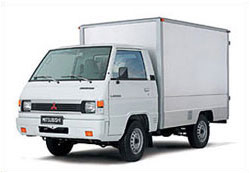

if i need something bigger, there's the Isuzu Elf or Mit. Canter
if i haven't got the budget for a brand new one, the Japan surplus importers will definitely have something i can afford
and there's also the option of brand new China commercial/utility vehicles
an all-pinoy commercial/utility vehicle will face very tough competition
-
Tsikoteer
- Join Date
- Oct 2002
- Posts
- 29,354
September 18th, 2009 12:31 PM #145Local companies will find it difficult to justify to buy a "pinoy" commercial vehicle because of long term maintenance issues. Especially when faced with the track record of companies like ISUZU and Mitsubishi in this market.
-
SobrangBilisMagType!
- Join Date
- Aug 2004
- Posts
- 22,702
September 18th, 2009 02:46 PM #146That's why you have to use transplanted technology, at least, at first. Using "Isuzu" or "Mitsubishi" parts goes a long way to assuring the public that spares will be easily had.
The most you can build here is the body. The one problem is the cost-economics factor... to build a body at competitive cost with the Chinese, you have to produce at least 40,000 units from the same die. Finding that kind of volume locally, for a start-up, is damn difficult. It's doable in China... but here, we don't even have the volume to support sales of 40,000 L300 FBs.
Ang pagbalik ng comeback...
-
Verified Tsikot Member
- Join Date
- Mar 2008
- Posts
- 263
September 19th, 2009 04:38 AM #147 Originally Posted by niky
Perhaps we should have some sort of paradigm shift here in looking at what the utility vehicle ought to be.
about two years before the coke tri wheelers delivery vehicle came out I was trying to put together enough funds to come up with such a tri-wheeler utility vehicle that I was aiming to market to certain organizations that I knew needed such cost efficient vehicles in terms of maintenance cost and acquisition.
Ourt cost estimates then was a production cost of 25 - 50 k per unit depending on add-ons for certain usages and our selling price would be around 50 - 65 k.
In Katmandu, the tri-wheeler six passenger electric jeepneys was a hit.
It is simple to build and the overhead cost can be minimixed with an innovative organizational structure.
-
SobrangBilisMagType!
- Join Date
- Aug 2004
- Posts
- 22,702
September 19th, 2009 11:47 AM #148Whoever managed to import those kits is on to a good thing. I'm surprised it took so long for them to go commercial.
That's the right way to go for electrics. Smaller, lighter vehicles require smaller battery packs, requiring much less in overhead costs.
Ang pagbalik ng comeback...
-
Tsikoteer
- Join Date
- Oct 2002
- Posts
- 29,354
September 19th, 2009 12:48 PM #149Maybe we should just avoid "radical" and "neo-world" ideas what a UV should be and simply go back to basics like: "necessity". Originally Posted by kitsons
-
Verified Tsikot Member
- Join Date
- Mar 2008
- Posts
- 263
September 21st, 2009 09:21 AM #150Except for the power chain, all parts of a tri-wheeler we can actually have built here. Originally Posted by niky
The tri-wheeler is actually a necessity since it is the cheapest mode of transportation used either for hauling people or goods in the tertiary roads here.
-
 Tsikot Member Rank 3
- Join Date
- Jun 2007
- Posts
- 2,857
September 29th, 2009 11:41 PM #151Indeed. Originally Posted by kitsons
Especially in small rural roads (former dirt roads or iskinita) in the provinces.
-
BANNED BANNED BANNED
- Join Date
- Dec 2006
- Posts
- 379
October 14th, 2009 12:59 PM #152We actually customize. and the design came from DLSU Originally Posted by hein

-
BANNED BANNED BANNED
- Join Date
- Dec 2006
- Posts
- 379
October 14th, 2009 01:06 PM #153 Originally Posted by marg
Hi Marg. We customized this for De La Salle Dasma. They wanted the old look so as to still promote the Iconic Jeepney design.
We made different designs for the congress and bangko central. Thanks for the comment.
-
BANNED BANNED BANNED
- Join Date
- Dec 2006
- Posts
- 379
October 14th, 2009 01:09 PM #154pls call John Marasigan at o9228395770 he is the Sales manager for PHUV the seller of the ejeepneys
-
Tsikot Member Rank 3
- Join Date
- Jun 2007
- Posts
- 2,857
October 15th, 2009 08:00 AM #155Good news that government agencies are now buying the e-jeepneys... Originally Posted by romski123
Why not offer it in the industrial estates in Cavite or in CALABARZON?(Gateway, FCIE, Dai-ichi, CEZ. These are huge industrial export processing zones...) or in other La Salle System Schools with huge campuses aside from La Salle-Dasmarinas i.e. La Salle-Canlubang (largest), La Salle Lipa...Last edited by jpdm; October 15th, 2009 at 08:06 AM.
-
Verified Tsikot Member
- Join Date
- Mar 2008
- Posts
- 263
October 15th, 2009 02:32 PM #156 Originally Posted by jpdm
Problem with the e-jeepney is that electricity and maintenance cost with the batteries is rather expensive if no support electricity generating component.
-
 enthusiast
- Join Date
- Mar 2007
- Posts
- 855
October 15th, 2009 03:25 PM #157Hi Kitsons, Originally Posted by kitsons
It's not really a problem... if for example, the batteries are old or if the vehicle will be used for extended ranges... all they need to do is carry or integrate a small portable generator to charge the batteries.
This basically makes the e-jeep a Hybrid per se. which literally makes it no different in essence to a Prius.
Last edited by ehnriko; October 15th, 2009 at 03:30 PM.

-
 Tsikot Member Rank 2
- Join Date
- Jan 2007
- Posts
- 3,438
October 15th, 2009 05:00 PM #158Adding an engine and a generator to an electric vehicle makes it a series hybrid. The Prius is a parallel hybrid. Originally Posted by ehnriko
In series hybrids the engine is not mechanically connected to the wheels. It is simpler and cheaper than a parallel hybrid but not as efficient at high speeds.
In parallel hybrids the engine and electric motor are both connected to the wheels. It is more complicated and more expensive.
The series hybrid configuration is good enough for the low speed, stop-and-go traffic the jeepney goes through. The hybrid electric jeepney can have a longer range than the e-jeepney and can replace all the normal jeepneys in the city because of better fuel economy. Additional bonus: air conditioning is possible.Last edited by donbuggy; October 15th, 2009 at 05:07 PM.
-
Tsikoteer
- Join Date
- Oct 2002
- Posts
- 29,354
October 15th, 2009 05:21 PM #159Yeah right. Originally Posted by ehnriko
 A hybrid in concept but one that spews out smoke and other hydrocarbon pollutants like your worst nightmare.
A hybrid is not simply throwing together parts and hoping it works.
-
enthusiast
- Join Date
- Mar 2007
- Posts
- 855
October 15th, 2009 05:40 PM #160Lol, of course it will not be green anymore with this normal generator. Originally Posted by ghosthunter
There are many ways to make this gen set green. GEET for one, hydroxy on the other... or combining them both.
Any small gen set can become an ultra low emission engine with the right set-up. GEET acts like a vapor carb - which basically induces fuel more efficiently than the normal carburetor type... Do they have EFi gen sets also?... if there is, then hydroxy on demand with GEET will keep this gen set green.
 Originally Posted by aejhayl17


 Reply With Quote
