
Short of declaring martial law or going for a dictatorship government (or a nuke bomb exploding killing all senators, congressmen, the first family, etc), I don't see enough change would happen that would matter.Originally Posted by jpdm

The Filipino as a people is so unfocused on anything that matters. They would give more attention to Willie's WOWWOWIE than with investigations of corruption. This alone is a clear message to all politicians that they can steal and do whatever they want and they can get away with it.

The Largest Car Forum in the Philippines
- Forums
- Discussions
- Events
- Community
Results 161 to 180 of 288
-

 Tsikoteer

- Join Date
- Oct 2002
- Posts
- 29,354
September 26th, 2009 05:50 PM #161
-
BANNER BANNER BANNER
- Join Date
- Jun 2008
- Posts
- 1,439
September 26th, 2009 05:51 PM #162I have a suggestion!
People should learn how to fall in line. That's something many kids never learned from their parents. And the lack of that ethic is very evident on the driving habits of PUJ drivers! It's really a simple concept, but in it are all the virtues that all people will ever need. I bet we'd be number 1 again in Asia if we fall in line whenever we have to.
-
 Tsikot Member Rank 3
- Join Date
- Jun 2007
- Posts
- 2,857
September 26th, 2009 06:41 PM #163IMHO, here my thoughts. Originally Posted by ghosthunter
I think your idea of killing all politicians and their families is a little bit far out but anyway, probably, in my opinion, can indeed help solve our problem because they are the main stumbling block to our progress.
As for the Filipino as a people is so unfocused on anything that matters is partly true.
Let us start first with demographics. Alot of Pinoys (absolutely poor)who are only after survival and nothing more (these are the Pinoys that constitute 30% of our population).The 10% constitute the richest Pinoys and some experts say control 60 percent of our economy. The rest are middle class that includes about 12 million (multiplied by 4 or 5 family members) OFW families.
So I guess, alot from all social classes are not focus on things that matters. For, instance the poor, after earning little will spend the money on vices. The midlle class ( a "fomer poor" OFW)used all his earnings when he went home for good for a condo unit, LCD TV, laptop and a luxury car after his contract expired. But without work after coming home, he has to sell all his belongings to apply again for abroad. And a rich guy (like that Lopez heir from Iloilo) spent all his inheritance on women and liquor.
But Im uncertain as to who pay more attention to wowowee than with investigations of corruption.
But Im sure those who join rallies denouncing corruption are those who dont watch wowowee.
My opinion is most Pinoys hate corruption but can they really do something about it? Especially, if the most powerful person in the Philippines will come up with an E.O. prohibiting government officials from testifying? Witnesses threatened with lawsuits or (like the witness in the Jocjoc Bolante case) are killed in mysterious circumstances?
Pinoys want to survive and want to have a good life. Problem is we excel individually but our nation is bled dry by vampires called Pinoy politicians.
Now, I guess, maybe, I will agree on your solution.Last edited by jpdm; September 26th, 2009 at 06:54 PM.
-
Tsikot Member Rank 3
- Join Date
- Jun 2007
- Posts
- 2,857
-
 {Keepin' it Stock}
- Join Date
- Feb 2007
- Posts
- 1,975
September 26th, 2009 07:39 PM #165may I sirs....
some might say there is still a chance to improve transportation for the better but i say there's none...unless we change the whole mode of transportation(i.e jeepney) but who will?....those politicians?...politics in our country is like a disease that has no cure. Our country is like a body(infected with the disease) just waiting to decompose and die...
Its more like saying renew the whole generation/population of the "pinoys"..just like in the times of Noah..(if there's somebody here believe this)but I do...
anyhow, obeying those laws on the road are still in my everyday habit..at least for myself...i will still show to my children how i obey traffic rules, as simple as it is, i know i'm already teaching them the basics on the road...aside from teaching(inside our home)them how important it is to obey and follow rules...
even without hope...
-
Tsikot Member Rank 3
- Join Date
- Jun 2007
- Posts
- 2,857
September 26th, 2009 08:46 PM #166There is hope. Originally Posted by prince777
The following are just some of the examples of how the Philippine government (despite all the corruption)is trying to improve our transport system.

LRT 1: Baclaran to Monumento (with new trains)
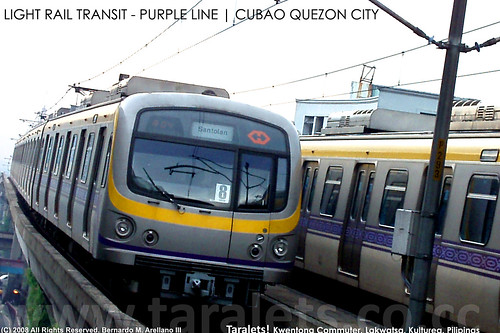
LRT 2: Santolan to Recto (Hyundai Rotem Trains)
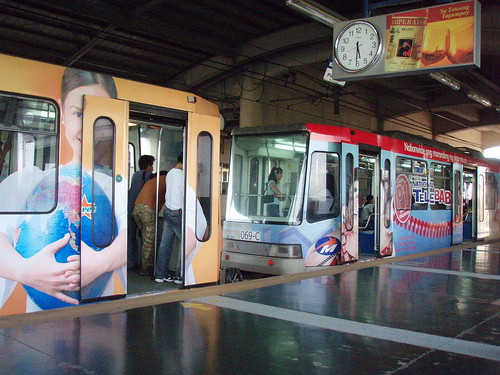
MRT with Czech-made trains. There are plans to buy more Czech- made trains next year.

MRT-Edsa (with pretty passengers).
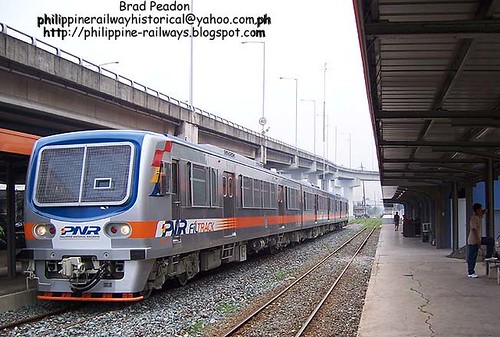
PNR (Tutuban-Alabang). More trains just recently arrived from Hyundai Rotem of Korea. Old trains (with GE locomotives and local Sta Rosa bus builders help)are now being rehabilitated.
The Bicol Express will be revived very soon. A Mindanao Railway is in the works.
With all these existing projects, the days of the jeepneys in major roads will be a thing of the past.
Eventually, they will just ply secondary routes in Manila and in the provinces.
There is always hope for this country.Last edited by jpdm; September 26th, 2009 at 09:03 PM.
-
 Tsikot Member Rank 9
- Join Date
- Feb 2008
- Posts
- 1,636
September 26th, 2009 08:47 PM #167There is hope Originally Posted by prince777
if we correctly choose our next leader. it's not too late to make a change.
anyway, just as i am suggesting few pages back, the government should handle the WHOLE transport sector! a dictatorial government would probably help here to eliminate the existing transport sector. then the existing drivers may be hired again in the new transport system.
and also the corruption among the police including the traffic enforcers should be eliminated. they're the black sheep of the roads (of course aside from st*pid drivers)
-
Tsikot Member Rank 3
- Join Date
- Jun 2007
- Posts
- 2,857
September 26th, 2009 08:58 PM #168The days of jeepney in major Philippine cities are numbered....
The Taguig and Cebu governments are planning to put up (already in the works) a BRT (Bus Rapid Transit) System.
This BRT for the C-5 route ( Boni Global-Makati) and Metro Cebu might look like this:
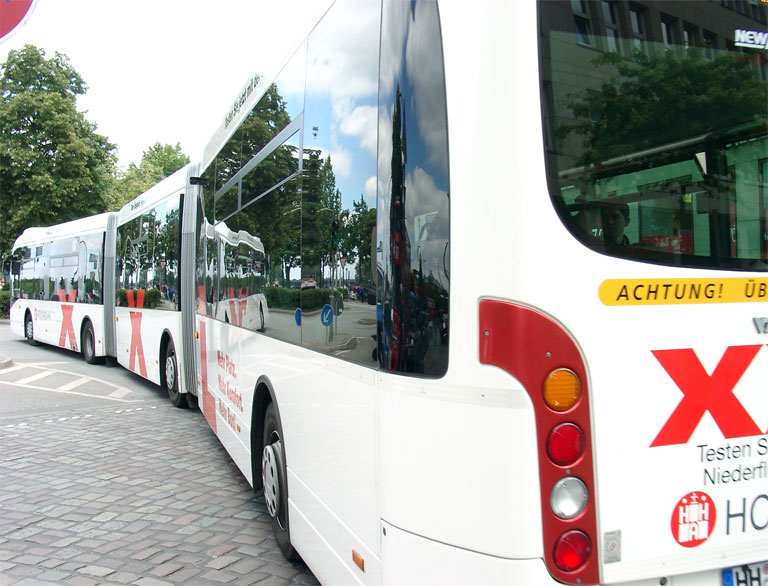
A BRT in Germany
Construction of the Northrail is on-going. Initially, the Caloocan-Malolos first will be opened. Then it will reach all the way to Clark in Pampanga. Hopefully, China, who provided the loans to Northrail Philippines will install this type of train:

This because the Philippine government was forced to pay China about close to 1 billion dollars in loans for the Northrail.
-
{Keepin' it Stock}
- Join Date
- Feb 2007
- Posts
- 1,975
September 26th, 2009 09:04 PM #169thanks sirs for the enlightment!
 ...that just me...
i'm pretty much aware of those developments in our transportation(even that slow) and it did make a change...at least for less.
i'm not being pssimistic though coz i still and will always remember that "while the sun is shining on the east everyday, there is hope!"....Really?
hope our future generation can tell us, that what we "hoped" was really fulfilled/happened...
-
 Dalek
Dalek
- Join Date
- Dec 2006
- Posts
- 17,314
September 26th, 2009 10:56 PM #170Ang aliw. May thread palang ganito. It just so happened that I chose the prevalence of jeepneys in the Philippines as subject for my term paper.

I think that there is a problem when we see jeepneys as a sign of "ingenuity" and "culture/tradition" just because we were able to make something out of the scrap trucks from WWII. I mean, how can we call it ingenious if it uses 4BA1 Isuzu engines from way back in the 80s? What exactly have we done new to the jeepney design aside from add rear seats and multiply its wheelbase by 5.
I know there is a need for mass public transportation that simply can't be answered by train systems (for example, Pasig-EDSA jeeps. imagine mo may tren dun). But I think that we should slowly progress to modernize the jeepney. The government has been too lenient with everything jeepney: emissions rules, safety requirements, even violations of jeepney drivers.
It saddens me how much of an example of how sick our country is the jeepney has become.
-
Tsikoteer
- Join Date
- Oct 2002
- Posts
- 29,354
September 26th, 2009 11:32 PM #171 Originally Posted by jut703
Actually, Metro Manila had a good transport system back before WW2 with the tram system ... A little historical background...
http://www.absoluteastronomy.com/top...o#encyclopedia
The Manila Electric Company , also known as MERALCO, is the Philippines' largest distributor of electrical power. The word MERALCO, is an acronym for Manila Electric Railroad And Light COmpany, which was the company's original name from 1903 to 1919. MERALCO is the Metro Manila's only electric power distributor and holds the power distribution franchise for some 22 cities and 89 municipalities, including the whole of Metro Manila and Mega Manila region La Electricista
In 1903, about 3,000 electric light customers and the city government with its streetlights were served by an electric company called La Electricista organized in 1892.
La Electricista had built a central power plant on Calle San Sebastian (now R. Hidalgo). On January 17, 1895, its streetlights were turned on for the first time.
American Occupation and Pre-War History
On October 20, 1902, the Second Philippine Commission began accepting bids to operate Manila's electric tramway, and by extension, providing electricity to the city and its suburbs. Detroit entrepreneur Charles M. Swift won the bidding by default as he was the sole bidder and on March 24, 1903, was granted the original basic franchise of Meralco.
In 1904, Meralco acquired both the Compañía de los Tranvías de Filipinas, a firm that operated public transportation and ran Manila's horse-drawn street railways, and added La Electricista. Construction on the electric tramway began that same year. In addition to acquiring La Electricista's Calle San Sebastian power plant, Meralco built its own steam generating plant on Isla Provisora which powered the streetcar system and eventually also the electric service. By 1906, Meralco's yearly power output capacity was around eight million kWh.
Public Transportation
Meralco built up a strong public transportation business in the decades leading up to World War II, building a 170-strong fleet of streetcars into the 1920s, before switching over to buses later in that decade.
The company operated a 52 mile tram transport from 1903 to the World War II. The equipment and tracks of the system was severely damaged during the war and had to be removed.


Manila streetcar, early 1900s

Calle Escolta de Manila
-
Dalek
- Join Date
- Dec 2006
- Posts
- 17,314
September 26th, 2009 11:39 PM #172I don't think trams are still feasible today with the high volume of passenger cars, reducing available road width to them would cause more traffic.

Tapos I think the tram system won't be able to accomodate the sheer volume of commuters. AFAIK they have less capacity than our LRT/MRT trains (which are bursting at the seams during rush hour, especially when coupled with poor management by the DOTC in terms of dispatching trains on time).
-
Tsikoteer
- Join Date
- Oct 2002
- Posts
- 29,354
September 26th, 2009 11:57 PM #173And here is another example of the short sightedness of the Filipinos today. Originally Posted by jut703
Today's traffic & transport mess was born out of the transport system we adopted at the end of WW2. If we would have adapted a different system then, the streets might not be as congested today, it would also mean a better impression for rail transport for the masses instead of the tired old trains we had for decades. It might also have meant we could have had LRT/MRT style railed transports much earlier than during the 1980s.
Anyway, a BRT (Bus Rapid Transit) system could have been much better instead of the current MRT. It would still use the same "rail-line" but without the actual rails. Instead it would be dedicated roadways for the BRT buses. Fare and ticketing would be the same. The difference is the density of buses can be adjusted to carry more people at peak times without massive cost of buying expensive trains.
Slide Show Review of BRT in China:
http://www.slideshare.net/EMBARQNetw...a-brief-review
-
Dalek
- Join Date
- Dec 2006
- Posts
- 17,314
September 27th, 2009 12:06 AM #174Hmm, how was that short-sighted? All I said was that adopting a tram system like before won't be feasible in the current state of the country's transportation system. Originally Posted by ghosthunter
Yeah I agree that our current transportation systems are messed up. What's important is coming up and implementing a solution to our current transportation problems instead of thinking of the 'what-could-have-beens' of the past.
They are trying to implement a BRT system but I'm not so sure as to how much progress that's actually getting.
-
Tsikoteer
- Join Date
- Oct 2002
- Posts
- 29,354
September 27th, 2009 12:12 AM #175You have first to know what worked and didn't work in the past so you can design and build a better system tomorrow. Originally Posted by jut703
If they are really trying to implement a BRT system in Metro Manila, the first thing they should do is to consolidate all the buses running on a particular route into a single company (no ifs, no buts about it). Next is to get rid of the "boundary" system for the bus crew (driver and conductor). Next, get rid of the conductor. Next, make sure the BRT bus stops (to load/unload passengers) only at designated stops and nowhere else.They are trying to implement a BRT system but I'm not so sure as to how much progress that's actually getting.
-
Dalek
- Join Date
- Dec 2006
- Posts
- 17,314
September 27th, 2009 12:22 AM #176You will have to consider the other circumstances that have changed since the past (increase in population, development of newer technology, exponential increase in corruption, etc). Originally Posted by ghosthunter
Then again it's not only the system per se that brings about the problems. Mapapasok na naman diyan yung poor implementation of rules and regulations that pushed the conditions to insane levels. Medyo mahirap yung consolidation into a single company (it's good in theory but with all the politicking here, it's not going anywhere) but in reality that's what we need, to somewhat control and reduce the volume of buses and jeeps that ply our roads.
Sa totoo lang madami namang feasible solutions jan kaso as usual it will boil down to the implementation.
-
Tsikoteer
- Join Date
- Oct 2002
- Posts
- 29,354
September 27th, 2009 12:28 AM #177 Originally Posted by jut703
I didn't say the solution would be easy nor popular with the existing system and people.
-
Dalek
- Join Date
- Dec 2006
- Posts
- 17,314
September 27th, 2009 12:33 AM #178Which goes to show that to solve problems like this we have to solve the prerequisite problem (which plagues practically all other national issues), which is the mindset and discipline of the people, and (oh how cliche) the corruption in the government. Originally Posted by ghosthunter
It saddens me to think na lagi nalang diyan nagboboil down yung mga problema. Implementation. Kasi ang laki ng problema natin sa mga taga-implement.
-
 Tsikoteer
- Join Date
- May 2007
- Posts
- 932
September 27th, 2009 03:31 AM #179for now, maging strict lang sana sa stops (jeepney and buses) hindi yung mag pa-para kahit saan.
on topic: para di maglaho ang Jeepney, gawa nalang sila ng mga aircon na 5 seater lang in short owner type lang pero design in which ang seating eh parang sedan... then gawing metered taxi.
-
Tsikot Member Rank 3
- Join Date
- Jun 2007
- Posts
- 2,857
September 27th, 2009 07:38 AM #180Part 2: The days of jeepneys in key cities like Manila are numbered...
So far, the still being revived PNR is now becoming an alternative to Metro passengers:

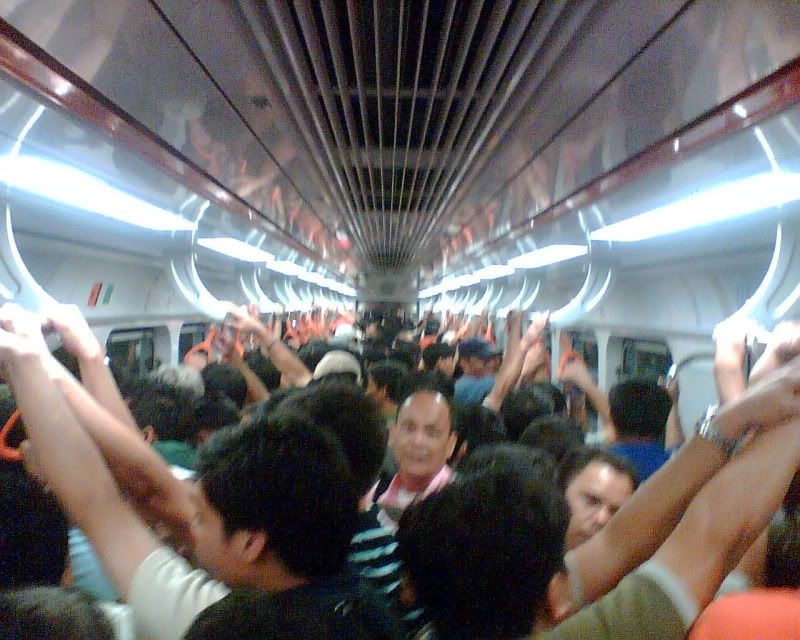
Crowded PNR DMU Train in Metro ( photo by Happosai of SSC)
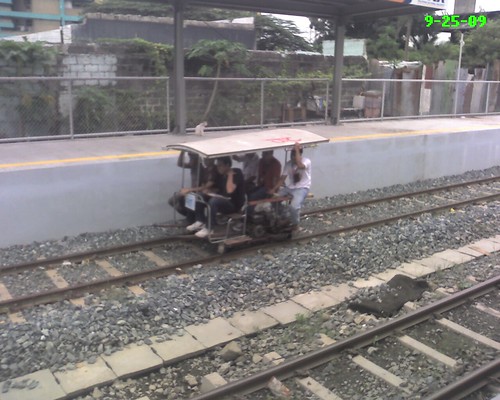
I hope no more of this eye sore (photo by Englehart of SSC)


Exterior and interior of the refurbished trains (Bicol Express)
The soon to be Bicol Express Trains (refurbished by local contractors) will compete with those dangerous Manila-Bicol buses and jeepneyss. These trains will service the lucrative Camsur, Naga and Albay tourism areas...
Photo by Vic Nierva and Jafiti of RIHSPI and SCC
 Originally Posted by jpdm

 Reply With Quote