
mga kuya anu po ba dapat pag nag ddrive ng automatic car & van lagi ba dapat naka on ang over drive??
para saan ang hold button???
ngayon lang ulit kasi ako nakapag drive ng matic ,btw kia pregio ang van ko

The Largest Car Forum in the Philippines
- Forums
- Discussions
- Events
- Community
Results 1 to 20 of 45
-

 Tsikot Member Rank 4

- Join Date
- Nov 2007
- Posts
- 2,442
October 22nd, 2008 07:14 PM #1
-
 Tsikoteer
- Join Date
- Sep 2004
- Posts
- 4,631
October 22nd, 2008 07:32 PM #2Overdrive allows the engine to run at a lower rpm for a given road speed, resulting in better fuel economy (ideal for cruising speeds). So whenever possible, engage overdrive when driving your A/T vehicle, except when overtaking, going uphill or downhill (engine braking) since OD mode reduces engine torque.
In manual transmission vehicles, the highest forward gear is the overdrive gear.Last edited by Bogeyman; October 22nd, 2008 at 08:23 PM.
-
Tsikot Member Rank 4
- Join Date
- Nov 2007
- Posts
- 2,442
October 22nd, 2008 07:44 PM #3thanks sir btw: it means na mas makakatipid ako sa diesel pag laging naka over drive ang van ko?
-
Tsikoteer
- Join Date
- Sep 2004
- Posts
- 4,631
October 22nd, 2008 08:18 PM #4In normal driving conditions, makakatipid ka kung laging engaged ang O/D mo. However, you should still consult your owner's manual for the proper speed on which to run on overdrive.
-
Tsikot Member Rank 4
- Join Date
- Nov 2007
- Posts
- 2,442
October 22nd, 2008 08:35 PM #5kung sa inyo po ano ba ang pwedng top speed for automatic O.D is ON sa kia pregio?
-
Tsikot Member Rank 4
- Join Date
- Jun 2006
- Posts
- 2,605
October 23rd, 2008 12:25 AM #6AFAIK, OD should be on all the time. Except as previously mentioned, overtaking, uphill and engine braking. It is the highest gear on your AT. I think the pregio is a 3 speed AT. OD is your 4th gear.
-
Verified Tsikot Member
- Join Date
- Oct 2008
- Posts
- 24
October 23rd, 2008 10:12 AM #7boss, matic din ang pregio ko acquire 2002 in signet, as advise and for more FC dapat palagi naka OD in normal road condition but if you will go uphill or down hill tsaka palang i-turn off ang OD.
-
Tsikot Member Rank 4
- Join Date
- Nov 2007
- Posts
- 2,442
October 23rd, 2008 10:31 AM #8speedpedal ang overdrive ba ang pregio e yung power button,na pag naka on sya e me nakalagay sa dashboard na POWER malapit sa trashcan sa harap sa me bandang ibaba ng pihitan ng aircon???
Last edited by aga_cruz; October 23rd, 2008 at 10:34 AM.
-
Tsikot Member Rank 4
- Join Date
- Nov 2007
- Posts
- 2,442
October 23rd, 2008 10:33 AM #9btw speedpedal 2001 din ang pregio ko aquire din sya ng 2002 festival sya white 2tone
kaso kabili ko lang sya this month pero ang lakas sa diesel 7 o 6km per litre ang kain?
mas matipid pa ang ginagamit ko na mb>>? wala pa ako masyadong lakad ittry ko ang OD lagi
kasi nagka pregio na kami dati blue 97 model pero ni minsan hindi namin pinakailaman yung OD BUTTON ,,
-
Verified Tsikot Member
- Join Date
- Oct 2008
- Posts
- 24
October 23rd, 2008 10:46 AM #10 Originally Posted by aga_cruz

yup. try mo din magpafull tank then tsaka mo ipower on then cruise ka lang sa city for an hour, dont forget to record the km then pa full tank ka ulit para mas maging acurate ang pagcomute ng fc. dapat nasa 9 to 10 km per liter yan kasi ang manual naman nakaka 12km per liter
-
Tsikot Member Rank 4
- Join Date
- Nov 2007
- Posts
- 2,442
October 24th, 2008 10:29 AM #11thanks this is very useful post to me,,,btw how much na ba ang full tank ng pregio????
-
 Darker and Bigger
- Join Date
- Oct 2002
- Posts
- 40,599
-
 Verified Tsikot Member
- Join Date
- Oct 2006
- Posts
- 204
October 24th, 2008 02:00 PM #13tama , on lang lagi yung od. yung power naman parang kabaligtaran ng od, pag on sya parang babad sa lower gear. parang pag gusto mong humataw hindi mag shift sa high gear( base on my observation).....
-
Tsikoteer
- Join Date
- Feb 2008
- Posts
- 903
November 27th, 2008 06:43 AM #14Mga sir, I have been driving a toyota corolla gli a/t. What is overdrive? Saan ba ang botton nya? Yung nasa side ba nang stick shift? I am also buying an innova vvti g a/t, saan ba ang overdrive botton nya?
-
 one shot
- Join Date
- May 2007
- Posts
- 2,328
November 27th, 2008 09:59 AM #15Generally speaking, overdrive (OD) is the highest gear in the transmission. Most automatic transmissions have three speeds and overdrive (fourth speed). Overdrive allows the engine to operate at a lower rpm for a given road speed. This allows the vehicle to realize better fuel efficiency, and often quieter operation on the highway. When you switch it on, you allow the transmission to shift into overdrive mode after the certain speed is reached (usually 70+ km/h, 45+ mph) depending on the load). When it is off, the transmission shifting is limited to the lower gears. For normal, operation of the overdrive should be enabled only if the average speed is above 70 km/h (approx. 43 MPH). It may be necessary to switch it off if the vehicle is being operated in a mountainous area.
The automatic transmission automatically shifts from OD to third gear when more load is present. When less load is present, it shifts back to OD. Under certain conditions, e.g.: driving uphill or towing a trailer, the transmission may "hunt" between OD and the third gear, shifting back and forth. In this case, switching it off can help the transmission to 'decide' para hindi shift ng shift ang tranny mo. It may also be advantageous to switch it off if engine is desired, for example, driving downhill para pigil ang takbo. Your vehicle's owner's manual has information and procedures regarding such situations.
* attyallanlatras
If your car equipped w/ OD it should have a marked OD on the gearshift or either a OD button on the shiftknob. Some other car's w/ OD equipped like this D, d3, 2, 1.....so the D is the OD. If you see one of this in your car then you have OD.Last edited by v6dreamer; November 27th, 2008 at 10:04 AM.
-
Tsikot Member Rank 4
- Join Date
- Oct 2002
- Posts
- 2,719
November 27th, 2008 11:21 AM #16Why is it called "OD" or "overdrive"? If it is just another higher gear, why don't they call it "4th gear"?

-
Tsikoteer
- Join Date
- Sep 2004
- Posts
- 4,631
November 27th, 2008 01:38 PM #174th gear, overdrive -- doesn't really make a difference, as long as you're talking about the highest forward gear in a 4-speed A/T. Same thing if it's a 5-speed A/T or M/T; in general, if it's the highest forward gear available, with an extra high overall gear ratio that reduces torque, then it's the overdrive gear.
Last edited by Bogeyman; November 27th, 2008 at 01:45 PM.
-
Tsikoteer
- Join Date
- Feb 2008
- Posts
- 903
November 28th, 2008 06:36 AM #18I have noticed a button on the side of the stick shift and after I pushed it, my dashboard indicates "O/D OFF." Now I understand what that button is for. Originally Posted by v6dreamer
By the way, I sometimes place the stick shift to N especially when the vehicle is about to stop around 7 or 6 meters away from the car in front of me. Am I doing it right? or should I wait for the vehicle to have a full stop using the brakes, before I will place it to N.
Thanks for the relpy, anyway.
-
one shot
- Join Date
- May 2007
- Posts
- 2,328
November 28th, 2008 10:38 AM #19Just left alone into D you dont to shift gear to neutral....remember everything automatic(well sort of). Originally Posted by attyallanlatras
-
 a.k.a. Snerac
- Join Date
- Jun 2005
- Posts
- 4,313
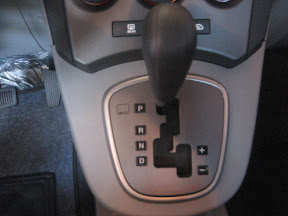
November 28th, 2008 05:38 PM #20First time kong mag-drive ng automatic. My car is Kia Carens. It's A/T comprises of Park, Reverse, Neutral, and Drive. It also has a Sports Mode (with signs + and -), where you can manually shift up to 4th gear. Shifting down can be done automatically or manually.
It has no OD mark or hold button.
When driving I put it to Drive always. I shift to Sports Mode when driving downhill to control the speed or to engine brake.
:car: [SIZE="1"]3822[/SIZE]Last edited by j_avonni; November 28th, 2008 at 05:42 PM.


 Reply With Quote
 Originally Posted by aga_cruz
