
^ I think you've mentioned it before. Pipelines and processing of heavy oil issues?

The Largest Car Forum in the Philippines
- Forums
- Discussions
- Events
- Community
Results 1,281 to 1,300 of 9164
-

 Moderator

- Join Date
- Nov 2010
- Posts
- 25,276
June 28th, 2012 10:56 AM #1281
-
 Tsikot Member Rank 4
- Join Date
- Nov 2005
- Posts
- 45,927
June 28th, 2012 11:25 AM #1282haha si mr. eastwest di nakatiis sa post ko nag react talaga
sinusubaybayan parin pala niya ang thread na ito
-
Tsikot Member Rank 4
- Join Date
- Nov 2005
- Posts
- 45,927
June 28th, 2012 11:49 AM #1283ya kaya malaki ang BINABA ng WTI sa BrentKaya nga mababa ang Oil Price ngayon, dami nahanap na new oil sa North America.
that new oil affected WTI price
why the hell is Brent $10-$15 more expensive than WTI? (>$20 months ago)
why are other benchmarks like Dubai, OPEC basket, Tapis more expensive than WTI?
WTI used to be $1 or $2 more expensive than Brent
WTI used to be the global benchmark. now it's Brent
if all that new oil affected GLOBAL supply we wouldnt see that price difference
ya they gotta come up with an explanation the MASSES can understandIt is now affecting the market accdg. to WSJ, Bloomberg, and Shell CEO
the masses can't be bothered with details like Brent-WTI spread, persistently high oil inventory at Cushing Oklahoma, etc
so? did the Saudis do anything about it? dapat they should be concerned. all that new Canada/US oil is competing with their oil so explain why the Saudis didnt cut production to stop oil price from fallingEven in the latest OPEC meeting, pinaguusapan na ito.
coz i believe factors BEYOND SUPPLY AND DEMAND affect oil priceSabi ni uls hindi daw
Mas magaling daw siya
looking at supply and demand ONLY is stupid
i'll remember to come back to this post when oil prices rise above $100 to see how that supply and demand explanation is holding upLast edited by uls; June 28th, 2012 at 11:56 AM.
-
 Running on Empty...
- Join Date
- Oct 2002
- Posts
- 17,338
-
Tsikot Member Rank 4
- Join Date
- Nov 2005
- Posts
- 45,927
June 28th, 2012 12:34 PM #1285and btw, if there's so much oil in the world right now why is Brent still over 90 dollars a barrel. why isnt it 40 dollars a barrel?
if based on supply and demand explanation alone, was there too little oil in the world in 2008 (or too much demand) then suddenly too much oil in 2009 (or too little demand)?
was it supply and demand alone that caused the massive rise and fall in oil prices in 2008 and 2009?
or was it coz of factors outside supply and demand? like speculation


Last edited by uls; June 28th, 2012 at 01:13 PM.
-
BANNED BANNED BANNED
- Join Date
- Feb 2011
- Posts
- 1,442
June 28th, 2012 01:35 PM #1286 Originally Posted by andywesteast

mas magaling naman talaga si *uls eh kasi nakaupo lang sya sa armchair buong araw kaka-analyze ng oil trends. lumalabas lang sya pag bibili sya ng milk tea. pag bili nya ng milk tea, sugar rush ulit so analyze ulit sya
nung minsan nasobrahan si *uls na kakanaluze 24/7 at nakipagdebate sya sa religion thread. baka natakot siya na may kalaban na siya si God, isa din armchair analyst, lagi nakaupo sa langit watching, observing all of us.
ULS is the oil God!
-
Tsikoteer
- Join Date
- Sep 2011
- Posts
- 623
June 28th, 2012 09:12 PM #1287Dahil lang sa oil and fuel nag-aaway na kayo.
Ito bili kayo bike wala na din cable sa brake.

-
Tsikot Member Rank 4
- Join Date
- Nov 2005
- Posts
- 45,927
June 28th, 2012 11:12 PM #1288the mainstream media says oil price fell coz there's too much oil
so what the hell caused oil price to rally earlier this year? too little oil?

there was an oil price run-up in Dec 2011 and it peaked in March 2012
was caused it? too little oil?
did the market realize there was too little oil in Dec 2011 and bid up the price of oil?
then market realized there's too much oil in March 2012 and dumped oil?
so you have a phenomena of having too little oil and too much oil in a span of 3 months?!
really now...
OR
the run-up in oil price was caused by something outside supply and demand -- the ECB's LTRO (which is like US Fed QE)
Macro and Cheese: An Update on LTRO: Impact on the Markets
This chart shows the S&P 500 from the time of the famous Bernanke speech at Jackson Hole on August 27, 2010. Although QE didn't start until that November, the market rose dramatically in response to the expectation.
Here we can see the effects of LTRO in its true QE-like form. The market has been moving relentlessly higher, irrespective of news and economic data releases. Since the December 21 LTRO initiation, the Dax has risen more than 18.5%.As you're probably aware, QE II impacted not only stocks but also all commodities, including crude oil. (In fact, one of the criticisms of QE II was its impact on the cost to consumers of gasoline, foodstuffs, etc.) Here we see that crude oil has risen by about 15%, very similar to the stock markets.
True to form, the price of brent crude (the European version of our West Texas) has risen steadily from the December 21 start of LTRO. Here the price is denominated in euro to more fully reflect the impact on European consumers.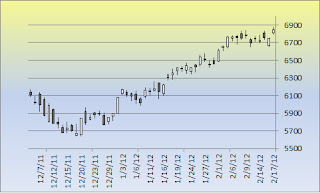
-
Tsikot Member Rank 4
- Join Date
- Nov 2005
- Posts
- 45,927
June 28th, 2012 11:22 PM #1289the mainstream media says oil price fell coz there's too much oil
there was an oil price run-up in Dec 2011 and peaked in March 2012
so what caused the run-up? too little oil?
did the market discover that there's too little oil in Dec 2011 and bid up the price of oil?
then the market suddenly found out in March 2012 that there's too much oil and sold off?
so you have a phenomena of too little oil and too much oil in a span of 3 months?
really now...
-
Tsikot Member Rank 4
- Join Date
- Nov 2005
- Posts
- 45,927
June 28th, 2012 11:25 PM #1290the mainstream media says oil price fell coz there's too much oil
so what caused the oil price run-up in Dec 2011?
too little oil?
did the market discover there was too little oil in Dec 2011?
then found out 3 months later there was too much oil?
so you have a phenomena where there's too little oil and too much oil in a span of 3 months?
really?Last edited by uls; June 28th, 2012 at 11:36 PM.
-
Tsikot Member Rank 4
- Join Date
- Nov 2005
- Posts
- 45,927
June 28th, 2012 11:41 PM #1291or was it caused by something outside supply and demand... like central bank action
the ECB's LTRO (equivalent to US Fed QE)
This chart shows the S&P 500 from the time of the famous Bernanke speech at Jackson Hole on August 27, 2010. Although QE didn't start until that November, the market rose dramatically in response to the expectation.
Here we can see the effects of LTRO in its true QE-like form. The market has been moving relentlessly higher, irrespective of news and economic data releases. Since the December 21 LTRO initiation, the Dax has risen more than 18.5%.
As you're probably aware, QE II impacted not only stocks but also all commodities, including crude oil. (In fact, one of the criticisms of QE II was its impact on the cost to consumers of gasoline, foodstuffs, etc.) Here we see that crude oil has risen by about 15%, very similar to the stock markets.
True to form, the price of brent crude (the European version of our West Texas) has risen steadily from the December 21 start of LTRO. Here the price is denominated in euro to more fully reflect the impact on European consumers.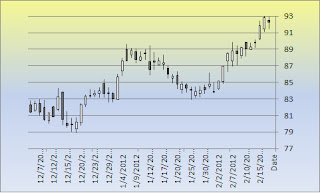
Last edited by uls; June 28th, 2012 at 11:47 PM.
-
Tsikot Member Rank 4
- Join Date
- Nov 2005
- Posts
- 45,927
June 29th, 2012 12:05 AM #1292so what caused the selloff?
FEAR
the effect of LTRO faded
apparently 1 trillion euros can only buy 3 months of calm
oil is a risk asset like stocks. it is bought when the market has appetite for risk and sold when there's fear
so what's bought when there's fear?
USG bonds
see how the yield fell after peaking in March (low demand = higher yield, high demand = lower yield)
demand for USG bonds drove down yield from the March high
oil price also fell from the March high
money rushed out of risk assets (like oil) and rushed into safe haven assets (like USG bonds)Last edited by uls; June 29th, 2012 at 12:38 AM.
-
BANNED BANNED BANNED
- Join Date
- Feb 2011
- Posts
- 1,442
-
Tsikot Member Rank 4
- Join Date
- Nov 2005
- Posts
- 45,927
June 29th, 2012 12:55 AM #1294pag pinost ko sa isang post i-a-approve pa daw ng moderator
so i split it into 3
sino kausap ko? yung isang armchair analyst... si God
-
Tsikot Member Rank 4
- Join Date
- Nov 2005
- Posts
- 45,927
-
Moderator
- Join Date
- Nov 2010
- Posts
- 25,276
June 29th, 2012 10:51 AM #1296At least il companies have $10 gross margin pa. hehe Originally Posted by uls
-
 SobrangBilisMagType!
- Join Date
- Aug 2004
- Posts
- 22,702
-
Tsikot Member Rank 4
- Join Date
- Nov 2005
- Posts
- 45,927
June 30th, 2012 09:51 AM #1298Brent up $6
WTI up $7
yung mga mahilig sa supply&demand explanation dyan... paki paliwanag nga
ano nangyari? may nagbago ba sa supply&demand? may nagbago ba sa oil production sa North America?
malinaw na ba na hindi lang supply&demand ang nagpapagalaw sa presyo ng langis?
-
Tsikot Member Rank 4
- Join Date
- Nov 2005
- Posts
- 45,927
June 30th, 2012 09:59 AM #1299quote ko lang sarili ko:
nag risk on kagabi... bigtimeoil is a risk asset like stocks. it is bought when the market has appetite for risk and sold when there's fear
so what's bought when there's fear?
USG bonds
see how the yield fell after peaking in March (low demand = higher yield, high demand = lower yield)
demand for USG bonds drove down yield from the March high
oil price also fell from the March high
money rushed out of risk assets (like oil) and rushed into safe haven assets (like USG bonds)
money rushed into risk assets (stocks. commodities) and rushed out of safe haven assets (like USG bonds)
so based on my explanation above dapat tumaas ang bond yield (less demand = higher yield)
which is what happenedLast edited by uls; June 30th, 2012 at 10:09 AM.
-
Moderator
- Join Date
- Nov 2010
- Posts
- 25,276

 Reply With Quote
 Originally Posted by uls


