
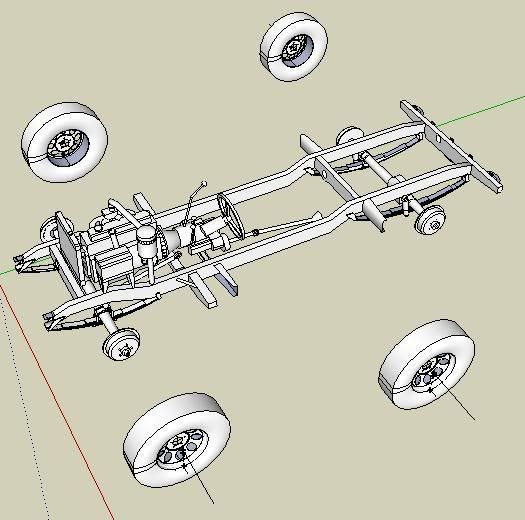
my latest doodle


The Largest Car Forum in the Philippines
- Forums
- Discussions
- Events
- Community
Results 281 to 300 of 1418
-

 BANNED BANNED BANNED

- Join Date
- Aug 2006
- Posts
- 1,488
-
BANNED BANNED BANNED
- Join Date
- Aug 2006
- Posts
- 1,488
-
BANNED BANNED BANNED
- Join Date
- Aug 2006
- Posts
- 1,488
April 20th, 2007 09:57 AM #283fyi
sources:
http://biz.balita.ph/html/article.php?story=20070418154747807
http://sg.biz.yahoo.com/070418/16/47wla.html
 18 - Auto parts makers back comeback of electric cars
Wednesday, April 18 2007 * 03:47 PM BST
Business The local auto parts makers comprising the Motor Vehicle Parts Manufacturers Association of the Philippines (MVPMAP) has signified its support for the Philippine Electric Vehicle (PEV) Program.
The PEV Program aims to introduce a clean, sustainable and affordable urban mass transport service on a limited travel distance.
According to Dir. Ferdi Raquelsantos, head of MVPMAP's own Philippine Utility Vehicle Program (PhUV), "the PEV is much like our own PhUV as it can transport both cargoes and passengers, though the PEV can operate only on a limited and confined range. It currently has a local content of around 50 percent thus we think that MVPMAP could help increase this to over 70 percent."
An electric vehicle (EV) is a motor vehicle powered by an electric motor and an on-board source of electricity, normally a battery pack.
Its advantages over a conventional internal combustion engine fueled by gasoline are that it consumes power only when in motion, emits no fumes and is very quiet even as it runs, thus there is no wasted fuel in traffic, no air pollution and no noise.
EVs far outnumbered gasoline vehicles at the turn of the 20th century. However, with the continued improvements in the gasoline engines and the availability (then) of inexpensive gasoline, EVs became extinct in the 1920s.
It is only now that it is slowly making a comeback as car manufacturers are coming up with the more expensive hybrid cars, powered by a computer-controlled engine that runs on both electricity and gasoline. Foremost among this is the Toyota Prius.
Many Filipinos may be familiar with the EV in the form of the electric golf carts seen in golf courses and even the bump cars in the amusement centers of some malls.
The downside of an EV is that in current models, a four-hour full charge on conventional 220 volts home outlet costs about P1,500 and can travel only 80 kms. This translates into about P18.75 per km. compared to less than P5.00 per km. for gasoline-fed cars.
"This is another challenge that the PEV proponents will have to address – make the EV comparable to the gasoline-fed cars in terms of operating cost per km. before we could mass produce them", said Raquelsantos.
Romeo Morave, president of Electromotion Motor Corporation and at the forefront of pushing for the PEV, said they are currently studying using a battery pack being developed in the USA that will increase the range of the EV to 200 to 300 miles (320 to 480 kms.).
"We are also looking at cheaper alternative 'refueling' schemes such as photovoltaic arrays or solar cells. We are at the same time studying the regenerative braking system in an EV that turns the electric motor into a generator when the brakes are applied, thus recharging the batteries during deceleration," he said.
"Currently, we have a PEV that sits 10 passengers, carries a payload of over 1,200 pounds and runs at a maximum of about 65 kms per hour", Morave said.
The PEV is now being pilot tested by the Philippine Economic Zone Authority within its Cavite Export Processing Zone to transport some 90,000 workers daily within the zone.
The vehicle's co-inventor, Roel Judilla, former dean of mechanical engineering at the Mapua Institute of Technology, said the current PEV costs around P600,000 but he said they are currently working to bring this down to about P300,000 to P400,000 with the application of more local parts from MVPMAP members. It has an AUV body supplied by Francisco Motors, one of MVPMAP's partners in its PhUV Program.
"To avoid the exorbitant electricity costs, we are developing a model that would run using solar energy. But at the moment, we are marketing the PEV for specific short distances such as inside the ecozones, military camps, subdivisions, theme and leisure parks, golf courses and resorts", he said.
MVPMAP is currently evaluating the possibility of including the PEV in its PhUV Program so that PEV manufacturers, parts makers and buyers can also avail of the package of incentives being finalized by the Board of Investments for the PhUV Program. This will hopefully make the PEV affordable to own and feasible to operate.(PNA)
-
 Tsikot Member Rank 2
- Join Date
- Jan 2007
- Posts
- 3,431
April 20th, 2007 10:39 AM #284Excellent 3D work of the chassis, OyiL!
About the components chosen: Leaf springs, solid axle and drum brakes for the front? I would prefer coil springs, independent suspension and disc brakes at the front. But who makes the final decision about these things?
About the process: Has anybody done a 2D CAD technical drawing based on the components chosen? If nobody has, shouldn't 3D drawings be based on the technical drawings?
-
BANNED BANNED BANNED
- Join Date
- Aug 2006
- Posts
- 1,488
April 20th, 2007 12:47 PM #285components: Originally Posted by donbuggy

i am in-line with your thinking. independent double wishbone is the desired suspension type for the front. the whole group decides on the components based on some factors, e.g budget, specifications.....etc.
CAD:
Yes 3D drawings should be based on the technical drawings. We should get it from the manufacturers - they should give it for free.
My 3D is just for the body styling design. The wheels and tires on that 3D is accurate - 215/85R16 tires on 16x7 5 spoke pcd 4.5" 0 offset 3.3" centerbore wheels. The wheelbase is also accurate - 3050mm.
Track width and min ground clearance should be based on the axles to be used so:
assumed a overall width=1800mm
tire width = 215mm
wheel offset = 0
then:
max track width = 1800 - 215 = 1585 ( DMAX is 1520, INNOVA is 1510, REVO is 1445) have to find which available brand new part(axles f/r) would satisfy the design.
I have the proposed engine dimensions including assumed matching transmission dimensions. To make sure that the size of the engine bay is good on 3D. I need windshield measurements. and frame measurements to be as accurate as possible. - to 3D my body shell design
-
BANNED BANNED BANNED
- Join Date
- Oct 2002
- Posts
- 3,790
April 20th, 2007 10:55 PM #286why not take the jeepney favorite axle...yung pang elf... baka mas mura yun kung "surplus" ang sourcing....and can accomodate big diameter tires....bagay din sa all leaf-spring suspension.
maganda rin sana kung LSD na rear differential ang available...
-
 Buon giro a tutti!
- Join Date
- Jan 2005
- Posts
- 688
April 20th, 2007 11:49 PM #287Hi donbuggy. Originally Posted by donbuggy
(1) The final decision is made by the market, ie, demand and price. If we're going to put out a PhUV that will price lower than 350K, then perhaps we should work with the assumption that the production cost should not exceed 280K. Otherwise the subsequent enterprise might not be viable at all.
This is the amount we as designers need to apportion into three parts: Rolling Chassis, Power Train, and Body. Basically, you want your rolling chassis to handle the load and the road; your power train to have adequate 'pull' and response; and your body to provide comfort and enticement.
If there exists an independent suspension system that can handle the hyperloaded rural offroading that jeepneys are famous for, and still fit into the budget, then we can use it -- why not?
How would you allocate your production budget (see attached)? Note that as your underchassis cost rises, you deprive the other two of funds. So, you see, the sky is actually not the limit for PhUV. Bottomline: If PhUV is not marketable at an OPTIMUM LOW price, it will be dead in the water.
(2) In answer to your question on process, AFAIK, in the real world of automaking, the 2D technical drawings (via "computer-aided drafting") are firmed up AFTER the styling is done and modeled mathematically and in clay. In other words, the 2D CAD comes just before the CAM, and all of that comes after stylists give the go signal. (Note that the reverse is true for architectural design & construction).
This design roundtable started designing the PhUV from outside-in. Now that the time has come to design from inside-out, our handicap is that we do not have a satisfactory spec-database of existing parts and components to firm up our design decisions. It seems MVPMAP members are not that keen yet on supplying auto design teams like ours with their product specs. That's because they are either multinationals or totally beholden to the bigboys they supply. That's just for technical specs. The other thing we need is the prices of parts and components.
If you can find it on the web, then fine. But there's nothing like getting out, hunting for the parts, digging for technical data, and taking actual measurements. You will find them in REPLACEMENT parts suppliers (and SURPLASAN, if you care to).
In the case of my personal FUV prototype (Chokaran), it took me just a couple of months designing but nine months running around looking for the appropriate parts that would match the drawings. This PhUV design project (and others like it) is not like architectural design, where nagkakandarapa ang mga supplier sumipsip sa arkitekto para lang mai-specify yung produkto nila. Hindi pa kasi tanggap sa Pinas yung idea of an independent auto design studio -- which is what this little group is evolving into, little by little.
dprox
www.disenyopilipino.ph
-
BANNED BANNED BANNED
- Join Date
- Aug 2006
- Posts
- 1,488
-
Buon giro a tutti!
- Join Date
- Jan 2005
- Posts
- 688
April 21st, 2007 09:54 AM #289Noted. Thanks wildthing. Originally Posted by wildthing
Last edited by dprox; May 11th, 2007 at 05:51 AM. Reason: error
-
BANNED BANNED BANNED
- Join Date
- Aug 2006
- Posts
- 1,488
-
Buon giro a tutti!
- Join Date
- Jan 2005
- Posts
- 688
April 21st, 2007 12:42 PM #291That is a distinct possiblity. It would make PhUV look really utilitarian (utility vehicle naman siya, di ba?) without as much class as say a visible double wishbone front silhouette view. It will definitely be more affordable. To incorporate (or conceal?) the U-shaped beam axle in the overall stance would pose a styling challenge. Originally Posted by wildthing
Though I did consider that for Chok, it didn't fit the look I wanted, so I fell for the lure of a 2wishbone torsion front. A couple of 4WD suspension mechanics have scolded me about this, saying that if I was serious about offroading, I should have chosen the live one.
"Skeleton" is pinoy shop language for rolling chassis complete with power train. FYI, the current cost of a PUJ (Elf/Canter) skeleton ranges from P130-150K. In that lot (lote), everything is basically surplus except the battery, wiring, and ladder frame.
The group is unanimous about using a brand new engine, and that alone would be over 100K, leaving very little for the rest of the skeleton, budgetwise. The engine can be sourced from PROC, but the cost problem remains largely unsolved.
More suggestions needed.
-
Buon giro a tutti!
- Join Date
- Jan 2005
- Posts
- 688
April 21st, 2007 03:00 PM #292Hi Mojo. Originally Posted by Mojo
In the course of building my own "FUV" I've interviewed some old AUV entrepreneurs (Castro, Hayag) and they all say the heyday of AUVs was the 80s and 90s. This was precipitated by a convergence of two events: (1) A Japanese law limiting the registration of motor vehicles to no more than 5 years; (2) the so-called "Asian economic miracle" of the late 1980s to 1997. SME Castro Motors' production line was spewing over 30 units/month and had corporate clients like PLDT, etc. They shut down in 2003 to set up a restaurant. But only until 1997.
The 1997 East Asian Financial Crisis hit really hard. From P28/$, forex jumped to 38/$ in 2000, settling at 40/$. The causes are controversial (Greed? Defensiveness because Asia was growing too fast for comfort? Whatever). In any case, it did happen, and the market shifted from locally fabricated AUVs to Korean cars and rehabilitated SUVic CBUs. If you have the patience and biz economics penchant, check Wiki for a summary. http://en.wikipedia.org/wiki/Asian_Financial_Crisis
Remember that SoKor was the hardest hit among the Asian countries. But since those guys are tough (and sometimes ruthless), they got into their Asian neighbors backyards for survival's sake, and took a huge chunk of the Philippine lower-cost vehicle market in the process.
When D&E level Pinoys bought an AUV and most especially a PUJ, they usually weren't thinking of replacing it for the next 15 or so years. In fact, they could have it repaired ad nauseam. Either sobrang repairable or sobrang tibay kasi. Yung PUJ is built to last a lifetime, especially if its in stainless.
This results in a very long business cycle. Why do you think Japan is enforcing that 5-year limit on car registration?
GUTOM Pinoy. LAKBAY siya. KAYOD overseas. REMIT siya. Ten years after 1997, P12B na OFW remittances. Mabuhay kaya ulit ang indigenous auto industry natin?
Remember this: THE MISSING LINK IN THE NATIVE FILIPINO AUTO INDUSTRY IS DESIGN. Kahit may pera ka, kung walang disenyong Pilipino, walang Pinoy vehicle. Ang bibilhin mo foreign brand pa rin na kahit assembled in the Philippines, foreign corps pa rin ang kumikita. Ikaw balik bayan; pera mo balik overseas! Ngek! Payag ka?
-
BANNED BANNED BANNED
- Join Date
- Apr 2007
- Posts
- 850
April 21st, 2007 10:47 PM #293Oh third week of April na wala pa rin yung PROTOTYPE ng PHUV. Kala ko ba first week of April. I hope its not the dreaded FILIPINO TIME all over again.
-
BANNED BANNED BANNED
- Join Date
- Aug 2006
- Posts
- 1,488
-
Buon giro a tutti!
- Join Date
- Jan 2005
- Posts
- 688
April 22nd, 2007 11:36 AM #295I hope I am wrong, but there is no indication that the MVPMAP as a whole really has its act together on this one. Sana nga Filipino time lang ang problema. But there are reliable reports that purely Filipino companies like Francisco Motors have prototypes, and maybe even MDJuan. Originally Posted by hein
Matagal na kasi dapat nangyari yung AUV revival, kaya lang mukhang sobrang komportable tayo sa paglilingkod sa bigboys -- sa halip na gumawa ng sariling atin. Sila yaman, tayo ... mababa kaligayahan.
If you look at its prehistory, the real reason for the present MVPMAP PhUV program is DESPERATION. Masamang ugali yung hindi tayo kumikilos hangga't hindi desperado. Here's a quick historical review:
1) COMFORT ZONE. Kumikita ang local parts manufacturers by supplying bigboys with local parts for "CKD" cars (bigboy cars assembled in the Phils). 1996 Ratio: 87%CKD to 13%CBU of 162,000 total vehicles.
2) THREAT. It so happens that bigboys assemble also in other countries, including China(!). Gradually, bigboys begin importing their CBUs from these countries to RP.
3) SLUMP. Car sales virtually flat over the last eight years. Eto pa bad Y2K news: Toyota FX strangles local PUJ industries, Sarao etc shut down. Ford/Mazda TKOs Francisco Motors, etc, etc.
4) PANIC TIME. CBU sales double in 2004. 2005 Ratio: 59%CKD to 41%CBU. CKD & local parts manufacturers are fast becoming irrelevant. Next step: extinction!
5) SOLUTION. Sensing eventual 'retrenchment', local parts manufacturers decide to build their own car.
That is a step in the right direction, but is two decades late and mukhang hindi nagkakaisa ang MVPMAP members That's why it looks like sa PEV pa aangkas ang MVPMAP. Why? Only the purely Filipino corporations like FMC & MDJuan have a real interest in it. Eto pa: If you want to make an ORIGINAL PILIPINO VEHICLE (OPV), isn't it stupid to ask for bigboy help? I don't think bigboys are in the business of creating competitors.
  The multinationals among the MVPMAP will not allow the PhUV to happen unless they have are guaranteed a cut of the booty.
So, you see, the PhUV took off the wrong way. For it to succeed, it has to be undertaken by a committed FILIPINO private enterprise.
The Pinoy auto industry is being left behind by its ASEAN neighbors because we lack the self-esteem to look after ourselves, and the self-confidence to produce our own. Somewhere in our history, the notion that we can only be
- cheap laborers instead of entrepreneurs and
- consumers instead of producers
has been knocked into our national psyche.
Sabog ang development planning, :rant: kasi ang inaatupag ay foreign companies at ang hinahabol ay foreign carrots. Yung pamahalaan, walang ginawa kundi mag spread-your-legs sa mga foreign investors, habang yung kabayan na merong puhunan, either masyadong maingat or duwag. Even our "car shows" are just beauty parlors of foreign marks. Wala namang original Filipino vehicle category. Sorry to have to say this, pero lumalabas na aftermarket beauticians lang ang mga Pinoy.
Kung kaya mong ma-take lahat niyan, DAPAT KA NGANG MAGPANIK!
OR ... DESIGN AND BUILD YOUR OWN CAR! It's the only way out of feeling like an industrial bitch.
<MODS: You can delete the last sentence if you feel it's inapproriate. It's your forum naman, e. Thanks.>
Mga Pinoy na dapat parangalan at subaybayan : MDJuan (http://www.youtube.com/watch?v=OjdUY...elated&search=) for being all-Filipino and exporting globally, Electromotion Motor Corporation for developing the Philippine Electric Vehicle (Francisco Motors, Philippine Batteries Inc, Asahi Glass Phils, Yazaki-Torres Mfg, Yokohama Tire Phils, Mapua), and Maglev Vision Corporation for magnetic levitation vehicle development (www.spacecarcorp.com).
Last edited by dprox; April 22nd, 2007 at 06:45 PM. Reason: grammatical error
-
Tsikot Member Rank 2
- Join Date
- Jan 2007
- Posts
- 3,431
April 23rd, 2007 03:18 PM #296More PHUV concepts.
Dwg. no H-8 is an alternative to owner-type jeeps.
There's still no relpy from safeorigin regarding my offer to clean up his drawing of a three-wheeler, so I created my own design. It is posted at the "Is This Street Legal..." thread.
-
BANNED BANNED BANNED
- Join Date
- Aug 2006
- Posts
- 1,488
-
 SobrangBilisMagType!
- Join Date
- Aug 2004
- Posts
- 22,702
April 24th, 2007 01:23 PM #298They can't make EVs economical with traditional construction. About the best way to do it is to have a strong but lightweight frame (say, fiberglass-reinforced balsa-wood?) with a lightweight body, to offset the weight of the batteries.
RE: Jeep-style: *dprox, so the engine price would put the cost of the project at 250k? Meaning retail would have to be 400-500k?
Ang pagbalik ng comeback...
-
Buon giro a tutti!
- Join Date
- Jan 2005
- Posts
- 688
April 24th, 2007 02:12 PM #299Medyo the team does not intend to go to war. But considering that the most famous Utility Vehicle is a military one (M998 High Mobility Multipurpose Wheeled Vehicle, aka "HMMWV" or Humvee), then perhaps you can join up. You just need to "civilianize" your sketches, just to be "safe". PM your background & contact info. Originally Posted by safeorigin
BTW, since mahilig ka sa combat vehicles, have you checked out Georgia Tech's ULTRA-AP? It's rumored to be the future replacement of the Humvee.
http://gtresearchnews.gatech.edu/new...e/ultra-ap.htm
When that happens, you can be sure H1s will be flooding the surplus market.
-
BANNED BANNED BANNED
- Join Date
- Aug 2006
- Posts
- 1,488
April 24th, 2007 02:43 PM #300maryosep parang gagamba. ito na lang pinoy pa. kulet ko no
source:http://www.pinoyexchange.com/forums/...php?p=19324687
can we make a civilian version? para sikat !

 Originally Posted by donbuggy


