


http://www.youtube.com/watch?v=8JDiiXr57KQ
watch this guys. you will know if it's worth buying toyota prius or What?

The Largest Car Forum in the Philippines
- Forums
- Discussions
- Events
- Community
Results 101 to 120 of 408
Hybrid View
-

 Verified Tsikot Member

- Join Date
- May 2007
- Posts
- 29
June 12th, 2007 05:29 PM #1
-
 Sans Pareil
- Join Date
- Oct 2004
- Posts
- 1,526
-
Sans Pareil
- Join Date
- Oct 2004
- Posts
- 1,526
-
 Touch me right there ...
- Join Date
- Oct 2002
- Posts
- 315
August 23rd, 2007 10:57 PM #4Article: http://onemansblog.com/2007/03/27/pr...mental-damage/
Building a Toyota Prius causes more environmental damage than a Hummer that is on the road for three times longer than a Prius. As already noted, the Prius is partly driven by a battery which contains nickel. The nickel is mined and smelted at a plant in Sudbury, Ontario. This plant has caused so much environmental damage to the surrounding environment that NASA has used the ‘dead zone’ around the plant to test moon rovers. The area around the plant is devoid of any life for miles.
The plant is the source of all the nickel found in a Prius’ battery and Toyota purchases 1,000 tons annually. Dubbed the Superstack, the plague-factory has spread sulfur dioxide across northern Ontario, becoming every environmentalist’s nightmare.
“The acid rain around Sudbury was so bad it destroyed all the plants and the soil slid down off the hillside,” said Canadian Greenpeace energy-coordinator David Martin during an interview with Mail, a British-based newspaper.
All of this would be bad enough in and of itself; however, the journey to make a hybrid doesn’t end there. The nickel produced by this disastrous plant is shipped via massive container ship to the largest nickel refinery in Europe. From there, the nickel hops over to China to produce ‘nickel foam.’ From there, it goes to Japan. Finally, the completed batteries are shipped to the United States, finalizing the around-the-world trip required to produce a single Prius battery. Are these not sounding less and less like environmentally sound cars and more like a farce?
Wait, I haven’t even got to the best part yet.
When you pool together all the combined energy it takes to drive and build a Toyota Prius, the flagship car of energy fanatics, it takes almost 50 percent more energy than a Hummer - the Prius’s arch nemesis.
Through a study by CNW Marketing called “Dust to Dust,” the total combined energy is taken from all the electrical, fuel, transportation, materials (metal, plastic, etc) and hundreds of other factors over the expected lifetime of a vehicle. The Prius costs an average of $3.25 per mile driven over a lifetime of 100,000 miles - the expected lifespan of the Hybrid.
The Hummer, on the other hand, costs a more fiscal $1.95 per mile to put on the road over an expected lifetime of 300,000 miles. That means the Hummer will last three times longer than a Prius and use less combined energy doing it.Last edited by FLiPMaRC; August 23rd, 2007 at 11:03 PM.
-
 Moderator
- Join Date
- May 2006
- Posts
- 3,722
-
 BANNED BANNED BANNED
- Join Date
- Mar 2005
- Posts
- 8,837
August 24th, 2007 06:23 AM #6hindi naman talaga nakakabilib ang hybrid. kasi bale parang 2 technologies in 1 (hybrid) instead of the usual common engine. logic dictates na mas magastos nga yan
purely electric cars vs. gasoline cars baka dyan maniwala pa ako na nakakatulong or nakakatipid nga
-
Tsikot Member Rank 4
- Join Date
- Oct 2002
- Posts
- 1,842
-
 SobrangBilisMagType!
- Join Date
- Aug 2004
- Posts
- 22,702
August 24th, 2007 10:52 AM #8This article is pure bull.
I've read it long before, and I believed it, then. Unfortunately, a friend on another board has pointed out some logical flaws in the research. And James Deakin has refuted this letter, himself. Although I don't share Deakin's views on the Prius, after much deliberation, I'm sad to say he's right about this article.
For one, the effects of pollution in Sudbury are from over 100 years of nickel mining in that area, and currently, nickel producers are producing lower sulfur dioxide levels than ever before, with promises to lower emissions further still in the coming years.
For another, Toyota only constitutes 1% of Sudbury's output. The rest? Nickel is used in chrome, stainless steel, and in alloys for engine parts. In other words, almost all car manufacturers use nickel in something. Last I looked, the Hummer2 seemed to be 90% chrome.
Shipping costs... this applies to almost any globally produced vehicle today. Think the rubber for the Hummer's tires is grown in North American weather? ;)
And lastly, they've arbitrarily placed the lifespan of the Prius at 100,000 miles (160,000 kilometers). There are already a number of taxi owners who've logged over 250,000 kilometers, and a couple over the magic 300,000 km mark. The highest odometer reading recorded for a Prius so far is 400,000 kms, or 260,000 miles.
These are taxi operators, so they log many more kilometers per year than the average owner. So, truthfully, it doesn't give a fair view of the vehicle's lifespan, but 100,000 miles only, is, quite frankly... bullsh*t. Some private owners have passed the "magic mark" already.
The Hummer? While the heavy block and engine bores on that hulking V8 might conceivably last over 300,000 kilometers, what do you want to bet the rest of it will, given GM quality? Also, note that large SUVs tend to warp their brake discs quickly. If you do a lot of highway driving, you can chew up a brake disc irrecoverably in less than 100,000 kms on a two-ton or more SUV. The Prius? The brake pads will often last over 100,000 kms, and you will almost never need to replace the discs.
-----thus ends pro-Prius portion of post-----
I still believe, firmly, that the Prius is a questionable value. The actual city mileage of the Prius, as reported by Consumer Reports, is about spot on for diesels, and the highway mileage is comparable, too. When the EPA was forced to adjust its testing to reflect real world conditions, the Prius lost twice as much fuel efficiency as anything else. Given that Prius mileage info comes mostly from the US, where weather is less of a factor, its mileage here should be much lower in traffic, where the airconditioner works much harder.
A Prius has about the same size and utility as an Elantra Diesel or a Focus Diesel (well, maybe the Focus has a wee bit less headroom... but the Prius is also tight when you're sitting three across...), but both cars get similar city economy and highway economy, and while the Elantra costs about 100,000 pesos more than a comparable 1.6 liter gasoline vehicle, the Focus costs only about 50,000 pesos more than a similarly equipped 2.0 (based on package deletions from the 2.0 Sport). Toyota is still wringing its hands on the Prius, because, as it stands, the Prius still costs anywhere from 800,000 to over 1,000,000 pesos more than comparable 1.6 or 1.8 gasoline powered vehicles. Knowing Toyota's reputation in the Philippines, the Prius should sell here, and sell relatively well, but the cost of stocking up parts, doing marketing and equipping dealerships to maintain them would mean that the Prius would still be a loss-leader... a sort of "halo car". And to make it more practical, they would need government tax breaks, or to soak up the loss themselves, to get it under the magic 1.5 million peso mark. Maybe, hopefully, Toyota will base the next Prius on the Corolla, instead, which would make it much cheaper to produce. Unfortunately, the reason the Prius sells so well is the fact that it's identifiably not a regular car, but shouts "hybrid" at anyone who looks at it. Hybrid Civics, though relatively efficient and cheaper, don't sell as well.
It's an evolutionary dead-end... or at least, a cul-de-sac. Having two powertrains in one vehicle is quite inefficient. If we find a better battery medium, that paves the way for pure electrics, or depleting charge hybrids, where the gasoline/LPG/diesel engine is only there to charge the batteries... a mobile charging source that doesn't need high horsepower would add less than $1000 to the cost of the vehicle.
Currently, the Prius and some EVs are finally moving to Lithium Ion batteries. It took them this long because of difficulties with heat, safety, and cost. I'm still waiting for supercapacitors, or to find out whether the purported "Nanosafe" batteries are as quick charging and efficient as they claim to be.
While I still feel the Prius is more showboat environmentalism and public relations strategy than anything else (Toyota's fleet fuel economy average is woeful compared to Honda's, simply because Toyota produces more gas-guzzling V8 SUVs than Honda and many other brands), I have to admit that it's provided a target for other "hybrid" or "alternative fuel" vehicles to beat. It's helped raise green-consciousness in other manufacturers.. who've had to try to beat Toyota at the "green" game.Last edited by niky; August 24th, 2007 at 11:35 AM.

Ang pagbalik ng comeback...
-
 Tsikot Member Rank 4
- Join Date
- Jan 2006
- Posts
- 2,105
August 25th, 2007 12:30 AM #9I don't trust articles these days...
maybe Mobil sponsored this article...
-
 Tsikoteer
- Join Date
- Oct 2008
- Posts
- 740
January 3rd, 2009 02:00 PM #10Here's the first look of the new Prius that will soon be displayed at this year's Detroit Motor Show in January 11.


Is it a facelift, or a new generation? Or possibly be followed up by another hybrid car which is the Lexus HS?
-
Verified Tsikot Member
- Join Date
- Nov 2008
- Posts
- 65
-
 Tsikoteer
- Join Date
- Oct 2002
- Posts
- 29,354
January 3rd, 2009 05:57 PM #12In the time of cheap gas prices, would an obviously expensive hybrid car have a fraction of the success as it's previous model. This is compared to other "normal" gas fueled cars on the market of the same size & capacity.
-
 Tsikot Member Rank 4
- Join Date
- Nov 2005
- Posts
- 45,927
January 3rd, 2009 06:13 PM #13Hybrid car sales plummeted in November
http://www.upi.com/Business_News/200...9381230922441/
DETROIT, Jan. 2 (UPI) -- U.S. hybrid car sales plummeted in November, falling faster than sales of conventional, gasoline-powered cars, an industry research group said.
Just as automakers were scrambling to turn their production over to smaller cars after gasoline prices spiked in the summer, the falling price of gasoline threatens to dampen new initiatives.
Autodata said hybrid gas and electric car sales fell 53 percent in November from a year ago, compared with a 37 decline in vehicle sales overall, the Financial Times reported Friday.
-
Tsikoteer
- Join Date
- Oct 2008
- Posts
- 944
-
 Verified Tsikot Member
- Join Date
- Jul 2008
- Posts
- 6
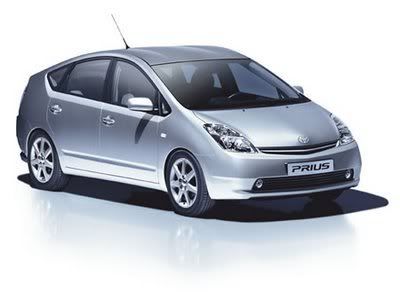
March 7th, 2009 02:16 AM #15There are rumors that toyota PRIUS will be out on the local market around June.not yet sure if these are the following specs
Engine 1.5L I4 (4 clylinder 16 valves DOHC)
VAR Speed Automatic Transmission
Hybrid Gas / Electric / Multi-Port Fuel Injected
-
 Tsikoteer
- Join Date
- Dec 2007
- Posts
- 3,938
-
 Drive@earth Inspired
- Join Date
- May 2007
- Posts
- 3,984
March 7th, 2009 08:09 AM #17yup- dapat within the price range of the Corolla Altis! say 900k-1.1m if they "really" want this to sell... Originally Posted by woohoo

-
 Photo/Videographer
- Join Date
- Sep 2007
- Posts
- 8,452
March 7th, 2009 09:11 AM #18hybrid engine din ba ang lalabas? may kutob akong mahal pa yan sa altis, pwede nasa gitna ng altis at camry
-
Verified Tsikot Member
- Join Date
- Apr 2009
- Posts
- 8
May 2nd, 2009 08:51 PM #19Our trainor just informed us that the hybrid-prius will become available some time June and will cost around 2M pesos!.. Pretty cheap for a hybrid. Stay tune for more updates.
-
Tsikot Member Rank 3
- Join Date
- Jul 2004
- Posts
- 1,540

 Reply With Quote
 Originally Posted by medyas


![TOYOTA PRIUS [merged threads]](https://play.google.com/intl/en_us/badges/images/generic/en_badge_web_generic.png "Google Play")