
Singapore GDP Q2 numbers are worst than PH 16%...
Singapore Posts Bigger GDP Contraction in Second Quarter
Gross domestic product plunged an annualized 42.9% in the second quarter from the previous three months, according to final estimates from the Ministry of Trade and Industry released Tuesday. That was worse than a previous estimate of a 41.2% contraction and compares with a forecast of -43% in a Bloomberg survey of economists.
The lockdown has pummeled retail and tourism businesses and crippled construction output, while exports have slumped because of weak global demand. Even though the economy has gradually reopened and the government has pumped in stimulus measures worth more than 19% of GDP, the recovery remains uncertain and companies are bracing for further job cuts.
The data showed sharp contractions in key industries:
Manufacturing declined an annualized 31.7% in the second quarter from the previous three months
Construction plunged 97.1%
Services contracted 37.4%

The Largest Car Forum in the Philippines
- Forums
- Discussions
- Events
- Community
Results 10,161 to 10,180 of 10726
-

 Social Dementia

- Join Date
- Sep 2003
- Posts
- 25,189
August 11th, 2020 11:18 AM #10161
-
Verified Tsikot Member
- Join Date
- Sep 2017
- Posts
- 754
-
 Tsikot Member Rank 4
- Join Date
- Nov 2005
- Posts
- 45,927
-
 Tsikot Member Rank 8
- Join Date
- Oct 2002
- Posts
- 21,433
-
Tsikot Member Rank 4
- Join Date
- Nov 2005
- Posts
- 45,927
August 13th, 2020 12:48 PM #10165Not yet Originally Posted by boybi

Need to see if US bond yields will keep going up
-
 Tsikoteer
- Join Date
- Oct 2012
- Posts
- 27,624
August 13th, 2020 03:27 PM #10166with china planning to replace "world tech" with china tech....
so much news have happened.. just 1 of many....
Foxconn says China can no longer be "the world's factory" - TechSpot
-
Social Dementia
- Join Date
- Sep 2003
- Posts
- 25,189
August 13th, 2020 06:48 PM #10167The first pandemic stimulus included US$ 600 a week aid for the million of unemployed....
https://www.washingtonpost.com/us-po....co/2ZeoITA26a
PPresident Trump’s senior aides acknowledged on Tuesday that they are providing less financial assistance for the unemployed than the president initially advertised amid mounting blowback from state officials of both parties.
On Saturday, Trump approved an executive action that he claimed would provide an additional $400 per week in expanded unemployment benefits for Americans who have lost their jobs during the pandemic.
By Tuesday, senior White House officials were saying publicly that the maneuver only guarantees an extra $300 per week for unemployed Americans — with states not required to add anything to their existing state benefit programs to qualify for the federal benefit.
On Tuesday, White House National Economic Council Director Larry Kudlow suggested that adjustments had been made to that plan and that no new money is required from the states for their residents to qualify for the $300.
“We modified slightly the mechanics of the deal,” Kudlow told Fox News.
The White House guidance means all states will probably be able to implement the program without spending new money on aid. It also means people on unemployment will see their benefit effectively cut from $600 to $300 — a 50 percent reduction — rather than from $600 to $400.
Under Trump’s directive, the federal government may only have enough money to pay the enhanced $300 benefits for about five weeks. After that, it would be up to states entirely to cover perhaps billions of dollars in unemployment aid using their own money, creating a financial headache for those that are anticipating multibillion-dollar budget shortfalls as a result of the pandemic. To do so, some states’ legislatures — including those that may not currently be in session — also may need to intervene just to authorize new spending or reapportion existing federal dollars to unemployment.
“States are going broke and millions of Americans are unemployed, yet the solution calls for states to create a new program we can’t afford to begin with and don’t know how to administer because of this uncertainty,” said Phil Murphy, the governor of New Jersey, at a news briefing this week.Last edited by Monseratto; August 13th, 2020 at 06:52 PM.
-
Tsikoteer
- Join Date
- Oct 2012
- Posts
- 27,624
August 16th, 2020 02:34 AM #10168Debt-Trap Diplomacy by China deterred!
India seeks to counter China influence in Maldives with bridge project | News | DW | 13.8.22
-
Tsikoteer
- Join Date
- Oct 2012
- Posts
- 27,624
August 17th, 2020 03:38 PM #10169These floods are pretty intense. Even Xi-t is talking about emptying plates...
China facing food shortage after months of flooding, infestations | Taiwan News
-
 Darker and Bigger
- Join Date
- Oct 2002
- Posts
- 40,599
August 17th, 2020 05:18 PM #10170Parang mas gusto ko na ulit manalo si trump to continue the pressure on China.
Since the world wa **** up by China virus then should give trump to sustain the momentum
Baka Biden might go soft on China.
Sent from my iPhone using Tapatalk
-
Social Dementia
- Join Date
- Sep 2003
- Posts
- 25,189
-
Social Dementia
- Join Date
- Sep 2003
- Posts
- 25,189
August 19th, 2020 08:42 PM #10172
-
 Moderator
- Join Date
- Nov 2010
- Posts
- 25,276
August 20th, 2020 09:57 AM #10173
-
Tsikoteer
- Join Date
- Oct 2012
- Posts
- 27,624
August 22nd, 2020 01:59 AM #10174on a related note.. Originally Posted by Ry_Tower

Subscribe to read | Financial Times
-
Social Dementia
- Join Date
- Sep 2003
- Posts
- 25,189
August 22nd, 2020 12:25 PM #10175With the Feds dumping free money on the banks, of course the stock market is a good place to park your money... Apple stocks are benefitting from that. But it does not mean Apple profit margin are any higher during this pandemic. Originally Posted by Ry_Tower
-
Tsikoteer
- Join Date
- Oct 2012
- Posts
- 27,624
-
Social Dementia
- Join Date
- Sep 2003
- Posts
- 25,189
-
Tsikoteer
- Join Date
- Oct 2012
- Posts
- 27,624
August 28th, 2020 09:40 PM #10178Hope PM Abe gets better.
I wonder if PRRD will do the same. doesn't he have health problems too?
Japan PM Abe to quit over health problems | Philstar.com
Militant lawmakers want full disclosure of Duterte?s health | Philstar.comLast edited by StockEngine; August 28th, 2020 at 09:42 PM.
-
Tsikoteer
- Join Date
- Oct 2012
- Posts
- 27,624
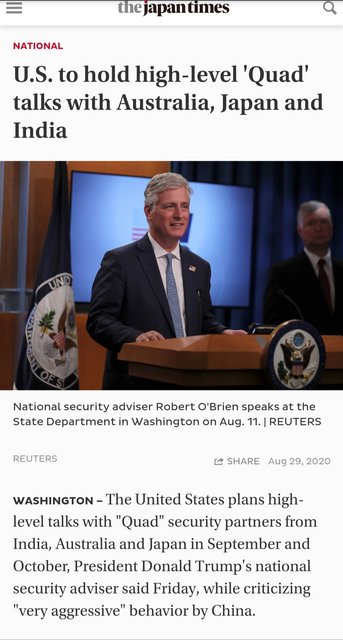
August 29th, 2020 05:08 PM #10179"QUAD" Originally Posted by StockEngine
Australia Japan India plus the USA.
-
Tsikoteer
- Join Date
- Oct 2012
- Posts
- 27,624

 Reply With Quote

 Originally Posted by uls
