
The rate hike was definitely no surprise but i was expecting a dovish hike. However the Fed signaled 4 rate hikes in 2016 which is pretty hawkish. The U.S. dollar was choppy for a few hours after the Fed decision but resolved itself to the upside.


The Largest Car Forum in the Philippines
- Forums
- Discussions
- Events
- Community
Results 8,761 to 8,780 of 10726
-
 Verified Tsikot Member

- Join Date
- Mar 2014
- Posts
- 355
December 17th, 2015 10:47 AM #8761
-
Verified Tsikot Member
- Join Date
- Mar 2014
- Posts
- 355
December 18th, 2015 12:46 PM #8762The stock rally after the rate hike is only a relief rally (after months of suspense... finally!). The rally isn't sustainable as long as oil prices remain this low. Back to reality, folks. Concern over HY bonds haven't gone away. Actually the concern has spread to investment grade corporate.
U.S. bond funds post $15.4 billion amid Fed rate hike: Lipper | Reuters
U.S. investors withdrew $15.4 billion from taxable bond funds over the week ended Dec. 16, Lipper said on Thursday, as some funds posted record-setting withdrawals in a week marked by fears over the stability of the bond market.
The $5.1 billion in outflows from investment-grade bond funds were the largest weekly withdrawals from those funds since Lipper's record-keeping figures began in 1992. The second and third largest withdrawals from those funds took place in September as the Fed pondered raising rates. Existing bonds are vulnerable to declining value as rates move up.
High-yield junk bond funds posted $3.8 billion in outflows over the week, their largest outflows since August 2014, Lipper said.
-
Verified Tsikot Member
- Join Date
- Mar 2014
- Posts
- 355
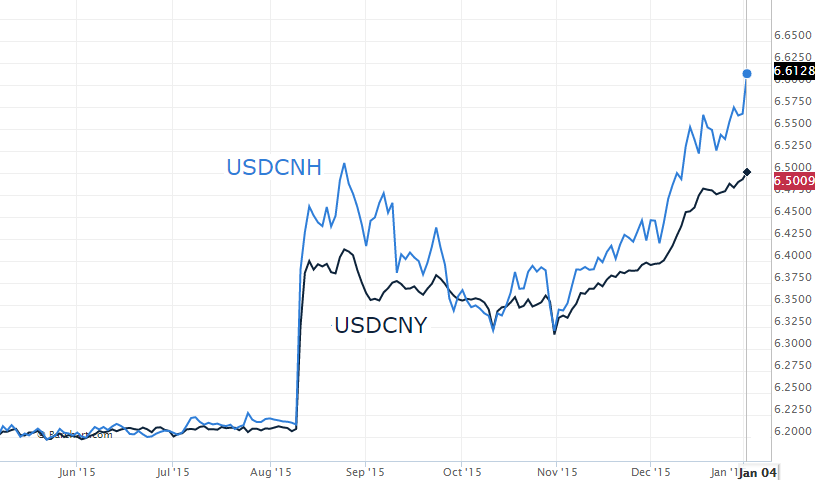
January 4th, 2016 03:08 PM #8763We start the year with weak China PMI, further RMB devaluation (check out USDCNH), Saudi-Iran tensions. Happy new year!
-
 Social Dementia
- Join Date
- Sep 2003
- Posts
- 25,189
January 4th, 2016 09:40 PM #8764
-
Social Dementia
- Join Date
- Sep 2003
- Posts
- 25,189
January 5th, 2016 07:46 AM #8765
-
Social Dementia
- Join Date
- Sep 2003
- Posts
- 25,189
January 5th, 2016 01:02 PM #8766Countries that relied heavily on the oil boom are now feeling the pain...
https://www.washingtonpost.com/news/...nds/?tid=sm_fbLast edited by Monseratto; January 5th, 2016 at 01:07 PM.
-
Verified Tsikot Member
- Join Date
- Mar 2014
- Posts
- 355
January 5th, 2016 10:19 PM #8767The U.S. dollar is stronger against other major currencies except for the yen. Declining stock prices worldwide is driving demand for the yen as safe haven. Chinese government intervention stabilized stocks but global markets are still on the defensive. The Chinese government also intervened in the currency market through state-owned banks. Onshore RMB stabilized but offshore RMB still weakened. The spread between the two is now at record level. EURUSD is falling as consumer prices in the eurozone decelerated in December.
-
Verified Tsikot Member
- Join Date
- Mar 2014
- Posts
- 355
January 6th, 2016 06:54 PM #8768China devalues its currency again. The spread between onshore and offshore RMB widens even more. I'm watching this more than anything else. The spread shows two important dynamics: the market expects further RMB devaluation and a lot of capital is flowing out of China.
-
Verified Tsikot Member
- Join Date
- Mar 2014
- Posts
- 355
January 7th, 2016 11:40 AM #8769China devalues the RMB again. China stock trading halted for the rest of the day after 7% plunge triggered circuit breaker (less than 30 minutes of trading). Yen strength across the board on safe haven demand. Good morning!
-
Social Dementia
- Join Date
- Sep 2003
- Posts
- 25,189
-
Tsikoteer
- Join Date
- Aug 2003
- Posts
- 9,720
January 8th, 2016 10:22 AM #8771Read on twitter than the Chinese government will suspend the "circuit breaker" rule today.

-
Verified Tsikot Member
- Join Date
- Mar 2014
- Posts
- 355
-
Verified Tsikot Member
- Join Date
- Mar 2014
- Posts
- 355
January 8th, 2016 11:25 AM #8773Dad: Tell me why it's time to buy.
Me: How many stocks in the S&P 500 are still above their 50-day moving average?
Dad: I don't know. How many?
Me: Not many. Stocks are oversold, dad.
-
Verified Tsikot Member
- Join Date
- Mar 2014
- Posts
- 355
January 11th, 2016 05:59 PM #8774Last week some people were asking why i'm watching the RMB more than anything else. Now they know.
-
Verified Tsikot Member
- Join Date
- Mar 2014
- Posts
- 355
January 11th, 2016 07:29 PM #8775Somebody is posting zerohedge articles in the WWIII thread. Just a little bit of advice that nobody in finance takes zerohedge seriously. Zerohedge is a permanently pessimistic finance blog run a guy or guys using the pseudonym "Tyler Durden" (the main character in the movie Fight Club). They're advocates of Austrian school ideas and they've been predicting the collapse of the global financial system everyday since they started posting in blogspot several years ago. The blog's consistent theme is the collapse will happen anyday now.
No need to panic over the spike in CNH-HIBOR. It makes sensational headlines but the spike has little practical impact. The reason why overnight CNH-HIBOR spiked is because China has been selling dollars / buying RMB in Hong Kong to stabilize USDCNH. The buying resulted in shortage of RMB in HK which caused borrowing rate to rise.
-
Tsikoteer
- Join Date
- Feb 2003
- Posts
- 1,038
January 11th, 2016 08:44 PM #8776So maam Lady Bathory is it safe to add now to my sooo bloody red Portfolio now? Are we on the reversal trend na? Damnnn. -9.28% loss ng MEG. BLOODY rmed since the start of the year tsk tsk.
-
Verified Tsikot Member
- Join Date
- Mar 2014
- Posts
- 355
January 12th, 2016 12:20 AM #8777I'm more optimistic towards developed market equities than emerging market equities. The multi-year EM boom has ended so asset prices are being adjusted.
-
 Tsikoteer
- Join Date
- Oct 2012
- Posts
- 27,624
January 12th, 2016 01:03 AM #8778Confirmed my prospects...I need to transfer to another country in 2yrs time. Originally Posted by Lady Bathory

-
Verified Tsikot Member
- Join Date
- Mar 2014
- Posts
- 355
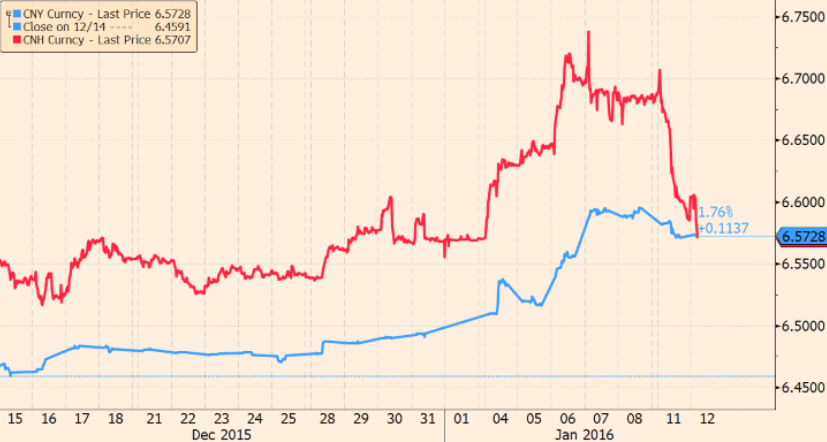
January 12th, 2016 12:57 PM #8779China intervention in the offshore market drove down USDCNH. USDCNH now at parity with USDCNY.
-
Verified Tsikot Member
- Join Date
- Mar 2014
- Posts
- 355
January 12th, 2016 03:30 PM #8780Q: "What does that graph mean?!"
A: China had to do something about USDCNH (offshore RMB) which kept pulling away from USDCNY (onshore RMB). The widening gap was caused by expectations of further RMB depreciation. Depreciation expectations encouraged speculators to short the RMB. Speculators would borrow RMB, sell RMB for dollars, then buy back depreciated RMB (they get more RMB than they borrowed). With the Mainland devaluing the RMB on a daily basis shorting the RMB became a popular trade. It was a one-way bet! The trade pressured USDCNH causing it to pull away from USDCNY. China couldn't catch up to USDCNH even with daily devaluation. USDCNH was a moving target. So China intervened by buying up RMB in Hong Kong making RMB scarce and expensive to borrow. The intervention pulled down USDCNH closing the onshore-offshore gap.

 Reply With Quote
 Originally Posted by Lady Bathory
