Ahh ok, pero if I were investing... Pass ako sa tweeter. They are unable to produce profit and that translates to low stock value.

The Largest Car Forum in the Philippines
- Forums
- Discussions
- Events
- Community
Results 7,921 to 7,940 of 10726
-
![[archie]'s Avatar](https://www.tsikot.com/forums/customavatars/avatar40707_3.gif)
![[archie] is offline](https://www.tsikot.com/forums/images/Smooth/statusicon/user-offline.png) Tsikot Member Rank 4
Tsikot Member Rank 4

- Join Date
- Feb 2008
- Posts
- 5,179
October 5th, 2013 07:07 PM #7921
-
 Tsikot Member Rank 4
- Join Date
- Nov 2005
- Posts
- 45,927
October 7th, 2013 11:41 AM #79221-month performance of major currencies against the dollar


Last edited by uls; October 7th, 2013 at 11:45 AM.
-
Tsikot Member Rank 4
- Join Date
- Nov 2005
- Posts
- 45,927
-
Tsikot Member Rank 4
- Join Date
- Nov 2005
- Posts
- 45,927
October 9th, 2013 12:42 AM #79241-month US t-bill yield highest since 2008

http://www.marketwatch.com/story/one...ion-2013-10-08
NEW YORK (MarketWatch) - Yields on 1-month Treasury bills moved higher Tuesday after the Treasury Department auctioned $30 billion of the short-term securities at a high yield of 0.350%. Prices in the broader market, which move inversely to yields, were already sliding, but accelerated their fall after the auction. The 1-month yield was up 13.5 basis points on the day at 0.2890%, on track for its highest close since the fall of 2008. Yields have been rising at the short end of the curve as the securities most at risk of a default build in additional risk premium in the event that lawmakers don't raise the debt ceiling.Last edited by uls; October 9th, 2013 at 01:04 AM.
-
Tsikot Member Rank 4
- Join Date
- Nov 2005
- Posts
- 45,927
-
Tsikot Member Rank 4
- Join Date
- Nov 2005
- Posts
- 45,927
October 9th, 2013 10:58 AM #7926Obama to name Yellen as next Fed chair on Wednesday | Reuters
(Reuters) - President Barack Obama will announce his choice of Federal Reserve Vice Chairwoman Janet Yellen to be the next head of the U.S. central bank on Wednesday, putting her on course to be the first woman to lead the institution in its 100-year history.
-
Tsikot Member Rank 4
- Join Date
- Nov 2005
- Posts
- 45,927
October 11th, 2013 10:41 AM #7927Treasury Short-Term Bill Yields Ease From Highs on Budget Talks - Bloomberg
Yields on the shortest-maturity Treasury bills have declined from their highest levels this week as negotiations in Washington increased speculation officials will increase the U.S. debt limit in time to avert a default.Bills maturing Oct. 17 yielded 0.365 percent as of 10:03 a.m. in Tokyo, according to Bloomberg Bond Trader prices. The yield was as high as 0.505 percent yesterday. It was negative as recently as Sept. 26.
-
Tsikot Member Rank 4
- Join Date
- Nov 2005
- Posts
- 45,927
October 12th, 2013 02:10 PM #7928so Republicans propose to raise the debt ceiling for 6 weeks
that takes away the risk of default in October and early November
now the risk of default is pushed 6 weeks further out
Treasury Bonds Rise; T-bills Due in December Selloff - WSJ.com
falling yield (falling risk)
rising yield (rising risk)The T-bill due Nov. 7, the benchmark one-month T-bill, traded at 0.236% recently, compared 0.259% closed Thursday. The yield rose above 0.35% on Tuesday, the highest level since the depths of the financial crisis in 2008.
Yet T-bills due in late November and in December has been taking a beating since Thursday, a sign investors saw increased risk of another stalemate at the end of the year.
Friday, the T-bill due Dec. 19 yielded 0.25%, higher than the three-month T-bill, which was yielding 0.071%, and the six-month T-bill's 0.076%.Last edited by uls; October 12th, 2013 at 02:18 PM.
-
Tsikot Member Rank 4
- Join Date
- Nov 2005
- Posts
- 45,927
October 13th, 2013 11:07 AM #7929China's September export growth in surprise slide | Reuters
(Reuters) - China's export growth fizzled in September to post a surprise fall as sales to Southeast Asia tumbled, data showed, a disappointing break to a recent run of indicators that had signaled its economy gaining strength.
China's exports dropped 0.3 percent in September from a year earlier, the Customs Administration said on Saturday, sharply confounding market expectations for a rise of 6 percent, and marking the worst performance in three months.
Imports fared better, rising 7.4 percent in September from a year ago, better than forecasts for a 7 percent increase, shrinking China's monthly trade surplus to $15.2 billion.
Analysts said weak exports underscored worries about flagging global demand, which may crumble further in coming months - especially in emerging markets - when tighter U.S. monetary policy pushes investors away from developing economies.
-
 Moderator
- Join Date
- Nov 2010
- Posts
- 25,276
-
Tsikot Member Rank 4
- Join Date
- Nov 2005
- Posts
- 45,927
-
Tsikot Member Rank 4
- Join Date
- Nov 2005
- Posts
- 45,927
October 13th, 2013 09:45 PM #7932the Fed won't taper this year
the Fed can't taper without economic data
no economic data coz of govt shutdownLast edited by uls; October 13th, 2013 at 10:07 PM.
-
Tsikot Member Rank 4
- Join Date
- Nov 2005
- Posts
- 45,927
October 14th, 2013 09:42 AM #7933Senate remains at an impasse - Manu Raju and Seung Min Kim - POLITICO.com
US stock futures deep in the redSenate leaders remained stuck Sunday over federal funding levels and the length of an increase to the national borrowing limit as they struggled to cut a last-ditch deal to reopen the government and avert the first-ever U.S. debt default.
-
Tsikot Member Rank 4
- Join Date
- Nov 2005
- Posts
- 45,927
-
 Social Dementia
- Join Date
- Sep 2003
- Posts
- 25,189
October 14th, 2013 02:07 PM #7935Tick tock to a Lehman Brothers default-typr event...
BBC News - IMF chief warns a US default could spark recession
IMF chief warns a US default could spark recession
13 October 2013 Last updated at 23:00 GMT
The head of the International Monetary Fund, Christine Lagarde, has warned that a US default could tip the world into recession.
In a US TV interview she said a default would result in "massive disruption the world over".
The US Treasury will start to run short of funds on Thursday if no agreement is reached for it to raise its debt limit.
Democratic and Republican leaders in the Senate held direct talks for the first time in weeks on Saturday.
But there is little sign of any breakthrough, correspondents say.
In an interview with ABC's Meet the Press Christine Lagarde said America must now raise the debt ceiling before Thursday's deadline.
"If there is that degree of disruption, that lack of certainty, that lack of trust in the US signature, it would mean massive disruption the world over and we would be at risk of tipping yet again into recession," she said.
World Bank
The president of the World Bank, Jim Yong Kim, has also expressed his concern over the situation.
He warned that the United States is just "days away from a very dangerous moment" because of the government's borrowing crisis.
Mr Kim urged US policymakers to reach a deal to raise the government's debt ceiling before Thursday's deadline.
He warned this could be a "disastrous event" for the world.
"The closer we get to the deadline the greater the impact will be for the developing world.
"Inaction could result in interest rates rising, confidence falling and growth slowing," said Mr Kim, speaking at the World Bank's annual meeting in Washington.
"If this comes to pass it could be a disastrous event for the developing world and that will in turn greatly hurt the developed economies as well," he added.
'Uneasy'
If the US does run short of cash, this could cause it to default on its debts, a development which would be likely to have a severe effect on financial markets around the world.
The BBC's Andrew Walker said that finance ministers from other countries think the US probably won't default, but they are uneasy and want the crisis resolved very soon.
Republicans and Democrats failed to come to an agreement on Saturday, but Senator Dick Durbin, a Democrat, said the aim was to reach a deal on extending the debt limit before markets reopen on Monday.
The White House rejected a deal for a short-term increase to the borrowing limit.
"It wouldn't be wise, as some suggest, to just kick the debt ceiling can down the road for a couple of months, and flirt with a first-ever intentional default right in the middle of the holiday shopping season," said President Barack Obama.
-
Social Dementia
- Join Date
- Sep 2003
- Posts
- 25,189
October 14th, 2013 02:24 PM #7936A U.S. Default Seen as Catastrophe Dwarfing Lehman?s Fall - Bloomberg
A U.S. Default Seen as Catastrophe Dwarfing Lehman’s Fall
By Yalman Onaran - Oct 7, 2013 11:27 PM GMT+0800
Anyone who remembers the collapse of Lehman Brothers Holdings Inc. little more than five years ago knows what a global financial disaster is. A U.S. government default, just weeks away if Congress fails to raise the debt ceiling as it now threatens to do, will be an economic calamity like none the world has ever seen.
Failure by the world’s largest borrower to pay its debt -- unprecedented in modern history -- will devastate stock markets from Brazil to Zurich, halt a $5 trillion lending mechanism for investors who rely on Treasuries, blow up borrowing costs for billions of people and companies, ravage the dollar and throw the U.S. and world economies into a recession that probably would become a depression. Among the dozens of money managers, economists, bankers, traders and former government officials interviewed for this story, few view a U.S. default as anything but a financial apocalypse.
The $12 trillion of outstanding government debt is 23 times the $517 billion Lehman owed when it filed for bankruptcy on Sept. 15, 2008. As politicians butt heads over raising the debt ceiling, executives from Berkshire Hathaway Inc.’s Warren Buffett to Goldman Sachs Group Inc.’s Lloyd C. Blankfein have warned that going over the edge would be catastrophic.
“If it were to occur -- and it’s a big if -- one would expect a series of legal triggers, potentially transmitting the default to many other markets,” said Mohamed El-Erian, chief executive officer of Pacific Investment Management Co., the world’s largest fixed-income manager. “All this would add to the headwinds facing economic growth. It would also undermine the role of the U.S. in the world economy.”
One unexpected consequence of Lehman’s collapse was the seizing up of the repurchase agreement, or repo, market -- a form of secured, short-term borrowing used by Wall Street banks and investment firms. Many of Lehman’s trading counterparts discovered the collateral they believed was backing their loans wasn’t there to grab as rules allowed. That scared investors in the rest of the market, closing off other trades and leading to fire sales of securities and further price declines.
A government default could freeze the repo market more than Lehman’s collapse because U.S. debt forms its backbone. At least $2.8 trillion of Treasuries serve as collateral for repo and reverse-repo loans, according to Fed data.
In the event of a default, Treasuries might no longer be eligible as collateral for repo agreements, according to James Kochan, Wells Fargo Funds Management LLC’s chief fixed-income strategist. The cheap funding for the holdings lowers the yields demanded on the investments, and unwinding the positions could amplify losses for lenders and borrowers.
If Treasuries were ejected from the market, “Well, holy cripes,” Kochan said in an interview.
The U.S. stock market lost almost half its value in the five months following Lehman’s failure. The country had its worst recession since the Great Depression (INDU), taking the global economy down with it. Unemployment (USURTOT) surged to 10 percent, the highest in three decades.
Another depression was prevented only by unprecedented action by the Federal Reserve, which pumped $3 trillion into the financial system. The U.S. Treasury provided about $300 billion of capital for the nation’s banks.
“If we miss an interest payment, that would blow Lehman out of the water,” said Tim Bitsberger, a former Treasury official under President George W. Bush and now a New York-based managing director at BNP Paribas SA. “Lehman was an isolated company, and now we are talking about the U.S. government.”
The Treasury has $120 billion of short-term bonds coming due on Oct. 17, according to data compiled by Bloomberg. An additional $93 billion of bills are due on Oct. 24. On the last day of the month, $150 billion needs to be paid back, including two-year and five-year notes that mature. The total due from Oct. 17 through Nov. 7 is $417 billion.
While some expect a 2013 default will drive up yields only on Treasury securities coming due, others including former Deputy Treasury Secretary Roger Altman see a wider impact in bond yields, pushing up borrowing costs.
“That would be higher interest costs over some considerable period of time for the U.S. and for U.S. taxpayers,” said Altman, who’s chairman of New York-based investment bank Evercore Partners Inc.
Some point to Standard & Poor’s 2011 downgrade of the U.S. credit rating, which led to an increase in Treasury prices, not a drop. Even after the rating was lowered by one level to AA+ from AAA, investors continued buying U.S. government bonds as they flocked to safety, according to Joe Davis, chief economist at Vanguard Group Inc
-
Tsikot Member Rank 4
- Join Date
- Nov 2005
- Posts
- 45,927
October 14th, 2013 03:11 PM #7937Everyone The U.S. Government Owes Money To, In One Graph : Planet Money : NPR
If Congress doesn't raise the debt ceiling soon, the U.S. government won't be able to pay its debts. Here's who the government owes money to — all the holders of U.S. Treasury debt, broken down by category and by how much government debt they hold.
-
Social Dementia
- Join Date
- Sep 2003
- Posts
- 25,189
-
Moderator
- Join Date
- Nov 2010
- Posts
- 25,276
October 14th, 2013 03:49 PM #7939^ Republican lang ba talaga nangungulit or there is a grander scheme for the US to flex its might? Just showing the world who is the real superpower? Just asking lang.
-
Tsikot Member Rank 4
- Join Date
- Nov 2005
- Posts
- 45,927
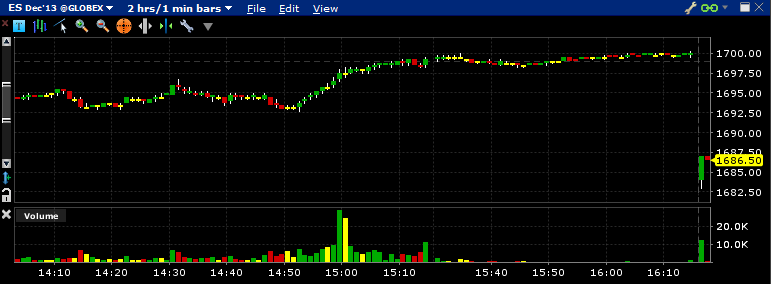
October 14th, 2013 04:46 PM #7940what US politicians are doing now is damaging US standing in the world rather showing strength
it's making large foreign bondholders like China seek an alternative to the US dollar as reserve currency
Commentary: U.S. fiscal failure warrants a de-Americanized world
http://news.xinhuanet.com/english/in..._132794246.htm
What may also be included as a key part of an effective reform is the introduction of a new international reserve currency that is to be created to replace the dominant U.S. dollar, so that the international community could permanently stay away from the spillover of the intensifying domestic political turmoil in the United States.Last edited by uls; October 14th, 2013 at 04:58 PM.

 Reply With Quote

 Driven To Thrill!