BTW, which is better or none pa rin? "Current options, diplomats said, include a buyback of Greek debt or a debt swap."
Read more: Euro debt contagion threatening Italy, Spain

The Largest Car Forum in the Philippines
- Forums
- Discussions
- Events
- Community
Results 5,461 to 5,480 of 10726
-

 Moderator

- Join Date
- Nov 2010
- Posts
- 25,276
July 12th, 2011 10:20 AM #5461Fasten your seatbelt! Or else... Driven To Thrill!
-
 Tsikot Member Rank 4
- Join Date
- Nov 2005
- Posts
- 45,927
July 12th, 2011 10:26 AM #5462if you follow EURCHF, you know that fall is BIG
---
US 10 yr yield
major risk off
-
Tsikot Member Rank 4
- Join Date
- Nov 2005
- Posts
- 45,927
July 12th, 2011 11:11 AM #5463RE China inflation
they're fighting it. raising rates, raising bank reserve requirement to slow down lending
i would be more concerned if i was selling to China than buying from China
as China tries to slow down their economy demand for raw materials will slow
so everyone who supplies raw materials to China will be affected
-
Tsikot Member Rank 4
- Join Date
- Nov 2005
- Posts
- 45,927
July 12th, 2011 11:17 AM #5464 Originally Posted by Ry_Tower

basta anything that won't trigger credit default swap payout
-
Tsikot Member Rank 4
- Join Date
- Nov 2005
- Posts
- 45,927
July 12th, 2011 11:19 AM #5465sovereign debt is risk free?
http://cache.dealbreaker.com/uploads...-Q2-Letter.pdf
According to current banking regulations, sovereign credits are considered “risk-free.” This means that banks can take on as much sovereign credit risk as they like without setting aside any capital. Under such a structure, selling short CDS protection is akin to free money for the banks.
Likely, the real worry is that the first default will expose the fiction that sovereign debt is risk-free. If the authorities permit one default, their credibility to prevent additional defaults will be lost. No one knows just how much aggregate exposure to sovereign debt and CDS is hidden in the banking system, and no one is itching to find out. The European regulators are trying to calm the market by conducting “stress tests” on the banks. This might be more comforting if the stress tests included testing for the possibility of a sovereign default. They do not. What is the point of a stress test that fails to test for the most obvious and visible risk facing the banks?
-
 Social Dementia
- Join Date
- Sep 2003
- Posts
- 25,189
July 12th, 2011 11:20 AM #5466Oil Prices and China...
Oil Prices Slump on China Concerns - TheStreet)
NEW YORK (TheStreet) -- Oil prices were being trampled over fears about slowing demand in China.
Brent crude oil for August delivery was tumbling by $2.29 to $116.04 a barrel and the August West Texas Intermediate light sweet crude oil contract was falling $1.14 to $95.06. The U.S. dollar was gaining 1% to $75.91.
"Part of the decline may be explained by seasonal factors and widespread power shortages, but we have to suspect that the government's tightening macro stance must be having some impact as well," said MF Global analyst Ed Meir.
Crude oil imports fell to an eight month low.
"Today's selloff is courtesy of news out of China that oil imports shrank in June to an eight-month low, combined with further European sovereign debt concerns; next stop is Italy and Spain, as both see the price of their debt spreads reach record levels as confidence in them evaporates," said Summit Energy analyst Matt Smith.
-
Moderator
- Join Date
- Nov 2010
- Posts
- 25,276
July 12th, 2011 11:36 AM #5467hehe, sa EU and china slowdown along with sluggish US economy, I expect oil prices to go down further. Originally Posted by Monseratto
Fasten your seatbelt! Or else... Driven To Thrill!
-
Tsikot Member Rank 4
- Join Date
- Nov 2005
- Posts
- 45,927
July 12th, 2011 11:42 AM #5468 Originally Posted by Monseratto
oil price fell last night coz of risk off
tataas uli yan
-
Tsikot Member Rank 4
- Join Date
- Nov 2005
- Posts
- 45,927
July 12th, 2011 01:19 PM #5469Brent spot is now higher than futures
despite risk off, oil is holding up pretty wellCBY00 (Cash) 117.93s
CBQ11 (Aug '11) 116.58
CBU11 (Sep '11) 115.79
CBV11 (Oct '11) 115.48
CBX11 (Nov '11) 115.88
CBZ11 (Dec '11) 115.86
-
Social Dementia
- Join Date
- Sep 2003
- Posts
- 25,189
-
Tsikot Member Rank 4
- Join Date
- Nov 2005
- Posts
- 45,927
-
Tsikot Member Rank 4
- Join Date
- Nov 2005
- Posts
- 45,927
-
 Wheelin and Dealin'
- Join Date
- Feb 2008
- Posts
- 14,181
-
Social Dementia
- Join Date
- Sep 2003
- Posts
- 25,189
July 12th, 2011 11:10 PM #5474Too big to fail...
Merrill warns of major global crisis over Italy - MarketWatch
MADRID (MarketWatch) -- A further deterioration in Italy's bond market could threaten the global economic recovery and lead to "tail risk scenarios for global financial markets," warned Bank of America Merrill Lynch in a note to investors on Tuesday. "As the third largest bond market in the world, after Japan and the U.S., Italy could be systemic. Funding pressures in Italy, and even more so a sovereign crisis, would have implications, in our view, that would extend well beyond the euro zone," the analysts said. They added that markets appear to be underestimating such risks with volatility low and the euro relatively strong. The analysts said unless euro zone leaders considerably strengthen the European Financial Stability Facility immediately and Italy resolves its political issues and adopts a more "credible and frontloaded fiscal consolidation plan," along with "ambitious structural reforms," the spike in Italy's borrowing spreads over Germany could "snowball into a major crisis for the global economy," substantially knocking the euro.
-
Tsikot Member Rank 4
- Join Date
- Nov 2005
- Posts
- 45,927
July 13th, 2011 12:23 AM #5475Italy bond auction July 14
the ECB will probably have to intervene (buy bonds) to prevent the auction from failing
either the ECB or China
-
Social Dementia
- Join Date
- Sep 2003
- Posts
- 25,189
July 13th, 2011 08:02 AM #5476Back to another PIIGS...
Moody's downgrades Ireland debt to junk status - Yahoo! Finance
NEW YORK (AP) -- Moody's Investors Service has cut Ireland's government debt ratings to junk status, saying it believes Ireland will need further rounds of financing when the current European Union and the International Monetary Fund support ends in 2013.
The ratings agency cut Ireland's bond ratings to "Ba1" from "Baa3," and said Tuesday the outlook on the ratings remains negative.
Moody's credits Ireland with a strong commitment to fiscal consolidation, but notes that implementation risks remain significant with its weak economy.
The analysts say the EU may require private sector creditor participation as a precondition for such additional support, a negative for holders of distressed government debt.
Ireland's short-term issuer rating also was lowered by one notch to "Non-prime" from "Prime-3."
-
Tsikot Member Rank 4
- Join Date
- Nov 2005
- Posts
- 45,927
July 13th, 2011 12:09 PM #5477^^^
Similar reasoning to Portugal downgrade
private sector involvement. bondholders no longer protected. bondholders have to take losses
that factor reprices PIIGS bonds
-
Tsikot Member Rank 4
- Join Date
- Nov 2005
- Posts
- 45,927
July 13th, 2011 01:52 PM #5478can't keep oil down
WTI spot and futures
Brent spot and futuresCLY00 (Cash) 97.43s
CLQ11 (Aug '11) 97.14
CLU11 (Sep '11) 97.57
CLV11 (Oct '11) 98.02
CLX11 (Nov '11) 98.44
CLZ11 (Dec '11) 99.00
CBY00 (Cash) 116.86s
CBQ11 (Aug '11) 117.41
CBU11 (Sep '11) 116.64
CBV11 (Oct '11) 116.63
CBX11 (Nov '11) 116.63
CBZ11 (Dec '11) 116.92
-
 Ignore
- Join Date
- Oct 2006
- Posts
- 5,994
July 13th, 2011 02:32 PM #5479Swiss Parliament to discuss gold franc - MarketWatchZURICH (MarketWatch) — The Swiss Parliament is expected later this year to discuss the creation of a gold franc — a parallel currency to the official Swiss franc, with the fringe initiative likely triggering a broader debate about the role of the precious metal in the Alpine nation.
The initiative is part of “Healthy Currency,” a campaign sponsored by politicians from the right-wing Swiss People’s Party (SVP) — the country’s biggest — that is seeking to capitalize on popular fears about global financial turmoil and inflation to reverse the government’s current policy on gold.
“I can imagine that this will spark some sort of debate about gold and there may be some pressure to accept the parallel currency,” said Dr. Gebhard Kirchgaessner, an economics professor at St. Gallen University. “But it won’t have any real effect on the economy. It seems incredible to imagine that there are people out there willing to buy millions of these things.”
Switzerland, which in 2000 became one of the last countries to decouple its currency from gold, is not the only place to contemplate a change in the precious metal’s role amid controversy over government involvement in the economy. In March, Utah became the first state in the U.S. to legalize gold and silver coins as currency, while similar legislation was considered in Montana, Missouri, Colorado, Idaho and Indiana.
“I want Swiss people to have the freedom to choose a completely different currency,” said Thomas Jacob, the man behind the gold franc concept. ”Today’s monetary system is all backed by debt — all backed by nothing — and I want people to realize this.”
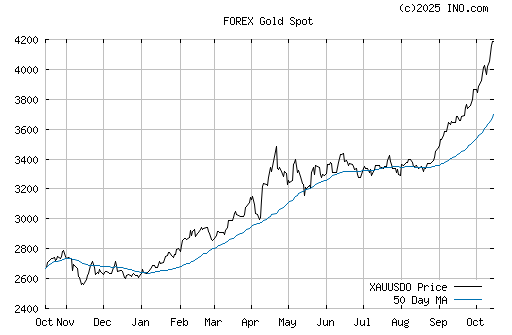
A good part of the enthusiasm for gold, which provokes strong emotion among many who invest in it, has to do with its price: the yellow metal has more than quadrupled during the last decade and now stands at more than $1,500 per ounce.Damn, son! Where'd you find this?

-
Tsikot Member Rank 4
- Join Date
- Nov 2005
- Posts
- 45,927

 Reply With Quote
 Originally Posted by Ry_Tower