
Hi peeps,
i recently got schooled on how to properly ground our equipment here in the office. Basically a contractor installed a ground wire on our equipment racks(with pcs, switches, etc). They used a VOM to check for grounding, and found that some equipment were OK, some were not. They suggested that we run ground wires to each equipment to be sure.
Some questions:
1. Sabi nung isang electrician, we just need to ground one server/switch, then OK na daw. But nagaground pa rin when we tested the other equipment. Need ba talaga maglagay ng ground wire per equipment?
2. Do i need metal to metal contact, i.e. metal covering to ground wire? i'm getting conflicting answers, sabi ng iba need pang iscrape yung paint para me contact, sabi naman ng iba hindi na kelangan.
3. The contractor mentioned that they somehow connected the ground wire to sprinkler pipes, in addition to attaching it to the building/floor's earth ground, for additional safety daw. Tama ba yung ganito?
4. We have a few servers with aluminum casing, no paint or coating. Can we ground it by attaching the ground wire directly onto the casing?
tia

The Largest Car Forum in the Philippines
- Forums
- Discussions
- Events
- Community
Results 1 to 7 of 7
-
 Tsikoteer

- Join Date
- Aug 2003
- Posts
- 9,720
February 28th, 2014 11:24 AM #1
-
 Tsikoteer
- Join Date
- Jun 2012
- Posts
- 1,488
February 28th, 2014 01:49 PM #2First, you have to make sure that the building has proper grounding installation as you mention in #3. Kahit pa pagbuhulbulin mo ang mga metals kung walang proper grounding, walang effect. You can also verify it with Meralco.
VOM is not the right equipment to test correct grounding installation. Basic is, those metals (connected to ground) should have a very low resistance with respect to Earth. Just imagine if you are at the 25th floor.
-
 Tsikoteer
- Join Date
- Sep 2007
- Posts
- 1,870
February 28th, 2014 03:51 PM #3Medyo mahina mag- explain electrician mo, tsk- tsk- tsk.
Ganito na lang:
1. The main equipment / server and all electrical equipment should be properly grounded. Sabihin mo lang
sa electrician 'yan at kung talagang marunong siya, alam niya na ang gagawin.
Kaya ka naga- ground, kasi 'yang "grounding or earthing system / connection" mo sa building ay
"floating" and / or "may sayad". Your electrician should be able to find this fault and fix it.
floating - poor connection of wires/conductors; interrupted flow of electric current
may sayad (grounded) - unintended flow of electricity between two objects / bodiess
Lahat ng electrical system or equipment ay may "grounding wires" o terminal man lang to tap these
grounding wires. Kung properly wired ang electrical system niyo, meron dapat grounding wires 'yan.
Usually, Green ang color ng insulation ng mga grounding wires. Pwede naman ipakita sa iyo
ng electrician 'yan. Just open an outlet and look at the wires inside.
2. Yes. kailangan talaga ang "full" metal to metal contact sa mga Grounding Systems.
You really have to scrape the paint. Paints are insulators, metals are conductors.
3. It's not advisable (well, I won't) to connect grounding wires to sprinkler pipes.
Hindi kasi siguradong lahat ng pipes / tubo ay metallic. Decades ago, ginagawa ito kasi nga
hindi pa uso ang mga PVC Pipes. Kapag somewhere eh na- interrupt ang connections ng mga
metal pipes, interrupted rin ang Grounding System mo. Diyan lumalabas ang mga "floating".
4. Yes. Merong "mark/s" diyan sa aluminum casing na 'yan where you should tap the Grounding Wires.
Imposibleng wala, unless, the aluminum casing is not meant for electrical equipment.
Above all, kailangan mo munang ayusin ang "Grounding System" niyo bago ka mag- connect ng mga
Grounding Wires sa mga equipment. Ask the Building Maintenance Engineer re the building's Grounding System.Last edited by joemarski; February 28th, 2014 at 03:54 PM.
-
Tsikoteer
- Join Date
- Aug 2003
- Posts
- 9,720
February 28th, 2014 04:12 PM #4icic. In any case it seems dicey to involve the sprinkler or any other pipe for grounding. Baka maground pa yung ibang maintenance people. Originally Posted by joemarski

[/quote]Above all, kailangan mo munang ayusin ang "Grounding System" niyo bago ka mag- connect ng mga
Grounding Wires sa mga equipment. Ask the Building Maintenance Engineer re the building's Grounding System.
Me earth ground naman daw bawa't floor ng building; we asked the contractor to install the ground wires going to our unit.
Yung equipment papuntang grounding "contact", pwede na pong stranded ang gamitin?
-
Tsikoteer
- Join Date
- Sep 2007
- Posts
- 1,870
February 28th, 2014 06:04 PM #5Each unit / offices inside the building is usually provided with a dedicated Electrical Panelboard/s. Originally Posted by badkuk
May mga Grounding Bus Bars (GBB) sa loob ng mga Panelboards. These GBBs are connected to the
Main Grounding Bus Bars (MGBB) of the building. Kaya merong "Tapping Point" ang MGGB sa bawat floor.
Hindi ko masyadong maintindihan 'yung sinabi mong "we asked the contractor to install the ground wires
going to our unit". Ano 'yung unit? Office ba o 'yun mismong equipment?
Anyway, the nearest grounding point source will be the GBB inside the Panelboard.
I don't think that they will allow you to tap your grounding wires to the MGBB of the building.
Ina- alala ko kasi kung saan nag tap ang contractor mo, at saka mahal na ang "wires".
Yung equipment papuntang grounding "contact", pwede na pong stranded ang gamitin?
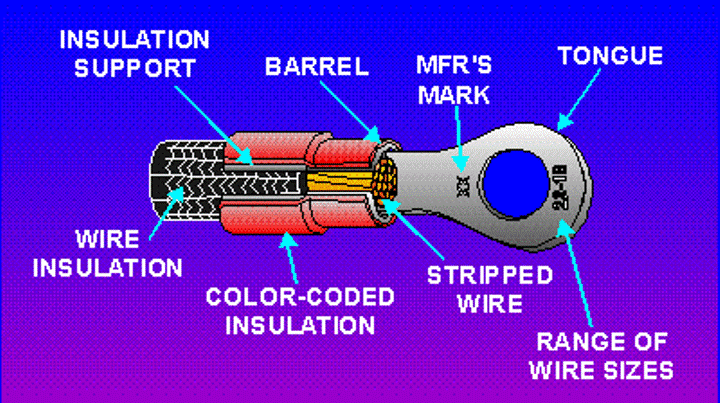
Yes, stranded wires are the best to use. Use Terminal Lugs for easy / clean installation.
Last edited by joemarski; February 28th, 2014 at 06:26 PM.
-
 Tsikoteer
- Join Date
- Oct 2011
- Posts
- 26,781
March 1st, 2014 10:57 PM #6 Originally Posted by badkuk
Dapat may common ung grounding sa lahat ng equipments mo sir. Kung hindi may potential difference pa yan.
-
 ASE MasterTechnician
- Join Date
- Feb 2009
- Posts
- 5,167
March 2nd, 2014 07:38 PM #7 Originally Posted by badkuk
the contractor is partially right. grounding is necessary. but to check for proper grounding, you check using an ohm meter.
grounding is used to dissipate unwanted or stray or eddy voltages. airplanes use those little static dissipators (usually found on the trailing edges of the wings) to get rid of electrical charges (both static and from lightning strikes) to the surrounding air and further grounded by personnel once it is on the ground. in germany, even the low lying metal buildings are grounded to reduce corrosion and to dissipate lightning voltages. the purpose is twofold, one, to reduce the hazard of electrical shock and fire, the other to get rid of unwanted electrical charges that might interfere with sensitive electrical or electronic circuits. the potential difference in electrical charges between an object and ground makes the voltage ready to discharge

 Reply With Quote
 Originally Posted by joemarski
Tags for this Thread
None

