Changing one's habits to go green presupposes a change in values. The attitude problem is the hard part. Change the attitude of government and big business and national habits can change more easily. (And sometimes, being OC is a gift. Some people want, nay, have to know the issues to the last detail. And others are just passionate about cars and propulsion technologies.)Originally Posted by itchywitch

But I still have serious doubts if getting splashed, sweating, getting wet, and breathing fumes while commuting are habits that people will ever get used to. Auto design is not just about propulsion.
It's primarily about PEOPLE who want safe and comfortable means of getting from Point-A to Point-B.
But since this technology is relatively new to many, it merits a closer look -- even just for the sake of completeness. So, here's a short overview.
Those who want to learn a bit more about HOW ELECTRIC VEHICLES WORK, can visit the ff pages from HOWSTUFFWORKS.COM.
* Introduction to How Electric Cars Work
* An Electric Car Example
* Doing a Conversion
* Inside an Electric Car
* Charging an Electric Car
* The Magna-Charge System
* Battery Problems
* Electric Car Video
The acknowledged leader in cutting edge e-car research & development is Tesla Motors.
Those who want to know HOW SOLAR CELLS WORK, visit
* Solving Solar-Power Issues
* Solar Car Video
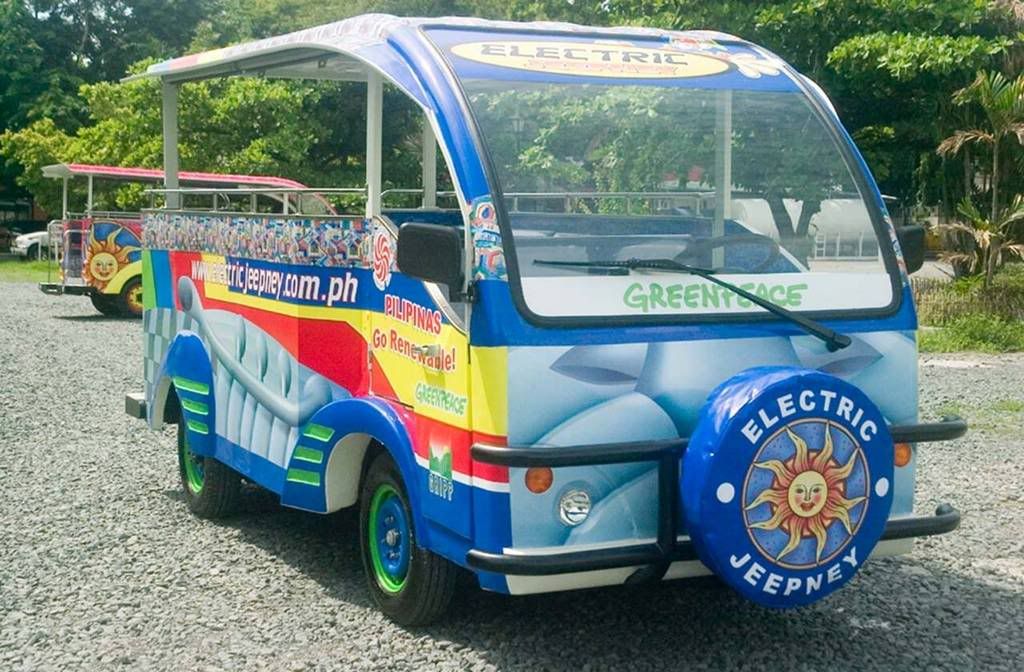
To run a vehicle purely on solar power using photovoltaic (PV) cells is not really that feasible at the moment. It still has to pair up with some other energy source. Hence, you have hybrid vehicles. What "PHEV" originally means is "Plug-in hybrid electric vehicle" (not "Philippine Electric Vehicle", but that's alright). The e-Jeepney is essentially a PHEV. I guess that's one of the reasons why LTO is balking on e-Jeepney's registration process. Among other things, they're having difficulty categorizing it. You can also imagine how the oil companies don't like the idea of becoming irrelevant.
At the moment, hybrid-electric vehicles (HEV) pair up internal combustion engines and electric motors, generally powered by electric batteries or other rechargeable energy storage system or "RESS".
If you want to do away with combustion, you have to connect to a power supply grid. Vehicle to Grid (V2G) technology is a bi-directional grid interface for gridable Electric vehicles such as Battery Electric Vehicles (BEV) and Plug-in hybrid electric vehicles (PHEV). It's a version of Battery-to-grid, but applied to vehicles.

The Largest Car Forum in the Philippines
- Forums
- Discussions
- Events
- Community
Results 41 to 60 of 1193
-

 Buon giro a tutti!

- Join Date
- Jan 2005
- Posts
- 688
August 13th, 2007 07:34 PM #41Last edited by dprox; August 14th, 2007 at 02:49 AM.
[SIZE="1"]DESIGN is the missing link in the Philippine auto industry.[/SIZE]
-
Tsikot Member Rank 4
- Join Date
- Oct 2002
- Posts
- 2,719
September 6th, 2007 12:10 AM #42this e-jeep is really cool ... a quick and simple calculation yields the equivalent fuel economy at 42 km/li ... not far from what I get with my Honda Wave 100 motorcycle

-
 Tsikot Member Rank 3
- Join Date
- Jun 2007
- Posts
- 2,857
September 6th, 2007 08:29 PM #43Great!!!Indeed this country is not short of innovative and resourceful people and entrepreneurs!!!!keep it up Insular Technologies!!!
-
 Tsikot Member Rank 2
- Join Date
- Mar 2006
- Posts
- 453
September 7th, 2007 12:29 PM #44Uh... When are these things suppossed to be running about anyway?
I've heard of them for quite some time now but have yet to actually see once on the road.
-
Tsikot Member Rank 3
- Join Date
- Jun 2007
- Posts
- 2,857
September 7th, 2007 06:36 PM #45dapat kasi hybrid...yung katulad ng mga txi sa manila na puedeng LPG at gasolina....kasi yang e-jeep ng Dumaguete ok kasi locally made at madaling i-fabricate..ang biyahe yan ay yung mga subdivisions...tama na yung mga inefficient at very expensive na pamasahe ng tricycle...
Actually, dapat alisin na tricyle....maingay, mausok, mahal ang pamasahe at delikado pa...especially sa mga babae pag gabi.....
yang e-jeep ng Dumaguete at Insular technologies, electric car nung taga-QC at e-jeepney ng MVPMAP ang dapat pumalit sa anachronistic na mga Tricycles...
-
Tsikot Member Rank 2
- Join Date
- Aug 2007
- Posts
- 675
October 29th, 2007 10:56 PM #46I was thinking along the lines of a schoolbus... Travels only at a certain time of the day kaya kayang magrecharge, and the distance it will take daily is also predictable...
Must be really nice to have electric schoolbuses
Are these e-jeepneys from dumaguete commercially available na? Their website is practically empty.
-
Tsikot Member Rank 3
- Join Date
- Jun 2007
- Posts
- 2,857
January 25th, 2008 04:39 PM #47The MVPMAP is pushing for the local manufacture of e-jeepneys with an initial 44 units in cooperation with a Dutch NGO, GRIPP.
Hope MVPMAP will become successful and will help spur the local manufacture of other similar indigenouslly engineered vehicles...
Go MVPMAP e-PHUV! Hope you will still produce a diesel-fed (with biofuel) Philippine utility vehicle...
-
Tsikot Member Rank 2
- Join Date
- Aug 2007
- Posts
- 675
February 2nd, 2008 07:30 AM #48yeah, I think often times, our government policies make it hard for us to innovate/invent. I still remember the locally made x-ray machine for one. Some Filipino guy was able to invent a locally made x-ray machine but it got scrapped because the Government required it to pass certain tests which werent available here. Yet they let many used surplus xray junk go through without being retested for radiation leaks and all... yet they offered no help in being able to come up with these tests. Originally Posted by dprox
Our policies tend to become too stiff sometimes and its often used by many people in office to their financial advantage (if you want us to bend the rules, then pay us)... Kaya home grown innovations are hard to come by, unless they are only asthetic ones. It's common for us to trust in foreign made innovations faster than local ones, and even giving them more ability to "flex" our rules as long as they've been tested abroad.
This is a challenge to local producers who would like to make innovations such as hybrid or electric vehicles
-
Verified Tsikot Member
- Join Date
- Mar 2007
- Posts
- 7
February 4th, 2008 01:21 AM #49X-ray machine is radiation free if is unplugged. X-ray Machine uses electricity to create radiation. The process accelerates particles that collide with a certain material thus creating x-ray particles... and this would only be possible by using electricity...this is not like gamma-rays which are emmited by radio acitve materials such as iridium, cobalt, cesium and others and used for industrial, and medical purposes. Thats why when you hear cobalt therapy, the body is actually receiving a controlled amount of radiation from radioactive material such a cobalt... Originally Posted by webmiester
Hope to have shared information to you guys..
-
Verified Tsikot Member
- Join Date
- Jan 2008
- Posts
- 66
February 20th, 2008 01:49 PM #50Siguro Ok tong Electric Motor that I found on the Web, accdg to the author up to 350 HP daw ang power. You guys be the judge na lang. It might help our Pinoy built electric vehicles.
Heres the emule link;
ed2k://|file|(Ebook%20-%20Free%20Energy)%20Fuelless%20Engine%2050-350Hp.zip|1871288|BCFF15A72301B8369D1F3E99FAD52D4D |/
-
 I... see... RED!
- Join Date
- Jun 2007
- Posts
- 2,840
March 23rd, 2008 12:05 PM #51With the actual vehicle, a purely electric vehicle would surely benefit from certain energy recapturing techniques found in hybrids, such as regenerative braking.
If there's truly going to be any commitment to helping the environment, the electricity should also come from renewable sources (e.g. wind, water, geothermal - especially this last one).
The purpose of electric vehicles is essentially defeated if the energy comes from a coal or oil fired power plant.
By the way, any details on the rejection of the e-jeepney by the JODA?Last edited by scharnhorst; March 23rd, 2008 at 12:09 PM.
-
Tsikot Member Rank 3
- Join Date
- Jun 2007
- Posts
- 2,857
May 6th, 2008 02:49 PM #52Sa wakas tatakbo na ang mga e-jeepney kasi papayagan na ng DOTC.
The DOTC has jsut finished formulating guidelines for e-jeepneys.
I hope this will spur local fabrication of electric vehicles....
-
Buon giro a tutti!
- Join Date
- Jan 2005
- Posts
- 688
May 7th, 2008 05:49 AM #53Kamukha talaga ni Eugene, the magical Jeep from the Popeye cartoons. Originally Posted by romski123

I guess a bus version with the spare in front would look like Alice the Goon.
Last edited by dprox; May 7th, 2008 at 06:18 AM.
[SIZE="1"]DESIGN is the missing link in the Philippine auto industry.[/SIZE]
-
 Tsikot Member Rank 2
- Join Date
- Jan 2007
- Posts
- 3,448
May 7th, 2008 11:23 AM #54Dprox grew up watching those 1930s Popeye cartoons (the ones made by the Fleischer Studios). Joke only
 . When I was a little boy I watched Spongebob Squarepants.
Pop quiz. What is the name of Popeye's nemesis?: (a) Brutus, (b) Bluto.
The answer is here http://en.wikipedia.org/wiki/Bluto .
Sorry, OT.
----------------
I'm sure the Tsikot design team can improve the design of the E-jeepney. Any re-design of the jeepney should tackle the existing jeepney's shortcomings:
- uncomfortable seating position.
- passengers have difficulty entering and alighting due to low ceiling / high floor.
- rear door allows exhaust fumes to enter the passenger compartment.
- rear door location increases chances of passengers being crushed when the jeepney is rear-ended by another vehicle.
- jeepney driver has to extend his arm to the rear to collect fares.
- it gets hot inside when the plastic curtains are in place during rainy days.
-
 enthusiast
- Join Date
- Mar 2007
- Posts
- 855
May 8th, 2008 02:28 AM #55If these E-Jeepneys are using NiMH or Lead Acid, end users will likely find the replacement cost too high.
That's why there are only ten EV still registered in British Columbia. The cost of battery replacement is HIGHER than buying gas. Unless you use Revived, Cost-free, batteries like Rob Mathies does. (* 30 cents a day operational cost - can be charged by solar panels too!)
Here are his blogs
You Can Save The Electric Car
http://battery-reuser.blogspot.com/
http://battery-reuser.blogspot.com/2...sers-blog.html
Originally Posted by scharnhorst
Last edited by dprox; May 9th, 2008 at 04:25 AM.
-
Verified Tsikot Member
- Join Date
- Nov 2004
- Posts
- 18
July 1st, 2008 05:06 PM #56Let us not be distracted from our quest for alternative energy sources by the bogeyman of Global Warming.The purpose of electric vehicles is essentially defeated if the energy comes from a coal or oil fired power plant.
The Philippines produces less than a fraction of 1% of greenhouse gases; even if we convert all our power plants to coal-fired plants, it won't make a bit of difference in the overall status of Global Warming.
Besides, a consumer has no way of knowing if the electricity coming from his wall outlet is produced by oil/coal-fired plants or other sources.
If we can buy low-cost lithium-ion batteries from China (mahal bumili from other countries), incorporate regenerative braking into the design and improve the overall comfort and convenience of passengers, this could be the start of a truly efficient EPHUV.
One more PRO: The EPHUV will not be consuming any energy while stuck in traffic, except for air conditioning (yes, it's possible with electric vehicles).
One more CON: Paano kung may baha?
-
Tsikot Member Rank 4
- Join Date
- Jan 2003
- Posts
- 1,403
July 1st, 2008 07:32 PM #57While it is most probably true pollution in the Philippines won't make a bit of difference in the overall status of Global Warming, the harsh reality is that whatever pollution we are generating remains within our immediate surroundings. The smog over MetroManila is very evident as is the pollution in our rivers. So while our poison won't necessarily affect the rest of the world, it is in fact killing Filipinos on a daily basis. Originally Posted by banana_republic
-
 MU-X'ed!
- Join Date
- Oct 2003
- Posts
- 1,034
July 2nd, 2008 10:56 AM #58Nasakyan ko na yung eJeep sa MMLDC. Here's their article about it. Cool siya. Mabilis rin.
-
Verified Tsikot Member
- Join Date
- Mar 2008
- Posts
- 263
July 3rd, 2008 05:55 AM #59 Originally Posted by architect
[SIZE=3]The smog's not only in Metro-Manila. When I went to Isabela, I saw from the higher altitudes of I forgot where along our route the brown haze covering practically everywhere I looked.
The problem is not only with combustion engines and CO2 emitting plants but also garbage burnt. Garbage burning is the worse as dioxin is produced and ozone destroying chemicals emitted with the burning of plastics and styro's.
Electric and other non-co2 emitting would help not only directly in the reduction of CO2 emission but also as promotion for making people aware of the urgent need of living a 'greener' lifestyle.[/SIZE]
KSC
-
 Verified Tsikot Member
- Join Date
- Oct 2007
- Posts
- 141
July 4th, 2008 06:36 AM #60kaya medyo mabuti ding ang naging epekto ng pag taas ng fuel, nabawasan ang mga gumagamit ng sasakyan nila, maybe kung wala nang nagamit ng fuel sa mga sasakyan eh sa palagay ko malaki ang maibabawas sa global warming and pollution sa earth....peace go e-car
 Originally Posted by itchywitch

 Reply With Quote