
it wont take off..common sense. No drag.
airports would have designed it to save space.

The Largest Car Forum in the Philippines
- Forums
- Discussions
- Events
- Community
Results 121 to 140 of 154
-

 Eat me

- Join Date
- Nov 2005
- Posts
- 695
November 10th, 2006 05:05 PM #121
-
Tsikot Member Rank 4
- Join Date
- Jan 2003
- Posts
- 2,979
November 10th, 2006 05:18 PM #122after reading all comments here, I definitely am sure that the plane would definitely fly. I am also sure that the plane would move forward and gain enough thrust to take of. again, assuming that the conveyor would only match the turning of the wheels of the plane thus relying only on frictional force to hold the plane back on its original position but since the plane is not using its wheels to propel itself and uses a jet propulsion or a propeller system to push the wind, then we could just neglect the effect of the conveyor since the main forces that affects the plain are the engine and the wind. The wheel actually helps reducing the friction being caused by the conveyor... what could happen is that the wheels would be turning a lot faster than running on an ordinary runway Originally Posted by OTEP

Last edited by badsekktor; November 10th, 2006 at 05:22 PM.
-
 Mutawa'een
- Join Date
- Nov 2005
- Posts
- 7,976
November 10th, 2006 06:12 PM #123[QUOTE=OTEP;690167]From: http://www.4x4wire.com/forums/showfl...4&fpart=1&vc=1
as mentioned in my previous post. it will not be able to take off.
it clearly states that this conveyor has a control system that
tracks the plane's speed and tunes the speed of the conveyor
to be exactly the same (but in the opposite direction) instantly.
during taxiing and take off, thrust is needed in order for the nose
wheel and the main landing gear to roll.
any velocity the aircraft produces is accurately matched by the
conveyor. since no forward movement is obtained by the aircraft
therefore no incoming wind is encountered by it's elevator and the
wing's positive angle of attack.
-
 SobrangBilisMagType!
- Join Date
- Aug 2004
- Posts
- 22,702
November 10th, 2006 06:44 PM #124Nope. The conveyor doesn't push the airplane... it pushes the wheels back. All that will happen is the airplane will move forward, but the wheels will be spinning faster. Originally Posted by xto
Please read my previous posts and do the experiments I've listed, which demonstrate why this happens.
Last edited by niky; November 10th, 2006 at 06:48 PM.

Ang pagbalik ng comeback...
-
 Tsikot Member Rank 8
- Join Date
- Oct 2002
- Posts
- 21,433
November 10th, 2006 06:57 PM #125Please explain to me how will air flow to and under the wings that will lift the airplane.
all the engines do is suck in air and thrust it backwards that would supposedly push the airplane forward. but since the airplane is touching the conveyor through its wheels, the engine's work just makes the wheels spin faster and the airplane stays where it was.
-
Verified Tsikot Member
- Join Date
- Jul 2005
- Posts
- 199
November 10th, 2006 07:04 PM #126hala! 7 pages na in such a short time.

i'm afraid i have to change my position regarding this topic..there is no way the plane is going to fly.
becoz...there's no pilot...there was no mention of a pilot in the original question...not even a turning on of the engine.
joke lang peeps..to lighten up your day.
-
 Verified Tsikot Member
- Join Date
- Oct 2005
- Posts
- 122
November 10th, 2006 07:24 PM #127all that jet engine do is to create thrust to the direction of the exhaust. just like a rocket or jet propelled power boat. it does not create lift unless you point it downwards. the lift is still generated by the air interacting with the wing. so i stand also to my words, that the plane cannot fly.
-
Verified Tsikot Member
- Join Date
- Oct 2005
- Posts
- 122
November 10th, 2006 07:32 PM #128one thing more for all of you to analyze. an F1 car aerodynamics works just like wings but acting on oppsite direction, meaning pushing it down to the ground instead of lifting it up. the higher the speed of the car the stronger is the push downwards. put the car in a dyno or the same conveyor if you want. do you think it can create the downward force, no because there is no wind acting on it. even if you add in a jet engine behind, there will still be no downward force.
-
Tsikot Member Rank 4
- Join Date
- Oct 2002
- Posts
- 2,719
November 10th, 2006 11:12 PM #129After reading thru thread just now, I'm changing my position on the matter. I am now convinced that the plane will fly.
As pointed out correctly by alpha_one, in my FBD, Fb will only cause the wheel to rotate but will never approach the magnitude to counteract the Ff of the engine. The magnitude of FB will only be limited to rotating the wheel, no matter what the conveyor speed is. Since Ff will always be greater than Fb, The plane will move, accellerate, and fly. If Ff becomes less than Fb, it means the plane has not gained enough thrust to move itself forward against rolling friction, regardless of whether the runway is moving or not.
I realized, that the wheel bearing, with minimal friction, has effectively rendered the runway, moving or not, to be frictionless! Hence, if there is no friction below the plane, the engine thrust will act on the plane (and the wheel rotates due to Fb) and plane will move and take-off normally.
So there, the wheels will simply rotate faster when the runway moves in opposite direction. As far as the plane is concerned, it is standing on a frictionless surface, so it won't matter if the surface moves or not.
Now I can sleep.
-
 The Silent Threat
- Join Date
- Dec 2004
- Posts
- 1,310
November 10th, 2006 11:32 PM #130I'm sorry if you were offended when I referred to one of your comments as rubbish, but I'm not changing anything. Yes, let's just pretend it didn't happen, let's keep it from being personal. Originally Posted by mbeige
Give me an airplane that doesn't go forward using engine thrust. It's obvious that engine thrust is needed to push the plane to get enough wind across its wings to generate lift.
Besides, even a car or a man, which uses the friction between the feet/tires to propel forward, CAN move forward on a platform that matches it's speed backwards. It's simple, get a friend, and a pair of moving platforms (or escalators, but that'll require extra athletic ability/balance). You and your friend stand on the platform at the exact same moment, he goes on the platform that goes forward, just standing (letting the platform move him forward). You go on the platform that goes BACKWARDS, and you try to keep up with him. With extra effort you can easily keep up with him and get to the other side at the same time or even FASTER than him. Gumalaw ka diba? At gumalaw ka ng halos parehong bilis nung platform na tinatayuan mo (your friend is standing on a similar platform, which should be moving at approximately the same speed).
Of course, you used extra effort. But that's because your feet is directly attached to your legs which is directly attached to your torso. To more accurately model the forces acting on the airplane, it would require that you'd be on rollerskates holding on to a piece of rope (syempre di pwede sa escalator) - if you pull on the rope, you move forward, regardless if the platform is going forwards, backwards, fast, slow, keeping up with your speed or not at all. All the platform does is spin the wheels, because the wheelbearings has effectively isolated your body from the moving platform.
-
The Silent Threat
- Join Date
- Dec 2004
- Posts
- 1,310
November 10th, 2006 11:47 PM #131All right I was wrong. The error is in your understanding of the initial premise. Nowhere was it stated that the speed of the runway counteracts with the speed of the plane. The word is match. A world of a difference. Originally Posted by mbeige
Also, this isn't a matter of perspective because this is a scientific debate, not a religious or a political one. We're talking about facts, scientific laws, some logic here and there. It's not a matter of perspective, this is a simple yes or no question with just one answer. Everything here can be answered theoretically equipped with tools from high school physics (or maybe some basic college physics). I've already explained my side enough, and even went in-depth when some more tools were introduced such as kinyo's FBD.
It can also be proven easily in the real world (using model planes and a moving platform of course). With the resources of say, Mythbusters, this question is a piece of cake to answer (unfortunately, they couldn't be bothered).
I've explained my side enough. I don't think I need to introduce anything new. We're just repeating each other's arguments anyway.
*beachbum: the car can't move forward on the dyno, but it can on the conveyor belt if the engine allows the wheels to spin fast enough. I've explained how it works for the plane already and why the plane doesn't even need much more force at all (unlike the car).
OT: *OTEP, please just answer the question!! Have mercy!!
Last edited by Alpha_One; November 10th, 2006 at 11:56 PM.
-
 UST ENT-HNS
- Join Date
- Oct 2002
- Posts
- 22,658
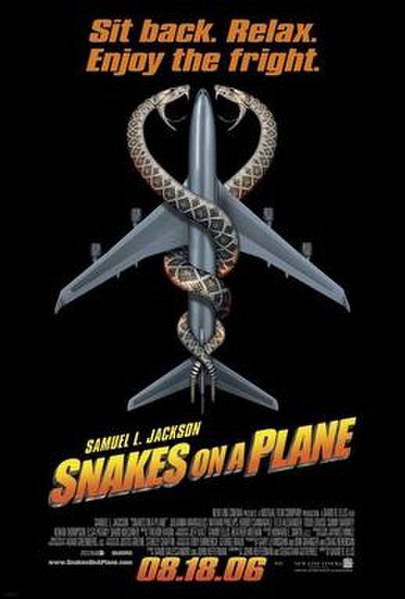
November 11th, 2006 12:20 AM #132Will it matter if there were snakes on the plane?
Honestly, hindi ko din alam ang sagot kaya itinanong ko dito sa forums.

http://docotep.multiply.com/
Need an Ambulance? We sell Zic Brand Oils and Lubricants. Please PM me.
-
The Silent Threat
- Join Date
- Dec 2004
- Posts
- 1,310
November 11th, 2006 12:33 AM #133Yes, of course it would matter if there were snakes on the plane! Depende kung nasaan sila kung nasa cockpit mahirap na ata lumipad yung eroplano...
Well, this material has been covered to death in a zillion Internet forums already. Aren't the existing explanations enough for you to decide?
-
UST ENT-HNS
- Join Date
- Oct 2002
- Posts
- 22,658
November 11th, 2006 12:37 AM #134Of course it's nice to see what Tsikoteers have to say about it.
I've only seen the question in one forum. hehehe. I seldom venture out of Tsikot.com and Yahoo mail. :lol:
http://docotep.multiply.com/
Need an Ambulance? We sell Zic Brand Oils and Lubricants. Please PM me.
-
The Silent Threat
- Join Date
- Dec 2004
- Posts
- 1,310
November 11th, 2006 12:40 AM #135I suggest you Google "airplane conveyor belt". Lots of sound explanations (avoid the forums, puro away lang dun sa mga yun) from people with lots of letters around their names.
-
The Silent Threat
- Join Date
- Dec 2004
- Posts
- 1,310
November 11th, 2006 12:56 AM #136http://mouser.org/log/archives/2006/02/001003.html
Picked out some nicely written comments:
Originally Posted by MOUSER
Originally Posted by BOZO
-
Tsikot Member Rank 4
- Join Date
- Oct 2002
- Posts
- 2,719
November 11th, 2006 12:58 AM #137It would be a different case if the plane is replaced by a car. If the road underneath moves against the car at exactly the same speed as the wheel rotates, then the car will not move. Now the FBD of the car wheel is different from the plane's case. For a car, there is no Ff to move the wheel forward. There is a torque that tends to rotate the wheel and there is Fb to move the wheel forward, so this time Fb is in the direction of the wheel's forward motion. Originally Posted by Alpha_One
Fb being frictional force is acting against the motion of the wheel's bottom surface which is moving backward, so Fb have forward direction. If the road is made to move in opposite direction exactly as the wheel moves, then Fb becomes zero, the wheel will not move horizontally, but the torque will continue to rotate the wheel.
Just imagine this. Let's say the car is lifted from the road just an inch above road surface. Let the car's engine run for the wheel to rotate at some rpm equivalent to 50 kph. Looking at the bottom of the wheel, we will see that the bottom surface of the tire is moving at 50kph backwards. If the road is not moving, we will see that there is a diffrence of speed between the tire surface and the road, i.e., 50kph. If the car is dropped to a non moving-road at this time, it will immediately run at 50 kph being pushed forward by frictional force Fb.
Now back to elevated car, wheel spinning for 50 kph. Let us move the road backward at 50 kph. We again look at the bottom of the wheel. We now find that there is no speed difference between the road and the tire surface. Both are moving backward at 50 kph. In this situation, if the car is dropped to the moving road, there will be no friction between the road and the tire because they are already both moving backward at the same speed. Fb will be zero, and the car will not move.
So there is a difference if the vehicle is a car. On the plane's case, the engine's Ff is what make it move, and Fb is insignificant to oppose the plane's motion. In the car's case, it is Fb (in forward direction) that is forcing the car to move. With a moving road in backward direction, Fb can be eliminated down to zero, and car will not move. Although both plane and car do appear to be standing on frictionless surface, due to wheel bearings, the mechanism by which they are forced to move are different.
The plane don't need Fb, so it does not matter whether the runaway moves or not. The car needs Fb, so it matters when the road moves. In fact, if the road moves at a faster rate than the wheel, Fb will act in backward direction and the car moves backward even if the tires are rotating for forward motion.
So alpha_one, I am again in opposition to your statement. I'd sure be happy to be proven wrong again by you or anybody interested to reply ... although it would appear to be off-topic.
Last edited by kinyo; November 11th, 2006 at 01:01 AM.
-
The Silent Threat
- Join Date
- Dec 2004
- Posts
- 1,310
November 11th, 2006 01:17 AM #138*Everybody: You're free to ignore my statement about the car and the one below. Suddenly I realize it's mostly irrelevant anyway. Originally Posted by kinyo
OT, *kinyo: For the sake of argument, assuming that both objects have to move in reference to the earth, and all the conveyor does is match the speed of the car relative to the earth, the car can still go it's normal speed. However, the engine would have to make the wheels spin faster than the conveyor can, i.e. the engine has to overcome the force of the conveyor. The difference is that the engine has to exert a LOT of force to overcome the conveyor, unlike the airplane problem where the engines probably won't notice a damn thing.
As per your example, the car would indeed remain stationary (with respect to the rest of the earth) if it was standing on the platform doing 50kph backwards (Earth ref as well)and its wheels doing 50kph forwards. The car can do 50kph forwards, but (a big BUT) the wheels would have to rotate at 100kph forwards to catch up (requiring the engine to compensate). The relationship between conveyor, wheel, and car velocities (earth ref) remains the same as the situation with the plane, the huge difference lies within the forces they exert against one another (as you say, the forces are different, that is perfectly correct). Since the car has to rely on the ground for propulsion (Newton's third law) anything the ground does the car is directly affected by it. In the case of the plane, whatever force the ground exerts on it is almost negligible. However for the car's engine, it gets a share of Fb from the tires that's too big to ignore, but it's not bound by Ff=Fb either. The engine has to exert a greater force than Fb, and the car starts to move. That is what I originally meant with my post, if it wasn't too clear.
Ergo, for the car to be able to run forwards at the same speed the conveyor is doing backwards, the engine must be able make the wheels spin *twice* the rate that would be used to run on a normal road. It doesn't matter what Fb or Ff is, except that the engine can make Ff>Fb. When this is the case, the "speed" (for a lack of a better term) of the wheel forwards would become greater than the speed of the ground backwards and the car starts to move forwards.
To illustrate an example, let me mention again the hypothetical race-up-the-elevator experiment. I'm sure as children, at least those who grew up in the cities, many of you played around elevators, so I hope this would be intuitive.
-You need two similar elevators next to each other, one going up one going down.
-You and a friend are at the bottom. You're in front of the "down" elevator and a friend is standing in front of the "up" elevator.
-At the go signal, both of you jump in the elevator.
-Your friend just stands there, waiting to get to the top.
-You must get to the top at exactly the same time as he does, or better.
-Of course you can't just stand there, the elevator will push you over the ground and you trip off. You must walk or run really fast in order to stay with your friend/beat him. You have to pace MUCH faster than you would if you were climbing up a set of stairs.
-Given exceptional balance and leg strength/endurance, you can match or beat your friend to the top.
-After the experiment we have proved that you can go just as fast the platform you're standing on.
-Remember, your friend's elevator is a similar model and goes up just about as fast as yours go down.
-Since you either matched him or beat him to the top, you were able to go as fast or faster forwards than the elevator you're standing on is going backwards.
-You'd be VERY tired however. (i.e. you've exerted lots of force and spent lots of energy)
I hope that illustrates that a car (or a man), can indeed go as fast as, or faster than, forwards, as the platform he's standing on is running backwards. But unlike the airplane which has a wheelbearing to frictionally separate it from the runway, the car or the man would have to expend a tremendous amount of energy to overcome the force generated by the treadmill on the tires/feet. In the case of the car/man, the tires/feet are the ones responsible for propulsion thus the body is directly affected by the forces the ground exerts on it.
P.S. I just wanted to illustrate that the situation (body moving forwards, platform moving backwards) is possible with the car/man, just insanely difficult. I hoped to explain that if, with athletic abilities (man)/a very powerful engine and perhaps even special gearing (car) the car/man can do it, it should be trivial for the plane to do so (which doesn't rely on the ground to be able to exert any force on itself, making whatever effect the ground has negligible).Last edited by Alpha_One; November 11th, 2006 at 01:57 AM. Reason: Clarifications
-
Tsikot Member Rank 4
- Join Date
- Oct 2002
- Posts
- 2,719
November 11th, 2006 03:33 AM #139You agreeing on the car remaining stationary with respect to earth when the road matches the wheel speed is welcome. Originally Posted by Alpha_One
But mentioning Ff in the case of the car is irrelevant as there is no Ff on the FBD of its wheel. For the car's wheel, there is torque acting on the wheel which tends to rotate the wheel for forward motion if the wheel touches the ground. Torque will only rotate an object. It has no force to move an object to any direction. The car's wheel moves because Fb is developed by friction with the road. In a FBD, torque is represented by a semi-circular arrow, usually labelled "T". For forward motion to the right of this page, the arrow will be drawn in clockwise direction.
However, you could possibly mean torque when you say Ff on the car, as you seem to equate Ff with Fb. This is fine with me. I would just make it clear that torque T is quite different from a linear force such as Ff. I'd repeat myself ... for an isolated body, torque T will make the object rotate but it won't move the object, while a force such as Ff acting thru the center (of gravity, such as the center of a wheel) of the object will not rotate the object but it will move the object to the direction of the force. If a force Ff acts off-center on a body, it will cause the body to rotate only enough to align the center-of-gravity with the force and as soon as alignment is completed, rotation stops but object will continue to move.
Yes, for the car, it is possible to move forward or backward, depending on the speed difference between the wheel and the road. When their speed matches in opposing directions, the car remains stationary with respect to earth.
I'd leave the elevator to others. Just reading it makes me tired.
-
The Silent Threat
- Join Date
- Dec 2004
- Posts
- 1,310
November 11th, 2006 07:33 AM #140Torque, that's the correct word, thank you! No, I don't mean Ff=Fb, just that whatever force the car pushes the car backward the engine can overcome by generating enough torque at the wheels. Once it generates enough torque at the wheels to be able to convert enough forward linear force to overcome all the backwards linear forces, it's not necessary that the conveyor will be pushed back, because it will match the *car* speed not the *wheel* speed. Originally Posted by kinyo
The elevator race example is simple. It seeks to demonstrate that you *can* move across a moving platform that's moving in the opposite direction as you are, whatever it is that's propelling you. The platform, even if it's going backwards, still has a enough backwards resistance that allows you to push against it in order to move forward. The elevator isn't slipping back farther if you use enough force on your feet to get a net forward movement across an elevator moving backwards.Last edited by Alpha_One; November 11th, 2006 at 07:41 AM.

 Reply With Quote
 Originally Posted by OTEP
