
What is the difference between Rear led lights vs Rear normal lights. Eto ba yung tipong pag umuulan mas kita Led lights..Thanx in advance

The Largest Car Forum in the Philippines
- Forums
- Discussions
- Events
- Community
Results 1 to 16 of 16
-
 Tsikoteer

- Join Date
- Jan 2011
- Posts
- 382
March 9th, 2011 11:37 AM #1
-
Tsikot Member Rank 3
- Join Date
- Jul 2004
- Posts
- 1,540
March 9th, 2011 12:16 PM #2If it's oem leds, not necessarily mas kita. But advantage of LED would be much longer life compared to ordinary bulbs and the reaction time is faster. Pansinin mo pag may nakasabay ka na cars with LEDs, ang bilis ng on and off nung light unlike normal bulbs may slight delay.
-
 Tsikoteer
- Join Date
- Jan 2007
- Posts
- 851
March 9th, 2011 12:39 PM #3aesthetically masmaganda for me LEDs... except signal light, mastype ko pa rin ang pagblink ng normal bulb
reliability- masmahaba buhay ng LEDs
OT na rhetorical question lang... kapag napundi ba LEDs sa tailight may nabibili replacement bulb gaya ng ordinary bulb?!?
-
 VICE MAYOR
- Join Date
- Apr 2007
- Posts
- 21,343
March 9th, 2011 11:07 PM #4Baka palit ng buong module kapag napundi ang LED sa tail light. Pero napapansin ko sa Corolla Altis 2004 circa, wala pa napupundi na LED bulb sa tail light. Hehe.
Kung high powered LED yung ilalagay sa tail light para gawin brake light bulb, pwede.
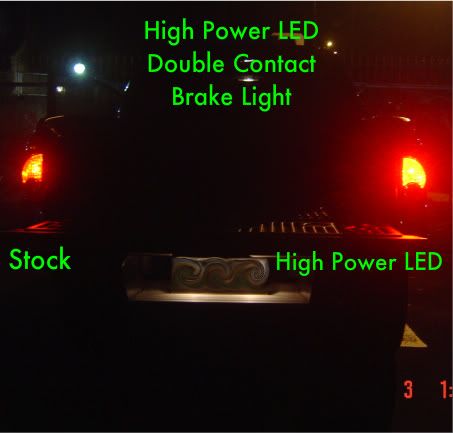
-By Mr. LED of TeamFD.
-
 Tsikoteer
- Join Date
- Nov 2009
- Posts
- 1,421
March 9th, 2011 11:38 PM #5yung dome light ng FD ko medyo mahina na. I want to replace it with LEDs. Me naikikita akong ELEVO na LEDs. ok kaya yun? pati yung license plate lights, trunk lights and park lights gusto ko rin LEDs.
your suggestions please...
-
 Disturbing the Peace
- Join Date
- May 2010
- Posts
- 743
March 9th, 2011 11:41 PM #6Yung mga Altis na taxi, hanggang ngayon hindi pa rin napupundi yung tail lights nila.

-
 Tsikoteer
- Join Date
- Nov 2010
- Posts
- 667
March 9th, 2011 11:48 PM #7I'm using Led dome lights sa loob ng Innova namin. Mas maliwanag compare sa stock at puting puti sya sosyal sa loob. Originally Posted by cjv_justice

-
Tsikoteer
- Join Date
- Nov 2009
- Posts
- 1,421
-
Tsikoteer
- Join Date
- Nov 2009
- Posts
- 351
March 10th, 2011 12:53 AM #9I'm also using LED lights for my map light, dome light and park lights. Looking at changing the plate lights and trunk lights to LED na rin. It's a cheap, yet classy uograde. My car looks and feels European with just the LED upgrade.
-
Tsikoteer
- Join Date
- Oct 2008
- Posts
- 944
March 10th, 2011 01:50 AM #10leds these days offer more brightness compare to the normal ones. ang isa sa mga pinaka importanteng feature niya na hindi na-mention ng mga naunang posters was yung efficiency niya
 mas energy saving.
hope that helps you deciding which would be which
-
 Verified Tsikot Member
- Join Date
- Feb 2011
- Posts
- 61
March 10th, 2011 02:01 AM #11A Light Emitting Diode (LED) is basically a diode that lights.

Since it is a diode, it is considered solid state lighting. This means that compared to halogens, it doesn't have a filament that bruns out. Therefore it lasts much much longer. How much longer? Easily 50x.
Compared to halogens which use a lot of power to heat up a filament until it glows, LEDs are semiconductors that emit light when current passes through. This means it uses much less power. How much less? Over 90% less.
Since it uses much less power, it also produces much less heat.
I can go on about its benefits, but i'll stop there. I'll mention one typical drawback -- cost.
I am a bit of a lighting guy as I am involved in this industry. You can also use LED for home and office lighting. *hint hint* Power savings, anyone? This is somewhat of a passion. Any more questions, PM me.
-
 Tsikot Member Rank 1
- Join Date
- Dec 2002
- Posts
- 1,299
March 10th, 2011 04:27 AM #12noong nag-sale sa Concorde yan ang binili kong brand ng LED para sa trunk, almost a year na wala pang pundi. Originally Posted by cjv_justice
-
 Tsikot Member Rank 2
- Join Date
- Jan 2009
- Posts
- 6,460
March 10th, 2011 10:45 AM #13If I may add, the power supply and overall design has a lot to do with an LED's useful life. Too much current or if heat is not dissipated properly (for high-power LEDs), lifetime is drastically reduced. Also consider that the 50,000 hrs life was determined under ideal conditions. High power LEDs are usually driven by a current that is slightly higher than typical (how high is again dependent on the design) and would usually last only a fraction of the advertised 50k hrs. Originally Posted by RadioKnight
-
Tsikoteer
- Join Date
- Nov 2009
- Posts
- 1,421
-
 Hoosier'ed Hotspur
- Join Date
- Dec 2005
- Posts
- 39,174
March 10th, 2011 12:34 PM #15LEDs have definitely come a long way,- from mere logic signals in electronic circuits, to displays, and now lighting solutions.....

12.5K:soccer:
-
Tsikoteer
- Join Date
- Jan 2007
- Posts
- 851
March 10th, 2011 01:43 PM #16medyo may kamahalan nga lang elevo/carstethics brands being sold sa blade/concorde... meron ako binibilhan 150pesos lang 12led viking brand galing china. ok naman walang problema. Originally Posted by cjv_justice

 Reply With Quote
 Originally Posted by cjv_justice

