


http://www.trust.org/alertnet/news/p...licoptersboats
Philippines says will spend $255 mln on military helicopters,boats
13 Apr 2011 12:26
Source: reuters // Reuters
MANILA, April 13 (Reuters) - The Philippines will use proceeds from the country's Malampaya gas fields to fund most of a $255 million plan to buy boats, helicopters and weapons for the military, President Benigno Aquino said on Wednesday.
The Philippines has one of the weakest militaries in the region, patrolling its vast maritime borders, including disputed areas in the South China Sea, with 20-year-old trainer jets and Vietnam War-era frigates.
Efforts to upgrade equipment have been hampered by tight government finances and graft allegations.
"For the information of everybody, we are allocating 11 billion pesos ($255 million) for the equipment of the Armed Forces of the Philippines," Aquino told reporters after observing joint military exercises of American and Filipino soldiers at an army jungle base north of Manila.
"There will be boats and other watercraft, helicopters for our air force and assault rifles for our Philippine army and many more."
Aquino has previously said the navy would be upgraded to better protect the country's maritime resources, including oil exploration areas in the South China Sea. [ID:nSGE70304O]
Aquino said 8 billion pesos for the modernisation programme would be allocated from the government's royalties from the Malampaya gas fields off western Palawan island. Another 3 billion pesos will be taken from the 2011 budget.
A refurbished Hamilton-class cutter donated by the United States would be ready by August and three brand-new Taiwan-manufactured Multi-Purpose Attack Craft vessels will be delivered by early next year, he said.

The Largest Car Forum in the Philippines
- Forums
- Discussions
- Events
- Community
Results 21 to 40 of 201
Hybrid View
-

 Social Dementia

- Join Date
- Sep 2003
- Posts
- 25,189
April 15th, 2011 06:40 PM #1Last edited by Monseratto; April 15th, 2011 at 06:53 PM.
-
Social Dementia
- Join Date
- Sep 2003
- Posts
- 25,189
April 15th, 2011 07:01 PM #2What is a 2nd hand coastguard cutter compared to a 2nd hand aircraft carrier...?
http://atimes.com/atimes/China/MD13Ad03.html
Ming Dynasty admiral spooks Taiwan
By Jens Kastner
TAIPEI - A proud China is set to launch its first aircraft carrier. For Taiwan, the carrier's most frightening aspect could be its name.
For years, military enthusiasts flying over the seaport city of Dalian in northeast China knew well when to press their noses against the cabin windows. On the approach to Dalian's Zhoushuizi airport, the construction of China's first aircraft carrier could be spotted, with workers busy along the length of the 302-meter long, 70.5-meter wide ship.
They installed engines and other heavy equipment, completed the radar mast, installed the shipborne multi-function Active Phased Array Radar (APAR) and Sea Eagle radar as sensors, hauled up Type 730 close-in weapon system (CIWS) seven-barreled 30mm machine guns to destroy incoming anti-ship missiles and enemy aircraft at short range, and tinkered with the fully automatic fire-and-forget Flying Leopard 3000 Naval (FL-3000N) air defense missile system.
Once the steely giant blew out steam and exhaust, and workers begun painting its hull the People's Liberation Army Navy's (PLA Navy's) standard light gray-blue, it became clear that the 67,000 tonne-carrier was never meant to become a Macau casino float as the Chinese had initially claimed.
The story of how the Varyag - once destined to become a Soviet navy multi-role aircraft carrier - ended up in Chinese hands may inspire novelists or screenplay writers for decades. Her keel was laid down in 1985 in what was then the Ukrainian Soviet Socialist Republic, only to have construction stopped - while the ship was structurally complete but without electronics - in 1992 following the chaotic breakup of the Soviet Union.
The carrier was first laid up unmaintained, then stripped, and by 1998 she had lost her engines, a rudder, as well as her operating systems. Finally, the Varyag was put up for auction by Ukraine.
Having had gross domestic product (GDP) fall 60% from 1991 to 1999 and suffering five-digit inflation rates in a deep economic slowdown, the Ukrainians warmly welcomed an unheard-of Hong Kong company which purchased the vessel for US$20 million. The colossus embarked on a 28,200-kilometer journey with the Hong Kong firm saying it wanted the vessel to become a casino in the southern Chinese gambling city of Macau. The Varyag was towed out of the Black Sea, through the Bosporus strait, the Straits of Gibraltar, around the Cape of Good Hope and through the Straits of Malacca.
But Macau wasn't the final destination. In 2005, the Varyag ended up at a dry dock at Dalian, home to the PLA Dalian Naval Academy. There, China's first batch of carrier aviators began training in 2008, undergoing a four-year course of instruction to turn them into fighter pilots capable of operating from a carrier. It took a few years until Chinese state-run media broke the news that the carrier was being built. In early April, it was declared that China's first aircraft carrier could take to the sea as early as July 1.
However, according to unconfirmed reports in Western and Taiwanese media, the Varyag has been renamed. Now, the she is allegedly to be called the Shi Lang, pennant number 83, a name that is not popular in Taiwan.
Shi Lang (1621-1696), the historical figure after whom China's first aircraft carrier is allegedly to be named, has also been providing the Chinese with a useful historical narrative of late. The Ming general, reputedly a genius in naval warfare, defected to the Manchu-Qing Dynasty, who by then had conquered all China except Taiwan.
-
Social Dementia
- Join Date
- Sep 2003
- Posts
- 25,189
February 22nd, 2012 09:36 PM #3We have ships older than the sailors. The Philippine Navy has the distinction of having the only ship that actually sunk a german uboat that is still in commission. And I think they won't just blow up and sink. Beggers can't be choosy...
-
 3.14159265
- Join Date
- Aug 2004
- Posts
- 6,234
February 23rd, 2012 09:49 AM #4At least they replaced the engine block before they transferred it to us :D
We need big hulls capable of patrolling the sea states around our interests in the West Philippine Sea. An old and defective (repairable?) hull is still better than none at all. Besides they're available now and they were needed yesterday. It may be under equipped compared to the PLAN's ships but it's like an old guard dog: it may not have teeth but it can still bark at intruders.
It's just a matter of properly maintaining them. The law requires that used acquisitions must be operable for at least 15(?) years.
-
3.14159265
- Join Date
- Aug 2004
- Posts
- 6,234
February 23rd, 2012 09:57 AM #5The sister ship on patrol:

Some of its creature comforts:
https://fbcdn-sphotos-a.akamaihd.net...05424622_n.jpg
-
 Moderator
- Join Date
- Nov 2010
- Posts
- 25,276
February 23rd, 2012 10:30 AM #6Beggars can't be choosers nga. Pero hindi naman basta lulubog yan. Palitan lang yung critical engine and navigation equipment para ayos.
 Fasten your seatbelt! Or else... Driven To Thrill!
-
3.14159265
- Join Date
- Aug 2004
- Posts
- 6,234
February 23rd, 2012 10:36 AM #7We paid transfer costs so they were not exactly given to us for free. Presyong kaibigan lang. Nigeria got one too: THEWILL - Expanding the National Conversation - Update: Nigerian NAVY Takes Delivery Of Warship NNS THUNDER F90
-
 Tsikot Member Rank 4
- Join Date
- Oct 2002
- Posts
- 3,872
March 11th, 2012 06:41 PM #8^ The Phil. Army will probably ask for a few. How they'll be able to keep them maintained and operational is another matter.
-
 Tsikoteer
- Join Date
- Oct 2002
- Posts
- 10,819
-
Tsikoteer
- Join Date
- Oct 2002
- Posts
- 10,819
March 11th, 2012 07:38 PM #10e di the usual method ng afp, get 3, the first one to break down becomes the donor of parts to the other 2 still running. Originally Posted by Altis6453

-
Social Dementia
- Join Date
- Sep 2003
- Posts
- 25,189
-
 Tsikot Member Rank 5
- Join Date
- Sep 2003
- Posts
- 21,384
-
Moderator
- Join Date
- Nov 2010
- Posts
- 25,276
March 12th, 2012 10:09 AM #131 each for L, V, M. Originally Posted by chua_riwap
 Fasten your seatbelt! Or else... Driven To Thrill!
-
Tsikot Member Rank 4
- Join Date
- Jun 2006
- Posts
- 2,605
March 11th, 2012 09:03 PM #14Since the Bradley uses a Cummins engine, there is a good chance that parts will be easily available. There are a lot of Cummins parts importer here in the Phils. Originally Posted by Altis6453
-
 Tsikoteer
- Join Date
- Oct 2002
- Posts
- 29,354
March 12th, 2012 12:36 PM #15Magaling naman ISUZU diba? (sabi ng isuzu agent) Eh di gawin Isuzu yung mga makina pag masira. Originally Posted by Altis6453
(sorry, can't resist)
-
 Tsikot Member Rank 2
- Join Date
- Jan 2007
- Posts
- 3,436
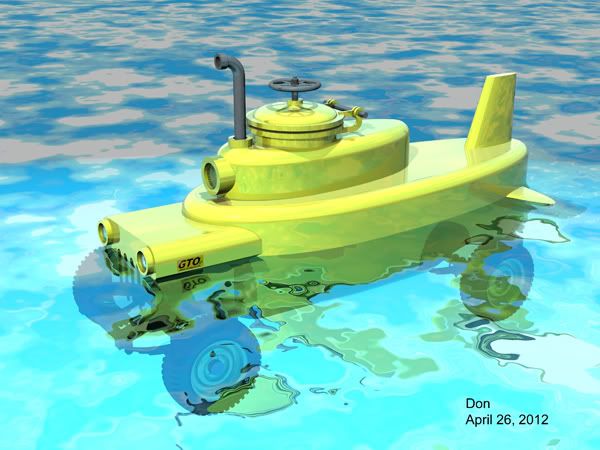
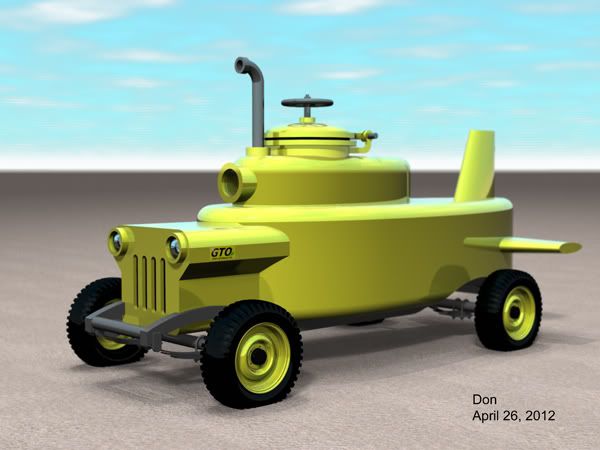
April 27th, 2012 02:00 AM #16What if jeepneys were converted to midget submarines for the Philippine Navy?
-
Social Dementia
- Join Date
- Sep 2003
- Posts
- 25,189
April 27th, 2012 08:44 AM #17The occupant would be gassed to death when that thing submerges. Walang propulsion system?
-
 Tsikoteer
- Join Date
- Mar 2010
- Posts
- 2,209
-
Tsikot Member Rank 2
- Join Date
- Jan 2007
- Posts
- 3,436
April 28th, 2012 10:00 AM #19Oxygen tanks provide air supply. Originally Posted by Monseratto
There should be a propeller behind for propulsion. The vehicle can also move on the ocean floor using its four wheels. It's a PHUV (Philippine underwater vehicle).
Yes. With a Daniel Dingle hydrogen / oxygen generator. Originally Posted by robot.sonic
-
 Tsikoteer
- Join Date
- Jan 2011
- Posts
- 1,646
May 4th, 2012 02:34 PM #20sana magkaRoon tayo ng 10 Maestrale class frigates at 10 pa hamilton class cutter para lalo pa natin madefend ang mga island natin lalo nasa spartlys island..

 Reply With Quote
 Originally Posted by Altis6453

