


Working for the development of a new type of jeepneys[SIZE=3]PHUV, Inc.[/SIZE]
[SIZE=4]MVPMAP[/SIZE] on the other hand, through [SIZE=4]PhUV Inc.[/SIZE], is fortifying its position as the pioneering organization that will not only help rekindle the Philippine auto manufacturing industry but will also push for sustainable and environment-friendly communities.
"This advocacy started when we locally designed in 2006 and developed in 2007 the Philippine Utility Vehicle (PhUV) to prove that given the opportunity and the resources, the Pinoy engineer can design and build a truly Pinoy vehicle.
The PhUV Program has been in the Investment Priority Plan (IPP) of the Board of Investments since 2007.
This e-jeepney is just a reincarnation of the PhUV as a pioneering endeavor under the IPP", Mr. Raquelsantos says.
MVPMAP members are excited to supply their locally-assembled parts to both the e-jeepneys and the e-trikes for its forthcoming mass production.
"This will ensure the availability of after-sales parts and service for the vehicle. Even Pres. Arroyo has shown much interest in the electric vehicle program when we and our Chinese partners presented this to her in China.
Things are looking brighter and this we hope will finally put the Philippines at the forefront of electric vehicle development in this part of the globe", he concludes.
PhUV Inc. is the first to locally design, fabricate, assemble and actually put on the road a locally-assembled electric vehicle, the e-jeepney.
The Logo of MVPMAP
Source: Press Release, December 2008, Enterprise

The Largest Car Forum in the Philippines
- Forums
- Discussions
- Events
- Community
Results 1 to 20 of 153
Hybrid View
-

 Tsikot Member Rank 3

- Join Date
- Jun 2007
- Posts
- 2,857
August 14th, 2009 10:04 AM #1
-
Tsikot Member Rank 3
- Join Date
- Jun 2007
- Posts
- 2,857
-
Tsikot Member Rank 3
- Join Date
- Jun 2007
- Posts
- 2,857
August 14th, 2009 10:14 AM #3E-jeepneys of PHUV, Inc.
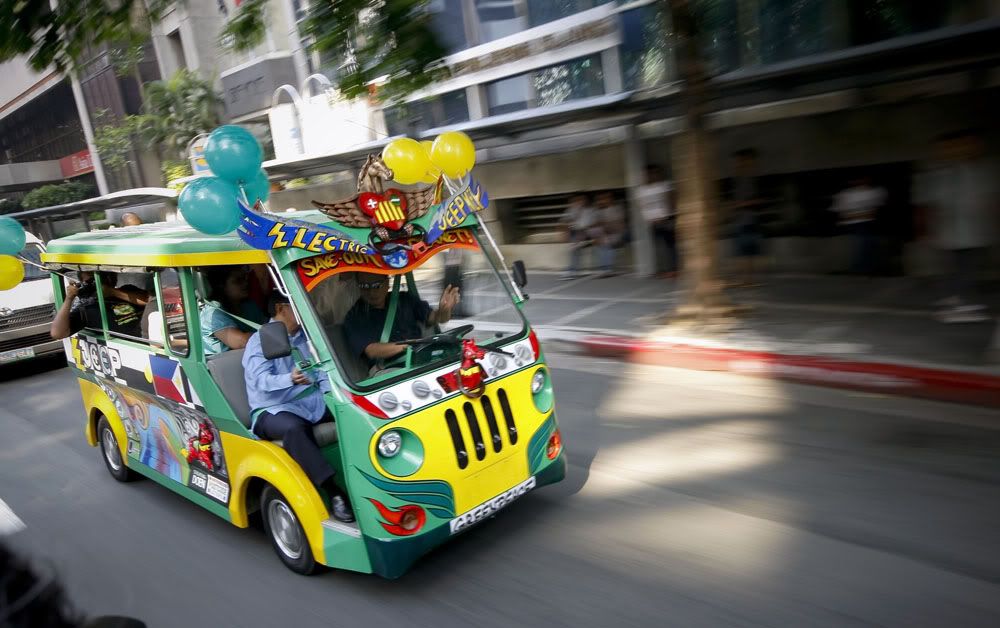
courtesy of Greenpeace southeast asia
The LTO will issue orange plates for these environment-friendly vehicles which are now classified as low speed vehicles with a maximum speed of 60 kilometers per hour.
E-jeepneys cost 625,000 pesos a unit, while reconditioned diesel engine jeepneys cost from 700,000 to 800,000 pesos, depending on how many passengers it can carry.
From Trapik.com posted 3/2009
-
 Tsikoteer
- Join Date
- Oct 2002
- Posts
- 29,354
August 14th, 2009 10:29 AM #4First things first. Find a production method which would give finished vehicles curves. What is the point of trying to push PHUV if all you will produce are vehicles which look like cardboard boxes on wheels?

-
Tsikot Member Rank 3
- Join Date
- Jun 2007
- Posts
- 2,857
August 14th, 2009 10:46 AM #5 Originally Posted by ghosthunter

hehehe
Hindi naman po sir...
Khit mukhang gorilla at darna yung gawa nila, malaki naman improvement nila sa mga bulok at karag-karag na jeepney..
Tsaka naman sila e...
Anyway, just my opinion sir.
Last edited by jpdm; August 14th, 2009 at 10:49 AM.
-
Tsikoteer
- Join Date
- Oct 2002
- Posts
- 29,354
August 14th, 2009 10:56 AM #6I agree that a cardboard box with proper doors is an improvement over the old jeepney style design (no doors anywhere) but I think doors on cars isn't anything new these days. Originally Posted by jpdm
Even the old Ford Model T already had proper doors.

-
Tsikot Member
- Join Date
- Dec 2012
- Posts
- 3
February 10th, 2013 02:11 PM #7hi po sa lahat regarding po sa PHUV pwede po ako makatulong sa pamamagitan ng aking desenyo pki bisita nalang po ang aking facebook mrt3tech*yahoo.com at lahat po ng aking mga desenyo gaya ng mobile food kart na pang palit s jollijeep , concept aero dynamic passenger jeepney .. maraming salamat po God bless po sa lahat..(*_-)wink
-
 Tsikot Member Rank 2
- Join Date
- Jan 2007
- Posts
- 3,437
March 5th, 2013 11:56 PM #8*creativepinoy,
Welcome to Tsikot. Sayang you weren't around in 2007 when there was a design crowdsourcing in Tsikot.
In 2007, the MVPMAP PhUV was introduced but its style was controversial.

A group effort by Tsikot members to redesign the PhUV produced three concepts: X, Y and Z.
This is Y:

Last edited by donbuggy; March 6th, 2013 at 12:01 AM.
-
Tsikot Member Rank 3
- Join Date
- Jun 2007
- Posts
- 2,857
March 27th, 2013 09:02 AM #9Competition has become very intense in the Philippines with more CBUs coming in both from CAMPI and AVID members. Aspirations to have a locally designed and assembled vehicles will be very difficult to achieve now. Originally Posted by donbuggy
-
 SobrangBilisMagType!
- Join Date
- Aug 2004
- Posts
- 22,702
March 27th, 2013 09:35 AM #10Particularly with the Chinese starting local assembly.
Well, at least they're doing some sort of assembly (SKD, I think)... many of those who lobbied to have Subic and Port Irene imports have not increased local production at all.
Ang pagbalik ng comeback...
-
 Tsikoteer
- Join Date
- May 2012
- Posts
- 1,042
September 10th, 2013 06:34 PM #11saw this kanina. akala ko revo but the tires gave it away. galing talaga ng pinoy. hehehe...
sorry for the poor quality pics as mahirap kumuha ng photo habang nagmamaneho.


Last edited by cpsolt; September 10th, 2013 at 06:40 PM.
-
Tsikot Member Rank 3
- Join Date
- Jun 2007
- Posts
- 2,857
-
Verified Tsikot Member
- Join Date
- Sep 2009
- Posts
- 8
September 28th, 2009 06:00 PM #13i like the ejeepney. pero the trend is towards lithium ion cells. iba tech kelangan nun kesa sa gamit ngayon para sa lead acid batteries. maybe phuv inc should put the ejeepney on hold muna and just pursue making phuvs using new efficient diesel engines and perfect the body, design, safety features etc first as well as the manufacturing process. pag mainstream na yung li ion cell batteries, saka na lang i revisit. they could do a technology transfer by then.
-
Verified Tsikot Member
- Join Date
- Oct 2009
- Posts
- 21
October 15th, 2009 03:39 PM #14Where can I find the E-quad? Saan gawa ito? sa Pinas?
Regarding e-jeepney, we should also consider the source of electricity.
If it came from the coal fired power plant, diesel plant, etc... then we just transferred the location of polution into the plant.
Just my opinion!
-
Tsikoteer
- Join Date
- Oct 2002
- Posts
- 29,354
October 15th, 2009 05:28 PM #15Not to mention the lifecycle of the batteries. Twelve or more lead acid batteries per e-jeepney that require replacement every 1.5 years is a lot of toxic waste that need specialized handling. Originally Posted by KCMenteryo
-
Tsikot Member Rank 3
- Join Date
- Jun 2007
- Posts
- 2,857
October 15th, 2009 06:00 PM #16Gawa sa Pilipinas. Originally Posted by KCMenteryo
Check this:
For inquiries about the e-jeep, e-bike and e-quad, contact John Marasigan of Philippine Utility Vehicles Inc. at 9365022 or 9308012, e-mail johnalfonsomarasigan*yahoo.com, or visit www.gripp.org.ph and www.ejeep.org. The office address is 2 Susano Road in Bo. Deparo, Novaliches, Caloocan City


 Reply With Quote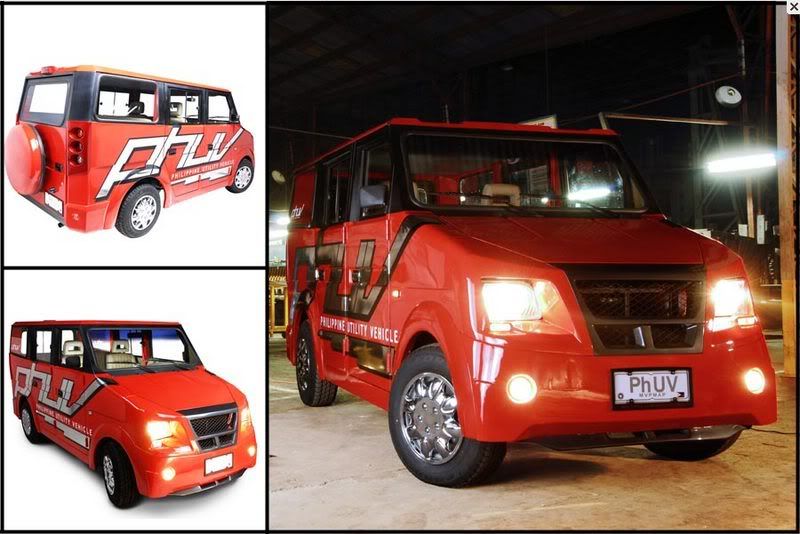
 Originally Posted by ghosthunter


