
Many were killed at the evacuation centers...
They didn't seem to know what hit them. Mindanao provinces that have rarely been in the path of a storm suffered heavily from the impact of Typhoon Pablo on Tuesday, and its full extent is only now coming to light.
Some residents in Davao Oriental took shelter in flimsy evacuation centers that fell apart in the face of Pablo's ferocious winds, with one refuge reportedly swept away in a landslide with its terrified evacuees.
There was enough warning of the coming typhoon for authorities to evacuate residents in advance, but there was apparently a lack of solid structures in communities in rural southern Mindanao to serve as temporary shelters.
"We have 325 dead and this is expected to rise because many more are missing," civil defense chief Benito Ramos told a news conference.Despite the preemptive evacuation of residents hours before landfall, poorly built evacuation centers may have been the weak link in the response of authorities in Davao Oriental province to the threat from Typhoon Pablo (Bopha).
Maj. Gen. Ariel Bernardo, head of the Army's 10th Infantry Division, said Wednesday that some of the evacuation centers in the province collapsed.
"Doon sa Davao Oriental and even sa Compostela Valley, nagkaroon ng preemptive evacuation Monday night ... Sad to say sa Davao Oriental ... sa lakas ng hangin, ulan at bagyo, talagang evacuation center may nag-collapse. They were not enough (In Davao Oriental and even Compostela Valley, we conducted preemptive evacuation Monday night. Sad to say, in Davao Oriental, some of the evacuation centers collapsed after being exposed to strong winds and heavy rain)," he said in an interview on dzBB radio.
Corn farmer Jerry Pampusa, 42, and his pregnant wife were marooned in their hut but survived.
"We were very scared," Pampusa said. "We felt we were on an island because there was water everywhere."
Another survivor, Francisco Alduisa, said dozens of women and children who had taken shelter in a village centre, had been swept away.

The Largest Car Forum in the Philippines
- Forums
- Discussions
- Events
- Community
Results 1,781 to 1,800 of 11634
-

 Social Dementia

- Join Date
- Sep 2003
- Posts
- 25,189
December 6th, 2012 11:46 AM #1781
-
 Darker and Bigger
- Join Date
- Oct 2002
- Posts
- 40,599
December 6th, 2012 11:53 AM #1782"Water came suddenly" headline Sa inquirer...Pucha meron ng enough time na advise govt, Kung meron man nalunod dahil Ayaw mag evacuate buti nga Sa kanila! Bwisit!
Sent from my iPad using Tapatalk HD
-
 Tsikoteer
- Join Date
- Jan 2011
- Posts
- 1,646
December 6th, 2012 12:16 PM #1783my nabasa ako sa facebook 40 typhoon daw lang nadaan sa mindanao in 60 years?
kaya siguro a lot of them dont know about it kawawa naman sila
-

 nag-memeron
- Join Date
- Mar 2006
- Posts
- 18,997
December 6th, 2012 12:39 PM #1784for the southern portion of mindanao pwede bro kasi in my 9 years of being based in davao city before, not once did i experience a storm. yes, there were a healthy amount of rains during the wet season but nothing so alarming as the past 2 years Originally Posted by timrev

what's another interesting event that's happening and that i've noticed is that our province in northern samar is now being bypassed by tropical storms. dati-dati every year, walang paltos talagang bugbog iyong mga lupa namin doon. lately, ulan lang pero wala ng mga howling winds kasama gaano
i guess that's another sign of changing weather patterns worldwide.
btw, i remember mga twice kami dumaan dati sa nadelubyong new bataan, compostela (comval) valley kasi may dinadayo kaming 7 waterfalls na kilala sa mga davaoeno adventurer types sa maragusan, comval and it was pretty isolated back then and looking back, it's really susceptible to flash floods much like the flood plains at the foot of mount pinatuboLast edited by baludoy; December 6th, 2012 at 12:41 PM.
-
 Tsikoteer
- Join Date
- Oct 2011
- Posts
- 26,781
December 6th, 2012 07:03 PM #1785 Originally Posted by timrev
bihira lang sa mindanao area. natsempuhan na sobrang lakas ung tumamang typhoon.
-
 Tsikot Member Rank 5
- Join Date
- Oct 2002
- Posts
- 2,716
-
Social Dementia
- Join Date
- Sep 2003
- Posts
- 25,189
December 8th, 2012 04:50 PM #1787Just when you thought it's over, Pablo has regained typhoon strength as wants to visit Luzon...

Last edited by Monseratto; December 8th, 2012 at 04:53 PM.
-
Tsikoteer
- Join Date
- Oct 2011
- Posts
- 26,781
December 8th, 2012 04:53 PM #1788 Originally Posted by Monseratto
what??! pabalik sa luzon si typhoon pablo?

-
 Tsikot Member Rank 5
- Join Date
- Sep 2003
- Posts
- 21,384
-
Social Dementia
- Join Date
- Sep 2003
- Posts
- 25,189
December 8th, 2012 07:54 PM #1790Bagyo na naman... Originally Posted by chua_riwap
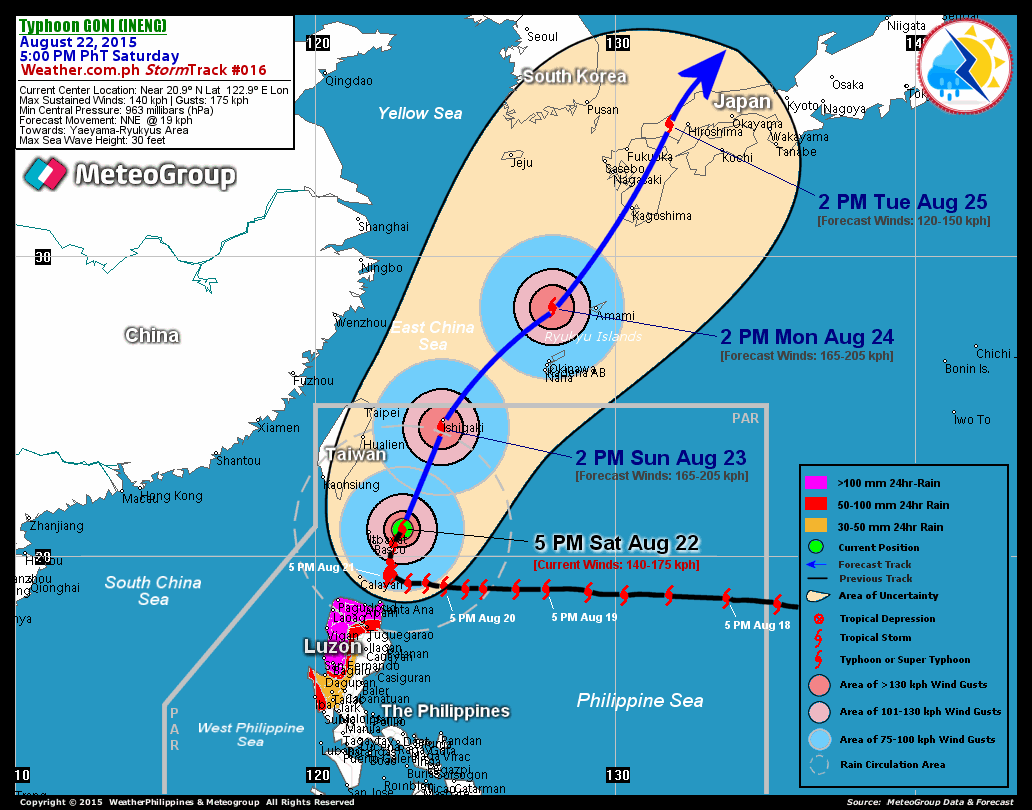
https://maps.google.com/maps/ms?msa=...6&source=embedMANILA, Philippines – Typhoon “Pablo” (international codename: Bopha) just refuses to go away as it continues to stay within the Philippine Area of Responsibility, maintaining its strength and now threatening the Ilocos and La Union provinces, the state weather bureau said Saturday.
Signal No. 2 is up in Ilocos Norte, Ilocos Sur and La Union as Pablo heads east-northeast at 17 kilometers per hour with maximum sustained winds of 130 kph near the center and gustiness of up to 160 kph, according to the Philippine Atmospheric Geophysical and Astronomical Services Administration (Pagasa) in its 5 p.m.bulletin.
Signal No. 1 is up in Cagayan, Calayan group of islands, Babuyan group of islands, Batanes group of islands, Abra, Apayao, Kalinga, Mt. Province, Benguet, Pangasinan, and Zambales, it said.
Estimated rainfall amount is from 15 to 25 millimeters per hour (heavy – intense) within the 400 km diameter of the typhoon.
-
 Tsikot Member Rank 2
- Join Date
- Jan 2004
- Posts
- 6,502
-
Tsikot Member Rank 5
- Join Date
- Sep 2003
- Posts
- 21,384
-
 BANNED BANNED BANNED
- Join Date
- Sep 2005
- Posts
- 3,829
December 9th, 2012 09:36 AM #1793Oo nga eh, abnormal na talaga weather ngayon. Buti na lang di dumaan si Pablo dito sa Norte at bumalik otherwise parang pepeng uli. Originally Posted by chua_riwap
Ang hindi ako maka paniwala eh dumaan si Pablo sa Central Mindanao.Last edited by CoDer; December 9th, 2012 at 09:50 AM.
-
Social Dementia
- Join Date
- Sep 2003
- Posts
- 25,189
-
Tsikot Member Rank 5
- Join Date
- Sep 2003
- Posts
- 21,384
-
Social Dementia
- Join Date
- Sep 2003
- Posts
- 25,189
December 9th, 2012 11:49 AM #1796People were very impressed at the survivor victims in Japan's Tsunami disaster, where 16,000 died, They showed willful discipline and restraint unlike,,,
I'm sure Uls will get a kick out of this...hehehe.
Hungry victims of 'Pablo' loot town's shops and warehouses
By: Agence France-Presse
December 8, 2012 11:59 AM
InterAksyon.com
The online news portal of TV5
TAGUM, Philippines - Hungry survivors of a deadly Philippine typhoon looted shops and warehouses in a hard-hit town in a bid to stay alive amid stalled aid deliveries, a rescue official said Saturday.
Local officials monitored the desperate scenes in the early aftermath of Typhoon Bopha's onslaught in the isolated southern town of Cateel, Cedric Daep, a provincial public safety official, told AFP.
"The food aid took so long to arrive that the locals broke into whatever building left standing in search of something to eat," said Daep, a specialist sent to the south by the government to help rescue and relief operations.
Warehouses and grocery stores were broken into in Cateel, a coastal town near where the eye of the typhoon made landfall on Tuesday, Daep said.
Officials said damage to roads and bridges by floods and landslides trapped 150,000 people for three days in Cateel and the nearby towns of Baganga and Boston, where they said 97 percent of buildings were flattened or unroofed.
The typhoon killed more than 500 people and left hundreds of others missing across the south, rescue officials said.
A Philippine Navy vessel with 31 tonnes of emergency relief and 132 volunteer aid workers reached Baganga on Thursday, navy spokesman Omar Tonsay told AFP, saying he had not heard of the Cateel looting.Last edited by Monseratto; December 9th, 2012 at 12:00 PM.
-
BANNED BANNED BANNED
- Join Date
- Sep 2005
- Posts
- 3,829
December 9th, 2012 11:54 AM #1797Anak ng baka, nasiraan na ng ulo si Pablo. Originally Posted by Monseratto
-
 twoyotas
- Join Date
- Mar 2009
- Posts
- 21,667
December 9th, 2012 12:06 PM #1798Lasheng yan. Kamusta kaya si Ry?
Sent from my GT-P7310 using Tapatalk 2
-
Tsikoteer
- Join Date
- Oct 2011
- Posts
- 26,781
-
Social Dementia
- Join Date
- Sep 2003
- Posts
- 25,189
December 9th, 2012 09:13 PM #1800Downgraded na nga to an LPA na lang, kaya wala na tayo masyado nararamdaman...malapit na malusaw.. Originally Posted by Retz

 Reply With Quote
 Originally Posted by timrev



![Weather TALK [forecasts, etc]](https://play.google.com/intl/en_us/badges/images/generic/en_badge_web_generic.png "Google Play")