


Nadale ako sa c5 nung isang araw bro. Prior to that sa macapagal din pero naiwasan ko parang nag crossover lang ala tim hardawayOriginally Posted by chua_riwap

Yun kasabay ko na mirage ang tibay tinalo pa bus and suv, derederecho lang parang wala hehehe

The Largest Car Forum in the Philippines
- Forums
- Discussions
- Events
- Community
Results 2,041 to 2,060 of 12357
Hybrid View
-

 Tsikoteer

- Join Date
- May 2014
- Posts
- 14,700
July 12th, 2015 10:05 AM #1
-
BANNED BANNED BANNED
- Join Date
- Jan 2015
- Posts
- 4,580
July 12th, 2015 08:20 AM #2^very tragic. "shock secondary to digestion of toxic substance"? and the husband hadn't gotten inside the vehicle? couldn't be carbon monoxide bro. was it an underground parking?
-
 High & Dry
- Join Date
- Jul 2007
- Posts
- 57,771
July 13th, 2015 03:34 PM #3Magkano whole day parking sa basement ng Makati Stock Exchange? Meron ba flat rate? Ano oras napupuno?
Ayoko ng open parking pala
-
 Hoosier'ed Hotspur
- Join Date
- Dec 2005
- Posts
- 39,174
July 13th, 2015 07:25 PM #4Unless there are recent developments in that area, open parking bro. Tragic indeed.... RIP... Originally Posted by Juan Martinez
-
 Tsikoteer
- Join Date
- Feb 2008
- Posts
- 12,683
July 13th, 2015 09:51 PM #5Tagal talaga ng forensic natin. Si gus abelgas lang yata maka solb nito. Pati un milk tea poisoning wala pa rin closure? May lagay na kaya?
-
BANNED BANNED BANNED
- Join Date
- Jan 2015
- Posts
- 4,580
July 13th, 2015 10:33 PM #6if it's open parking bro parang rule out na yang carbon monoxide poisoning dyan. Originally Posted by CVT
abelgas sa soco bro? kahit na walang krimen, sa hukatsa pa lang niya, solb na. Originally Posted by dreamur
-
BANNED BANNED BANNED
- Join Date
- Jan 2015
- Posts
- 4,580
July 14th, 2015 07:05 PM #7
-
BANNED BANNED BANNED
- Join Date
- Jan 2015
- Posts
- 4,580
July 14th, 2015 07:14 PM #8Poisoned couple stayed in car for 3 hours http://feeds.abs-cbnnews.com/nation/...ed-car-3-hours
-
 Tsikoteer
- Join Date
- Sep 2012
- Posts
- 2,809
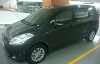
July 15th, 2015 12:15 PM #9Rapsa.... Cars we can’t have: Toyota’s trekking-shoe minivan, the Sienta | Motioncars
Mapapa Sienta ka na lang sa inis kasi hanggang tingin na lang tayo dito
-
BANNED BANNED BANNED
- Join Date
- Jan 2015
- Posts
- 4,580
July 15th, 2015 05:43 PM #10Iran nuclear deal Q&A
Inquirer.net, July 15, 2015 10:28am
WASHINGTON, Associated Press --- Here's what you need to know about the Iran nuclear deal.
WHAT JUST HAPPENED AND WHY IS THIS SUCH A BIG DEAL?
In general, Iran has agreed to limit its nuclear program if the U.S. and other world powers ease up on what have been brutal economic sanctions against the country.
The 100-page deal caps off more than a decade of diplomatic wrangling aimed at keeping Iran from building a nuclear bomb. U.S. and Israeli officials say a nuclear-armed Iran would be a security disaster and potentially lead to war because of Tehran's support for anti-Israel militant groups, such as the Palestinian Hamas and the Lebanese Hezbollah group, and frequent references by Iranian leaders to Israel's destruction.
Iran has long maintained that its nuclear program is peaceful and that it never sought to build a bomb. The talks were mostly considered stalemated until summer 2013, when Iran elected a new president, Hassan Rouhani, who said the country was ready to strike a deal.
The final agreement with Iran was negotiated by U.S., Britain, Germany, France, China and Russia.
SO WHAT IS THE AGREEMENT?
Iran agreed to reduce the number of uranium-enriching centrifuges it has in stock, as well as its stockpile of enriched uranium. It also has agreed to convert an enrichment site called Fordo --- dug deep into a mountainside and thought impervious to air attack --- into a research center.
Another key piece is the possibility of inspections: If the U.N. nuclear agency identifies a suspicious site, it can ask to inspect it. And if Iran refuses, an arbitration panel will decide whether the Iranians have to open up the site to inspection within 24 days.
All of this is aimed at slowing down the rate at which Iran could, in theory, build a nuclear weapon.
In exchange, Iran stands to receive more than $100 billion in assets overseas that had been frozen by other countries. It also will see an end to a European oil embargo and other financial restrictions on its banks. If Iran reneges on its promises, the sanctions will snap back into place.
EVERY GOOD DEAL INVOLVES COMPROMISE. WHAT DID THE WEST GIVE UP?
Among the biggest concession by the West is that Iran doesn't have to submit to international inspections anytime, anywhere. Because the process for inspections could end up with an arbitration panel, access to the Islamic Republic's most sensitive sites isn't guaranteed and may be delayed.
And while Iran has to reduce its stockpile of enriched uranium and its number of centrifuges, it doesn't have to give them up entirely. It also isn't being forced to close its mountainside Fordo facility, just use it for research purposes.
Another concern is that a U.N. weapons embargo could lift in five years or sooner if certain criteria are met. U.S. officials had sought to maintain the weapons ban because they worry that once sanctions are lifted and Iran's government becomes flush with cash again, more military aid would find its way to places like Syria and Yemen. But Iran dug in and was supported by Russia and China, which stand to profit from greater weapons exports.
WHAT DOES ALL THIS MEAN FOR OIL PRICES?
Many analysts estimate that Iran has piled up tens of millions of barrels of oil on floating barges that can be exported in fairly short order after sanctions have been lifted. The country will follow that with increased production from its oil fields.
When all this happens and how it ultimately affects the price of oil remain far from certain. Energy prices can depend on production levels in other countries, currency rates and demand sparked by the health of global economies. Plus there are questions about the state of Iran's oil infrastructure and its ability to increase production.
Despite all the uncertainty, analyst Tom Kloza expects the lifting of sanctions to help make energy prices next year "more palatable for most of the world."
WHAT DOES ISRAEL SAY? DON'T THEY HAVE THE MOST TO GAIN OR LOSE WITH THIS?
Yes, they do, and Israel isn't happy because the deal basically leaves Iran's nuclear infrastructure in place. Israeli Prime Minister Benjamin Netanyahu called the agreement a "bad mistake of historic proportion." President Barack Obama says he sees it differently: If a diplomatic agreement with Iran can't be found, that puts the next U.S. and Israeli leaders in the position of having to contemplate military action to prevent Iran from building a bomb.
WHAT HAPPENS NEXT? CAN THE U.S. CONGRESS KILL THE DEAL?
Congress has 60 days to review the deal. A vote of disapproval by itself won't stop the agreement. But if Congress decides to impose new sanctions on Iran or prevent the president from suspending existing ones, that would make it hard for Obama to fulfill the American side of the deal. To do that, however, Senate and House Republican leaders would have to find enough support to override a presidential veto.
This version corrects the amount of time Iran has to give access to a suspicious site to 24 days, instead of 24 hours.
-
BANNED BANNED BANNED
- Join Date
- Jan 2015
- Posts
- 4,580
July 15th, 2015 05:58 PM #11THIS IS GOOD NEWS TO ALL SALARIED EMPLOYEES, GOVERNMENT OR PRIVATE!
Aquino urged to lower individual income taxes as best goodbye gift
Inquirer.net, July 15, 2015 09:09am
A promise to lower the individual income taxes would be President Benigno Aquino III's "best goodbye gift" to the people when he delivers his final state of the nation address (Sona) this July 27, Senator Sonny Angara said on Wednesday.
"Of the thousands of words in his Sona, one of the most awaited and the one which will be most applauded is the President saying that he will back bills that will lower individual income taxes," Angara, chairman of the Senate committee on ways and means, said in a statement.
As chairman of the committee, the senator is leading the charge in the upper chamber to slash income taxes. He is also the author of a bill compressing the net taxable income brackets, and lowering tax rates especially for low- and middle-income earners.
Angara said Aquino's mention of tax reforms in his Sona could mobilize support from the House of Representatives, which would end "the embargo in serious discussion for lower tax rates."
The Senate already approved late last year a bill that would raise the tax cap for the 13th-month pay and other benefits from P30,000 to P82,000. Aquino signed it into law in February 2015.
READ: Senate OKs P82K tax cap for 13th-month pay | Higher tax exemption cap on bonuses now a law
"The Department of Finance has already expressed its openness to review and amend the tax rates and brackets, and we welcome this progress. We should let the executive guys run the numbers and tell us hanggang saan tingin nila pwede ibaba ang rates (up to how much they think the rates can be lowered)," Angara said.
In making one final push for lower income taxes, Angara again calmed concerns by revenue officers that altering tax rates will punch a big hole in the coffers.
"Any revenue loss is recoverable. If withholding tax is converted into disposable income, then it can be recouped through the VAT on goods. If part of the salary intended to be remitted to the BIR (Bureau of Internal Revenue) will now be spent for goods, then it can still be recaptured through the tax on the goods bought," the senator explained.
"It will also be good for the economy. It is always better to plow money back in circulation, where it can stimulate the production and consumption of goods. Sometimes, instead of government doing the spending for the people, let the people do the spending themselves," he added.
Angara said the bill, once enacted into law, would retain more money in paychecks of ordinary salaried workers and would lead to greater voluntary compliance.
"It will also attract human capital and prevent the migration of our own to countries (which) do not reward industry and productivity with high tax rates," he further said.
Angara pointed out that the Philippines has the second highest individual income tax rate in the region at 32 percent next to Thailand and Vietnam's 35 percent, and the highest value added tax (VAT) at 12 percent.
He also noted that the country's current individual income tax bracket has remained unchanged since 1997 until today even when the consumer price index has already almost doubled.
"We need to think ahead and be competitive in the region but more importantly, we must give the Filipino people a break," said the senator.
"Currently, a policeman and a teacher whose net taxable income is P150,000 are taxed at the third highest rate. Kung hahayaan lang natin ito at hindi tayo agad kikilos upang amyendahan ang sistema ng ating pagbubuwis, malamang ay sa mga susunod na taon, ang tax rate ng ating mga guro, nars at kapulisan ay sintaas na ng tax rate ng mga milyonaryo at bilyonaryo sa bansa," the senator said.
(Currently, a policeman and a teacher whose net taxable income is P150,000 are taxed at the third highest rate. If we will allow this and we will not act immediately to amend our taxation system, maybe next year the tax rate of our teachers, nurses and policemen would be as high as the tax rate of the millionaires and billionaires in the country.)
This injustice, Angara said, is called "bracket creep" where taxpayers who are not considered high earning are already pushed into high brackets. At some point, economists say, this bracket creep would lead to "fiscal drag" where people will not have any purchasing power left to contribute to the economy due to excessive taxation. IDL
-
 Tsikot Member
- Join Date
- Jul 2015
- Posts
- 2
July 17th, 2015 02:09 PM #12testing...
magandang hapon po sa lahat newbie po
- - - - - - - - - - - - - - - - - - - - - -
testing...
magandang hapon po sa lahat newbie po
-
BANNED BANNED BANNED
- Join Date
- Jan 2015
- Posts
- 4,580
-
 Aviator
- Join Date
- May 2010
- Posts
- 2,836
-
Tsikot Member
- Join Date
- Jul 2015
- Posts
- 2
-
 Tsikoteer
- Join Date
- Nov 2009
- Posts
- 12,364
July 18th, 2015 03:08 PM #16Browsing my FB then one of my friend posted this.

Dude turn off your location [emoji23]
Sent from my iPhone using Tapatalk
-
High & Dry
- Join Date
- Jul 2007
- Posts
- 57,771
July 18th, 2015 03:39 PM #17Ha ha ha! Accurate ba yan? Yung sa Google kasi mali mali. Although it's off by a few kilometers lang.
-
Tsikoteer
- Join Date
- Nov 2009
- Posts
- 12,364
July 18th, 2015 04:40 PM #18May margin of error oo pero minimal lang, pero to miss it by a country? Aba eh lasing yung GPS mo or yung FB app hahaha Originally Posted by _Cathy_
Sent from my iPhone using Tapatalk
-
Hoosier'ed Hotspur
- Join Date
- Dec 2005
- Posts
- 39,174
-
Tsikoteer
- Join Date
- Feb 2008
- Posts
- 12,683
 Originally Posted by chua_riwap


 Reply With Quote

