
Weakness in precious metals prices as the U.S. dollar strengthens on expectations of rising rates. Not only in precious metals but the whole commodities complex is under pressure.
Greece has faded into the background for now...

The Largest Car Forum in the Philippines
- Forums
- Discussions
- Events
- Community
Results 8,641 to 8,660 of 10726
-
 Verified Tsikot Member

- Join Date
- Mar 2014
- Posts
- 355
July 20th, 2015 04:24 PM #8641
-
BANNED BANNED BANNED
- Join Date
- Jan 2015
- Posts
- 4,580
July 23rd, 2015 08:28 AM #8642US stocks fall as Apple, Microsoft tumble
Inquirer.net, July 23, 2015 06:31am
NEW YORK--Shares of Apple tumbled 4.3 percent and Microsoft fell 3.7 percent as disappointing earnings from the two technology titans weighed Wednesday on the broader market.
The Dow Jones Industrial Average fell 68.25 points (0.38 percent) to 17,851.04.
The broad-based S&P 500 dropped 5.06 (0.24 percent) to 2,114.15, while the tech-rich Nasdaq Composite Index sank 36.35 (0.70 percent) to 5,171.77.
Apple reported that net income for the quarter ending June 27 jumped 38 percent to $10.7 billion. But traders focused on a revenue forecast that fell shy of expectations and commentary from some analysts that the 47.5 million iPhones sold missed expectations.
Deutsche Bank said the market's reaction to Apple's results showed "it's getting harder to beat the bulls."
Microsoft reported a loss of $3.19 billion due to a hefty write-down on the smartphone business it acquired from Nokia and restructuring charges of nearly a billion dollars.
Dow member Caterpillar fell 3.2 percent after the company reported lower equipment sales in most of its businesses in the second quarter. The industrial giant will issue its full earnings report Thursday.
Baker Hughes dropped 3.9 percent on a Bloomberg News report that its $34.6 billion sale to Halliburton could be blocked on antitrust grounds. Halliburton fell 0.8 percent.
Other oil services companies also fell as US crude prices closed under $50 a barrel for the first time since April 2. Weatherford International lost 3.9 percent, Nabors Industries shed 2.5 percent and Cameron International fell 5.0 percent.
Banking stocks rose, including Dow member JPMorgan Chase (+1.4 percent) and Bank of America and Citigroup (both +2.1 percent).
Yahoo fell 1.2 percent after reporting a $22 million loss in the second quarter as chief executive Marissa Mayer warned earnings could be pressured in the coming quarter due to heavy investment in new products.
Aerospace giant Boeing rose 1 percent after second-quarter earnings translated into $1.62 per share, 25 cents above analyst expectations.
Other companies to report earnings included Chipotle Mexican Grill (+7.8 percent), Dow member Coca-Cola (-0.7 percent), GoPro (-0.6 percent), Illumina (-8.4 percent) and Whirlpool (+7.3 percent).
Bond prices rose. The yield on the 10-year US Treasury fell to 2.33 percent from 2.34 percent Tuesday, while the 30-year fell to 3.04 percent from 3.08 percent. Bond prices and yields move inversely.
-
 Tsikoteer
- Join Date
- Feb 2008
- Posts
- 12,683
July 23rd, 2015 05:23 PM #8643^and I thought that stock prices had hit rock bottom last week. This is a disaster.
 Will there be bonus this year?
Nobody is even taking a second look at the apple watch. More woes to come?Last edited by dreamur; July 23rd, 2015 at 05:26 PM.
-
 D' Oiler
- Join Date
- May 2006
- Posts
- 4,346
July 23rd, 2015 11:00 PM #8644Laking effect sa akin itong oil glut sa ngayon...ang hirap maghanap ng magandang package. Adding to my worries is the worst thing i guess is yet to come:banghead:
-
Verified Tsikot Member
- Join Date
- Mar 2014
- Posts
- 355
July 24th, 2015 05:32 PM #8645Looks like the popular view that oil prices will bounce back to $80 in the second half of 2015 is becoming more unlikely.
-
Verified Tsikot Member
- Join Date
- Mar 2014
- Posts
- 355
July 27th, 2015 06:30 PM #8646Oil prices keep heading south. Recent data from the U.S. increased concerns about oversupply as drilling activity picked up. Producers added 21 rigs last week according to oilfield services company Baker Hughes.

That and the recent Iran nuclear deal and Saudi overproduction suggest lower prices to come.
This week we'll find out whether the Fed will raise rates or wait for stronger data. It's unlikely the Fed will raise rates this week but any hint that they're planning to raise rates this year will create volatility. Many market participants still think the U.S. economy is not yet strong enough for a rate hike.
-
Verified Tsikot Member
- Join Date
- Mar 2014
- Posts
- 355
July 30th, 2015 06:03 PM #8647The Fed statement didn’t provide any guidance about the timing of a rate hike but reading between the lines there's indication that all conditions to begin raising rates have been met. The cautious Fed didn't want to spook the market by signaling a September move.
-
Verified Tsikot Member
- Join Date
- Mar 2014
- Posts
- 355
August 5th, 2015 03:57 PM #8648The dollar index is fighting its way back to 100. With continued talk of a September rate hike the dollar index is now testing recent highs. 98.15 resistance level has been broken and if it stays above that level momentum should take it to 100 soon.
-
Verified Tsikot Member
- Join Date
- Mar 2014
- Posts
- 355
August 7th, 2015 01:04 PM #8649I keep getting asked if the U.S. dollar can still go higher. Well, if you believe what's happening now is a massive unwinding of the global carry trade then yes the dollar can still go higher. Bets against the dollar built up through several years are now being reversed. You can see that happening in emerging markets as investors liquidate EM assets and buy dollars. Trillions of dollars of bets have to be unwound so it will take time.
-
Verified Tsikot Member
- Join Date
- Mar 2014
- Posts
- 355
August 10th, 2015 01:17 PM #8650With continued strength of the U.S. labor market the probability of a Fed rate hike next month is increasing. If economic reports in the next few weeks show consistent positive data the Fed will definitely hike in September.
-
Verified Tsikot Member
- Join Date
- Mar 2014
- Posts
- 355
August 11th, 2015 04:23 PM #8651The big story today is China's devaluation of the renminbi. The devaluation is to combat falling exports caused by the renminbi’s relative strength against the dollar while competitors’ currencies have weakened. I think it's also to fend off criticism from the IMF that the RMB's value is determined artificially. China wants the RMB included in the SDR basket but it cannot be included if the currency isn't allowed to float freely.
-
Verified Tsikot Member
- Join Date
- Mar 2014
- Posts
- 355
August 12th, 2015 11:20 AM #8652Now i keep getting asked the effects of RMB devaluation. If China's exports become more competitive then it's bad for other Asian exporters like South Korea, Singapore etc. That would pressure them to devalue their currencies to stay competitive that's why their currencies fell in reaction to RMB devaluation. Weaker RMB makes imports more expensive so it could hurt China's demand for commodities, consumer goods, luxury goods that's why share prices of Brazil's Vale, AAPL, BMW, LVMH etc fell.
By the way, oil prices made a round trip back to this year's lows. Back then everyone said oil prices have bottomed.
-
 Social Dementia
- Join Date
- Sep 2003
- Posts
- 25,189
-
Social Dementia
- Join Date
- Sep 2003
- Posts
- 25,189
August 12th, 2015 04:08 PM #8654Malaysia ringgit isn't doing well...
Ringgit falls below 4 per US dollar for first time since 1998, weakens further against Singapore dollar
KUALA LUMPUR (BLOOMBERG, REUTERS) - Malaysia's ringgit weakened beyond the psychologically important 4 per US dollar level for the first time since 1998 as investors flee the country's assets after China's shock devaluations and amid a slowing economy and controversy over finances linked to Prime Minister Najib Razak.
The ringgit tumbled more than 1 per cent to 4.0025 a US dollar as of 11.02am in Kuala Lumpur, according to prices from local banks compiled by Bloomberg. The Malaysian unit was trading down 1.1 per cent to 4.0040 to the US dollar as of 0335 GMT (11.35am in Singapore), its weakest since Sept 1, 1998.
The ringgit also lost ground against the Singapore dollar, which was itself hit by China's second yuan devaluation on Wednesday (Aug 12). The Malaysian currency was trading at 2.84 to the Singdollar at about 11.45am, down from its close at 2.82 on Tuesday.
China's surprise devaluation of the yuan has lumped more pressure on the ringgit on speculation policy makers will favor weaker exchange rates to prop up faltering exports. The ringgit has lost about 20 per cent in the past 12 months in Asia's worst performance.
Malaysia is already reeling from slumping Brent crude prices that have cut government earnings for the net oil exporter, and a looming US interest-rate increase. Mr Najib has come under the spotlight over a RM2.6 billion (S$920 million) donation deposited into his personal bank accounts and which was initially linked to state investment company 1Malaysia Development Bhd.
Malaysia's foreign-exchange reserves dropped below US$100 billion last month for the first time since 2010 to settle at US$96.7 billion. The central bank will continue to "smoothen out excessive volatility," Julia Goh, an analyst at United Overseas Bank, wrote in a research note on Tuesday. Bank Negara Malaysia failed to stop the ringgit falling through its 1998 peg level of 3.8 a dollar in July.
Ringgit falls below 4 per US dollar for first time since 1998, weakens further against Singapore dollar, Economy News & Top Stories - The Straits Times
-
BANNED BANNED BANNED
- Join Date
- Jan 2015
- Posts
- 4,580
August 12th, 2015 04:48 PM #8655Q&A: What yuan devaluation means for China, other countries
Inquirer. net, August 12, 2015 08:54am
BEIJING, China --- China rattled global financial markets Tuesday by devaluing its currency --- an effort, in part, to revive economic growth.
The yuan's value declined 1.9 percent, its biggest one-day drop in a decade. The move could help Chinese companies by making their products less expensive in global markets. U.S. stocks plummeted, partly on fears about a worsening economic slowdown in China.
WHAT EXACTLY DID CHINA DO?
China doesn't let its currency trade freely in financial markets as the United States does. Instead, it links the yuan's value to the U.S. dollar. Then it restricts trading to a band 2 percent above or below a daily target set by the People's Bank of China. On Tuesday, the central bank set the target 1.9 percent below Monday's level --- the biggest one-day change in a decade. It also made a technical change to give market forces more influence in determining the yuan's value: Its daily target will now be based on the previous day's closing value. That change will allow the yuan to make bigger, faster moves up or down and better reflect investors' outlook on the prospects for China and its currency, said David Dollar, senior fellow at the Brookings Institution.
WHY DID CHINA DEVALUE ITS CURRENCY?
The People's Bank of China said it acted because the yuan has been rising even when market forces say it should be falling. Worried Chinese have been moving money out of the country, putting downward pressure on the yuan. Yet the yuan has remained up anyway because of its link to the dollar, which has been rising. An overvalued yuan has hurt Chinese exporters by making their products more expensive overseas. In July, Chinese exports plunged 8.3 percent year over year.
China's economy already needed help. The economy is expected to grow less than 7 percent this year, its slowest rate since 1990, and could decelerate even more next year. The stock market has been in a freefall since June.
"This move won't solve some of the pressing problems China faces," Sung Won Sohn, an economist at California State University Channel Islands, cautioned in a research note. "There is too much excess capacity, especially in basic industries like steel, aluminum ... A real-estate bubble is alive and well. Chinese banks are loaded with a lot of problem loans. The gyration in the stock market won't go away. "
HOW WILL CHINA'S TRADING PARTNERS BE AFFECTED?
Investors fear the worst. U.S. stocks sank Tuesday, dragged down by falling shares in such big exporters as Caterpillar and General Electric. In theory, a weaker yuan could reduce exports of U.S. goods to China, already down nearly 5 percent this year through June.
But economists doubt that a one-day 2 percent drop in the yuan --- a move China has called a one-time event --- will do much damage to exports from the United States or other countries.
"Two percent is no big deal," said Mark Zandi, chief economist at Moody's Analytics. "Ten percent over the next few months would be a big deal."
American politicians, who have long charged that China keeps its currency artificially low to give its exporters an edge, denounced the devaluation. "Today's news that China has yet again lowered the value of its currency is another harsh reminder that we cannot afford to sit idly by as China refuses to play by the rules," Ohio Republican Sen. Rob Portman said in a statement.
But economists didn't see Beijing's move as an effort to defy market forces and reduce the yuan to an artificially low level. Rather, they perceived an attempt by China to catch up to an economic reality that dictates a cheaper yuan. And the plan to let market forces play a bigger role in determining the yuan's level is something the U.S. government itself has called for.
In a statement, the U.S. Treasury Department said: "China has indicated that the changes announced today are another step in its move to a more market-determined exchange rate. We will continue to monitor how these changes are implemented and continue to press China on the pace of its reforms."
MIGHT THE FEDERAL RESERVE DELAY A RATE HIKE?
Probably not. True, a cheaper yuan hurts U.S. exporters and likely depresses U.S. inflation, which is already below the annual 2 percent rate the Fed targets. But Tuesday's move wasn't big enough by itself to make much difference. So the Fed is likely to go ahead, possibly at its September meeting, and raise the short-term rate it controls, which has been pinned near zero since 2008. The U.S. economy grew at a steady 2.3 percent annual from April through June, and U.S. unemployment has fallen to a seven-year low 5.3 percent.
If the U.S. economy continues to look healthy, wrote JP Morgan Chase economist Michael Feroli, "the yuan move will largely be a sideshow " by September's Fed meeting.
-
Verified Tsikot Member
- Join Date
- Mar 2014
- Posts
- 355
August 12th, 2015 05:45 PM #8656The effect of RMB devaluation on other currencies is becoming more pronounced. Worst performers are the Indonesian Rupiah, Malaysian Ringgit, Indian Rupee, Singapore Dollar, South Korean Won, Taiwanese Dollar, Australian Dollar, South African Rand, Mexican Peso.
-
Verified Tsikot Member
- Join Date
- Mar 2014
- Posts
- 355
August 12th, 2015 06:17 PM #8657Q: Why are other currencies falling in reaction to RMB devaluation?
A: Because there's fear of competitive devaluation. China devalued its currency to make their exports more competitive so other Asian exporters will also want to devalue their own currencies to stay competitive.
-
Verified Tsikot Member
- Join Date
- Mar 2014
- Posts
- 355
August 13th, 2015 03:13 PM #8658While everybody's hyperventilating over China's RMB devaluation the IMF welcomes the move. Originally Posted by Lady Bathory


-
Verified Tsikot Member
- Join Date
- Mar 2014
- Posts
- 355
August 17th, 2015 06:14 PM #8659A lazy Monday today is. The RMB devaluation last week feels so long ago already. Now let's shift our focus back to the coming Fed rate hike. There's a lot of talk about China complicating the Fed's plan to raise interest rates next month. China exporting deflation to the U.S. could put the Fed on hold (explanation: the devaluation makes Chinese exports cheaper resulting in lower import prices for the U.S. which is deflationary). Well yeah there's deflation risk but the time lag between China's action and the impact on U.S. inflation is several months so that shouldn't affect the Fed's decision next month. I think the Fed will stay on track.
-
Verified Tsikot Member
- Join Date
- Mar 2014
- Posts
- 355
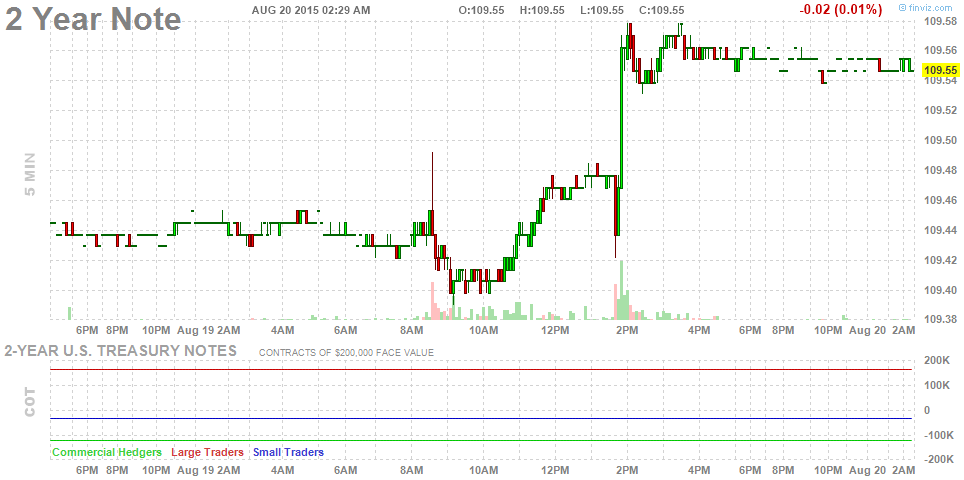
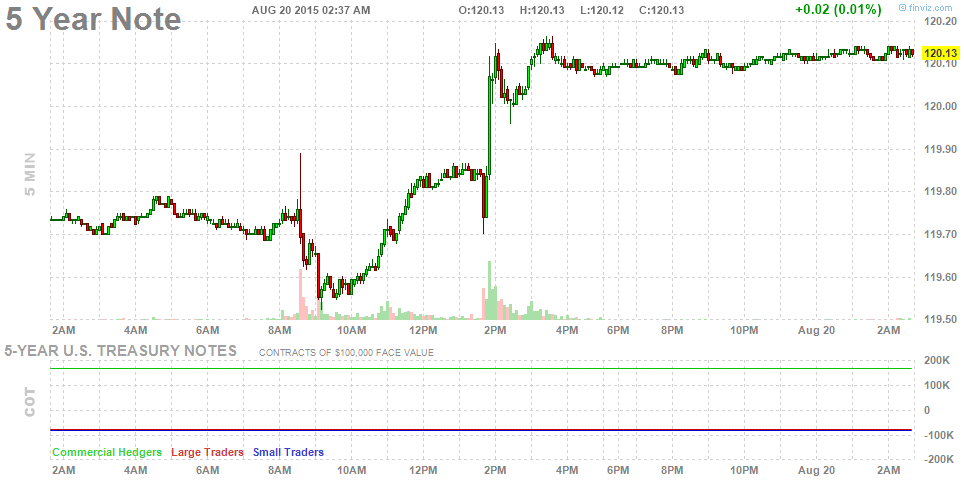
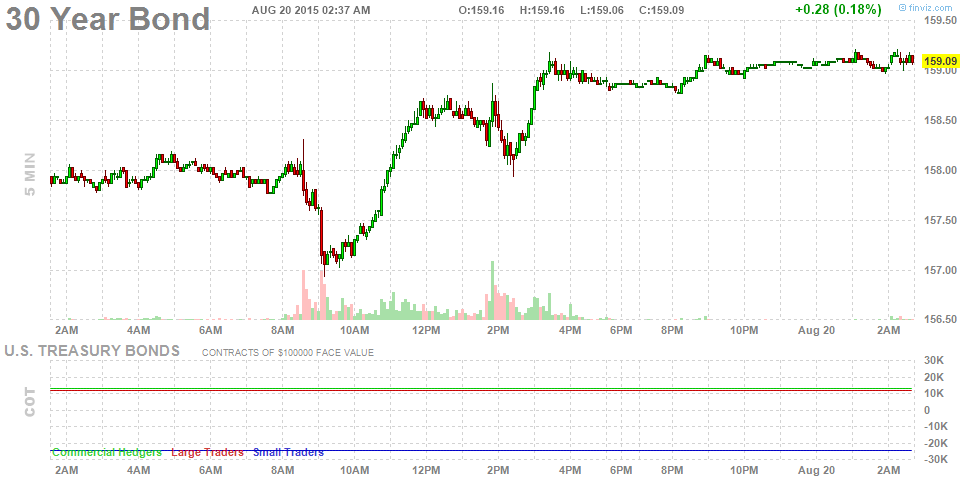
August 20th, 2015 03:57 PM #8660The Fed minutes from the July meeting indicated that FOMC members are still waiting for further evidence that the U.S. economy has strengthened sufficiently before hiking rates. Inflation is still far below the Fed's 2% target and there's no wage pressure to create inflation. The bond market interpreted the minutes as dovish so Treasuries are bid.


 Reply With Quote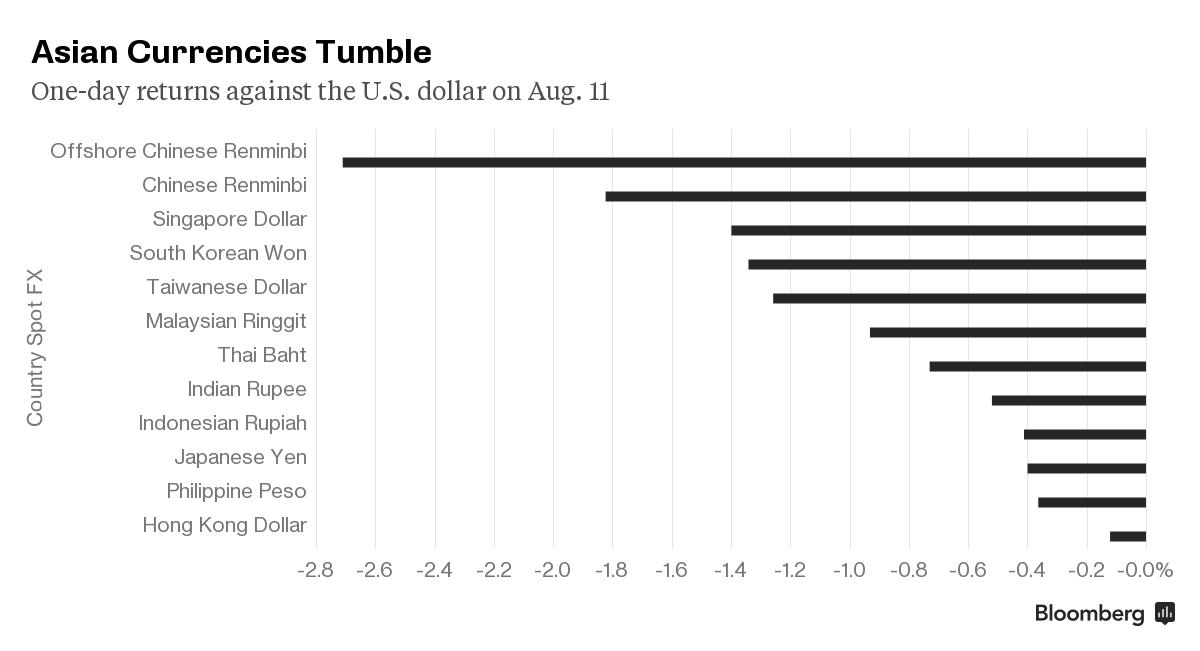
 Originally Posted by Lady Bathory
