


As far as the US market is concerned. But since the US is the 2ND biggest car market and influence carmaker's marketing decisions worldwide, the galant as a car will be gone for good?
The death list: Cars that aren't coming back for 2013 - Yahoo! Autos
Chevrolet Aveo
There’s one reason and one reason only to buy a Chevy Aveo: it’s inexpensive, and you need basic transportation. A prime example of why domestic automakers have been losing ground to import brands, the Aveo should have been killed off years ago. It’s replacement, the Sonic (which, ironically is built on the same platform), is a superior car in every way.
Volvo C70
Proof that there is such a thing as too much compromise, the Volvo C70 was neither a good convertible nor a good coupe. Its power retractable hard top took up virtually all trunk space, requiring use of the rear seats for cargo hauling. Underpowered and ill-handling, the car delivered little entertainment value with the top up; top down, the C70 exhibited more flex than a yoga studio and possessed more squeaks and rattles than a day care center.
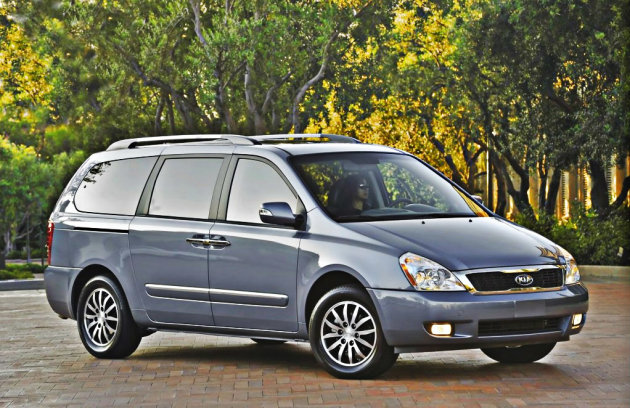
Kia Sedona/Carnival
Korean automakers have shown they can take on the Japanese and American manufacturers with sedans and crossovers, but not with minivans. The only Korean-brand minivan currently offered in the U.S., the Sedona rides into the sunset after 2012, a victim of lagging sales.
Hyundai Veracruz
While seven-passenger crossovers aren’t expected to deliver driving excitement, some are blander than others. In a market packed with solid choices from other manufacturers, the Veracruz’s uninspired styling, numb handling and surprising lack of cargo room proved to be its downfall.
Mitsubishi Eclipse
Let’s pause for a moment of silence here, shall we? If you’re a sport compact enthusiast, you know that the Mitsubishi Eclipse actually died with the second generation. Since then, the car has shuffled through various iterations, all of which took it farther away from its original turbocharged, all-wheel-drive, take-no-prisoners-on-the-racetrack mission. It’s worth pointing out that the Eclipse GSX paved the way for cars like the Subaru WRX and Mitsubishi Evo, but let’s be honest here: the real Eclipse was killed off in 1999.
Mitsubishi Galant
Who knew that Mitsubishi still built and sold a mid-size sedan in the United States? Aside from rental car agencies, the answer appeared to be “not many buyers,” leading to the Galant's demise in the U.S after 2012.
Mitsubishi Endeavor
Designed specifically for the United States market, the Endeavor was Mitsubishi’s attempt to build a mid-size crossover that catered to American tastes. The automaker boldly forecasted annual sales of some 80,000 units, but never managed to hit half that amount. By 2010, sales had fallen to just over 4,400 units, making the Endeavor unprofitable to build. Like the Galant, it won’t be missed by many

The Largest Car Forum in the Philippines
- Forums
- Discussions
- Events
- Community
Results 1 to 7 of 7
Threaded View
-

 Social Dementia

- Join Date
- Sep 2003
- Posts
- 25,189
May 27th, 2012 09:16 AM #1

 Reply With Quote