


To all of those aspiring to design and build cars today and in the future. Just to put some insights into your heads.
I started doodling cars at age 7, pursued the passion by choosing "History of the Automobile" as my subject for Research Papers and Reports everytime I had a chance to from Elementary through High School. Chose "Automotive Manufacturing in the Philippines" as my subject for my Feasiblity Study requirement in College just before the Car Development Program was even spoken about before Cory was seated in power. Collected about 50 classic and muscle and even replica cars in my lifetime just to immerse myself in Automotive Design Philosophies - to understand why they were designed and built that way, what made them different, what influenced the lines, where the influences are coming from and How the music of the eras they were built are actually inspired by the automobile fashion. To strengthen my understanding, I have also entered into racing from skateboards, to BMX to my VW bug and experimented Aerodynamics with it by making mock up wind deflectors and air dams measuring it Coefficient of Drag in Sangley Point Air Strip. The Engineering Background in Mapua also helped a lot in giving me a more clearer understanding and appreciation about what good designs are. A short course in Industrial Security gave me the understanding about Materials Engineering in relation to sefety and security as the guiding rule in developing designs where levels of security and safety is outlined before even starting to build the concept in relation to the target ergonomics. This is just to mention a few.
Summing up the experiences and immersions,
I see the Philippine Car Culture has gone astray by allowing Mediocrity to proliferate after the Japanese Occupation. Japans plan to make the Philippines it's slave country was indeed a success. I remember the quality of life and even the standards of Social Graces which prevail among the Middle-Aged Pinoys in the 1950's are at par with the cars they drove. But, little by little, the Bastardized Sarao Jeepney Culture has crept into the Psyche at the same manner as the RICER Import Car Culture has taken US based Asians - specially Pinoys.
I would like to share a little History and Heritage as inputs for budding Pinoy designers and wanabees. I have always been fascinated with pioneering concepts, I have kept silent about this even when I talked with other co-enthusiasts and kindred spirits even afficionados, however, among all my acquiantances, there was only one who came really very close to my secret object of passion... but not quite.
Here it is...
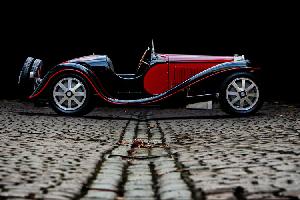
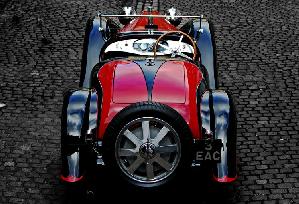
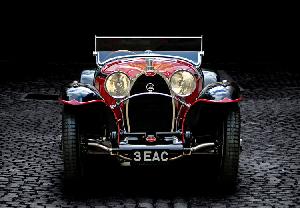
"The Bugatti Type 55 was a road-going version of the Type 54 Grand Prix car. A roadster, it had a short 108.3 in (2750 mm) wheelbase and light 1800 lb (816 kg) weight.
Power came from the Type 51's 2.3 L (2262 cc/138 in³) straight-8 engine. This 2-valve DOHC unit produced 130 hp (96 kW) and could rev to 5000 rpm. A Roots-type supercharger was used.
The car's 4-speed manual transmission came from the Type 49 touring car. 38 examples were produced from 1932 through 1935
By the early 1930s Ettore Bugatti had established an unrivalled reputation for building cars with outstanding performance on road or track the worlds greatest racing drivers enjoying countless successes aboard the Molsheim factorys products and often choosing them for their everyday transport. Because of its lengthy run of success, Ettore Bugatti remained stubbornly committed to his single-cam engine, only adopting the more advanced double-overhead-camshaft method of valve actuation, after much prompting by his eldest son Jean, on the Type 50 of 1930. From then on Jean Bugatti took greater responsibility for design, his first car being the exquisite Type 55 roadster, a model ranking among the finest sports cars of the 1930s.
The Type 55s 2,262cc, supercharged, twin-cam, straight-eight engine was carried over from the successful Type 51 Grand Prix car - successor to the legendary Type 35 - and fitted in a ladder frame chassis wider and stronger than that of its Type 43 road-car predecessor. The precocious Jean Bugatti added his own individual touch, designing a sublime two-seat roadster body that is universally acknowledged as one of the finest ever to grace an automobile. Aimed at only the wealthiest clientele, the Type 55 sold in commensurately limited numbers, a mere 38 being built between 1932 and 1935, the vast majority of these in the first year of production.
A true supercar of its era, the Type 55 is today one of the most desirable and expensive cars in the world."
With only 38 examples made - it catered the richest among the wealthiest in those days... and if there were any surviving example today of the Type 55 - it will still fetch 7 digit figures in any currency.
Jeans passion and enthusiasm in styling Ettore's Bugatti platform is truly a vision way too much ahead of its time.
In the Pinoy Automotive Culture.. if we would have kept our free thinking power after the Japanese mind conditioning era, we would have trekked a similar road in advancing our own car culture as what this marque has gone.
With todays technology, nothing is impossible... but if you look at whats coming out in the market... it is only Volkswagen who has the eye and appreciation of Automobile Heritage... Mainly, for the obvious reason why they bought Lamborghini and Bugatti... two unprofitable car companies... Why would VW invest in an old losing company? It's basically - investing on Heritage.
Modern Businessmen don't seem to realize how easy it is to sell something that has a name and a reputation. It shows how limited the way most is using or utilizing their imaginations.
This is going to be the primer to the series of insights I am going to dumping in this thread.
In closing, the Type 55 of 1932 is worthy of further review and consideration for the next Pinoy Car. It is after all - the first SUPERCAR.

The Largest Car Forum in the Philippines
- Forums
- Discussions
- Events
- Community
Results 1 to 20 of 35
Hybrid View
-

 enthusiast

- Join Date
- Mar 2007
- Posts
- 855
December 13th, 2009 01:15 PM #1Last edited by ehnriko; December 13th, 2009 at 01:39 PM.

-
enthusiast
- Join Date
- Mar 2007
- Posts
- 855
December 13th, 2009 02:04 PM #2In America, a different approach was taken in terms of size. Bigger is better, and it's mainly about muscle. However, the 50's has brought its own charm with it and in 59, Cadillac was able to build probably one of the most beautiful car ever.
The 1959 El Dorado Super V8 Biarritz Cadillac Convertible.
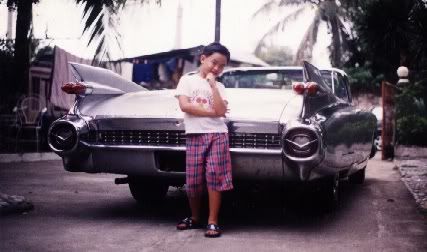


"No single automotive design better characterizes the industry’s late Fifites flamboyance than the 1959 Cadillac, which incorporated totally new styling. Large tailfins, twin bullet taillamps, two distinctive rooflines and roof pillar configurations, new jewel-like grille patterns and matching deck latch lid beauty panels personified these cars. They reflected the innocence, unsophisticated excitement and self-satisfaction of America during that era. They were Rock ’n’ Roll, outer Space and color TV – wrapped up in chrome and sheet metal with wide whitewall tires. And then those fins, the most popular ones in Automotive history. Love them or hate them, they became a styling icon unmatched ever since.
"The inherent dignity and grace and beauty which have become a hallmark of Cadillac styling take a giant stride forward for 1959. There is, for example, all of the impressive stature which only a motor car of adequate length and wheelbase can offer. There is the appearance of solid, enduring beauty imparted by the massive bumper and grille design, front and rear. And, of course, from any angle there is the unmistakable mantle of quality which marks each new Standard of the world."
Cadillacs self-confidence when introducing the 1959 model year was more than apparent though these words.
For the Eldorado Biarritz it read like this:
"The fabulous Eldorado Biarritz brings the glamour and zest of open-car motoring to heights of comfort, convenience and luxury never before attained. Completely equipped with air suspension, the 345-horsepower "Q" engine and every power and convenience accessory, it affords unique motoring enjoyment in a setting of interiors unmatched for lasting luxury and beauty."
There were more fine El Dorado Biarritz from other year models... but I am only putting more emphasis on the best year model they have come up with in this series of inputs. The 59 is the best of them all... much better looking than the 57 which incidentally was the one used in the Movie "Blast from the Past".Last edited by ehnriko; December 13th, 2009 at 02:10 PM.
-
enthusiast
- Join Date
- Mar 2007
- Posts
- 855
December 13th, 2009 02:14 PM #3Imagine this!

Now thats real beauty!.... the best of the past into the future... a DUBd' Eldy Cady Biarritz.
-
enthusiast
- Join Date
- Mar 2007
- Posts
- 855
December 13th, 2009 02:35 PM #4Now for a more distant past - about a decade earlier than the Type 55 Bugatti and about 3 decades earlier than the 1959 ElDorado Biarritz is the 1929 Dusenberg.
Another Supercar - way much ahead of it's time during it's introduction.


"It is difficult to imagine the excitement with which the Model J Duesenberg was received in 1929. Here was a chassis with an engine that—at 265 hp—beat its nearest competitor by more than 100 hp. The famed Packard 734 speedster produced 145 hp and the Cadillac V16, 175 hp. Coming from a company whose racing successes were legendary, it was the perfect marketing move. Priced at $8,500 for just the chassis, the Model J was by far the most expensive car in America. The timing could have not been better: with the economic success of the 1920s, America’s wealthy were ready to indulge themselves. The new Model J gave them the perfect opportunity.
The Murphy body company of Pasadena, California, is generally recognized as the most successful coachbuilder on the Model J chassis. Initially associated with Packard, Murphy built bodies that suited the California tastes of the time. They were simple and elegant, with trim lines and an undeniable sporting character. They appeared even more revolutionary when compared to their East Coast contemporaries which built heavier, more ornate designs.
This Murphy sport sedan features a special instrument panel with a dark blue fascia and early-style gauges. The doors are center mounted using piano-style hinges and open opposite to each other. The gray leather seats are accented by gray upholstery on the door panels and headliner, as well as plush gray carpet.
The car presented is the first of at least two Model J Sport Sedans that were bodied by Murphy in 1929. Currently in pristine condition, J151 was one of the cars featured by Duesenberg in the San Francisco Salon in 1929. It was purchased by the Norris family which owned the famed Broadmoor Hotel in Colorado Springs where the vehicle was kept. It remained in the Norris family until the 1980s when it was sold to noted collector John Mozart. It was subsequently acquired by Houston collector Jerry J. Moore. The current owner obtained J151 from Mr. Moore.
The Murphy Duesenberg has benefited from a professional restoration that was completed to meticulous standards and remains in show-worthy condition. This high quality, combined with the rarity and striking beauty of the design, make this one of the most outstanding Duesenbergs offered for public sale.
This 1929 Duesenberg Model J Sports Sedan Review and Buyer's Guide appeared in the May, 2000 Issue of Sports Car Market Magazine.
The SCM Analysis
Details
Years Produced 1927-1937
Number Produced 481
Original List Price $8,500-$9,500 (chassis only)
SCM Valuation
Tune-up Cost $2,000 (including distributor cap)
Distributor Caps
Chassis # Location Stamped near top of firewall
Engine # Location Flywheel housing
Club Info Auburn Cord Duesenberg Club, P.O. Box 547, Wellington, KS 67152
Website click to visit
Alternatives Hispano-Suiza V12, Cadillac V16
Investment Grade
The J151 1929 Murphy Duesenberg Model J Sports Sedan sold at RM Classic Cars’ Amelia Island, Florida auction on March 11, 2000 for an aggressive $522,500, including buyer’s premium.
The prestige and allure of the Duesenberg name can be best exemplified by their advertising campaign. Ladies and gentlemen of obvious means were depicted in activities suitable to their moneyed position with the simple statement “He (or She) drives a Duesenberg.” Paying $15,000 to $18,000 for a vehicle, as the Great Depression was tightening its hold, was an expenditure that only the upper crust could justify—and many of those had no desire to display their wealth with such conspicuous transportation. Because of the Great Depression, luxury car sales were slow all around and it forced Duesenberg to limit its production from the planned 500 cars to 481.
The Duesenberg market can be sliced a number of different ways: early and late, open and closed and one or two-off custom bodies as compared to the cataloged “custom” bodies. As far as desirability—and value—late takes preference over early, open over closed and the true custom bodies over the others.
The early cars displayed a plainer look and were lacking appearance and trim items such as shutters that concealed the radiator core, external horns, chrome tire covers, chrome strips on the rear fenders, radiator emblem and even a hood ornament. These were all features that appeared after 1929, although a few of these have been added to J151. However on J151, were these a factory retrofit with appropriate documentation, as was often done on the earlier cars, or was the car “enhanced” during a later restoration? If the latter were the case, it could preclude a podium award, assuming that knowledgeable judges were reviewing the vehicle at a national-level Concours d’Elegance.
The market for one-off custom-bodied Duesenbergs would have to be characterized as strong, with a few sales pushing the seven-figure mark, but to say that “A rising tide lifts all boats”—or in this case Duesenbergs—is not an applicable statement. “Catalog-bodied” Murphy roadsters have been consistently changing hands in the $700,000 to $800,000 range, convertible sedans in the high $500,000s and sedans like this one around $450,000 to $475,000.
A factor that’s having a negative effect on the overall Duesenberg market is the median age of the owners. Most are at the stage of their lives where estate planning is now a priority. New, young money that is entering the car hobby does not aspire to touring the back roads in a Duesenberg — they seem to be looking for more exotic machines for vintage racing.
The plausible explanation for this early, closed sedan selling for the price of a more desirable convertible sedan is that of a persistent auctioneer working two determined bidders. Perhaps positive comments from fellow collectors and the pride of owning a Duesenberg will offset leaving an extra $100,000 or so at Amelia Island. — Carl Bomstead"
Now - it is becoming more evident where the Type 55 got it's influence... Which brings to mind about where the 1950's Lotus Super 7 has got it's inspirations...
-
 I... see... RED!
- Join Date
- Jun 2007
- Posts
- 2,840
December 13th, 2009 02:14 PM #5sir, any pics from your collection?
Last edited by ehnriko; December 13th, 2009 at 02:41 PM.
-
enthusiast
- Join Date
- Mar 2007
- Posts
- 855
December 13th, 2009 02:42 PM #6Yes - if you see the 1959 El Dorado with the small boy- the boy is my nephew. Originally Posted by scharnhorst

My collection will be shown in another thread.
-
enthusiast
- Join Date
- Mar 2007
- Posts
- 855
December 13th, 2009 02:57 PM #7This Blast can give most of the under-cultured some shock.... some Elektrik Shock.
In 1916 - more more distant past than all the others I mentioned... about 10 decades ago...
They were already building minimalistic - environment friendly - classic quality cars.

The 1916 Rauch & Lang J-6 (electric car)
One of the better known makes of electric cars, the Rauch and Lang was produced by three separate companies from 1905 to 1928. Rauch and Lang was a carriage building firm from Cleveland that began to market a variety of high quality electric cars in 1905. In the early days of motoring, there was a debate between gasoline, steam and electric powered vehicles. The early advantages that steam and electric had were dissipated by the advent of electric starting in gasoline cars. Many people enjoyed driving the early electric cars for their ease of staring, operation and quiet running. The problems for electric vehicles included weight of batteries, slow speeds and limited traveling distance. While production of this type of electric car ceased in the 1930's, there is a renewed interest in new electric vehicles with new technology.
The 1916 Rauch and Lang J-6 is powered by an electric motor with 6 forward speeds and 3 reverse speeds. The wheelbase measures 100 inches. The original selling price of this luxury electric car was $3000.

And for the reference of those who thought Electric Cars are just a new fad...
Here's a site containing the list of Electric Car Makers in the early 1900's.
http://www.earlyelectric.com/carcompanies.html
and more in this site - about history of EV's during the 1800's....
http://www.speedace.info/electric_vehicle_history.htm
I will not be talking much about them for this thread - but will only focus in the design aspect for those who can still remember what became popular and successful.Last edited by ehnriko; December 13th, 2009 at 03:00 PM.
-
 Tsikot Member Rank 4
- Join Date
- Jun 2006
- Posts
- 2,027
December 13th, 2009 03:24 PM #8this could have been a great thread if TS wasn't too preachy. thanks for the history lesson.
-
enthusiast
- Join Date
- Mar 2007
- Posts
- 855
December 13th, 2009 03:36 PM #9Enough of vintages now...
Let's go back into the future and see how the past has indeed transformed or evolved to a not so distant era....
Let's explore the 70's...
OK, when one speak of the 70's, the best car that comes to my mind is the 71' Challenger. It's MOPAR Muscle....
I have always considered this car to be one of the most simplistically beautiful, subtle yet ass kickin classic muscle car of all times.
MOPARS are inherently Good Looking, Handsome cars.
The Mopars I grew up with are my Fathers Plymouth Valiants... Ninoy Aquino used to have a 67 Valiant with a Hemi Engine - I believe its still in the Villamor area. But the 60's Mopar isn't really god looking at all compared to the 69 Series up to the 73 and some 76.
The closest thing to the 71 Challenger is a 68 Charger and with a little more umph... the 69 Dart GT.


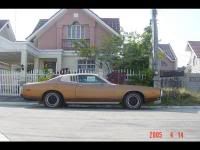 My old 72 Dodge Charger SE (Special Edition)
In the movie Vanishing Point, the 71 Challenger was portrayed to what is really is all about... brute power with some rebellious attitude or hate against authority oozing out of it's uncompromising muscled metal shell.

Clearly, the design evolution has taken a different road - much farther away from the old buggy type carriages. Nonetheless, the lines and attitude of the car is suggested all throughout from the body shell/ shape/ face/ ass and power.
-
enthusiast
- Join Date
- Mar 2007
- Posts
- 855
December 13th, 2009 04:04 PM #10I wish to point out also some personalities behind shaping the World Automotive Heritage...
I find it interesting that the personalities of these individuals are worth emulating should one really push the envelope into building a great car.
Here's one of the many...
Ferruccio - even the name sounds scary enough already.

Ferruccio Lamborghini was born in 1916 under the Zodiac sign of Taurus, his parents were farmers but Ferruccio soon decided he wanted to do something with mechanics. He started working on his fathers tractor out of interest and was able to attend a technical school in Bologna.
During the second World War he was enrolled into the Italian Air Force, working for the transport sections, after 1944 he became a prisoner of the Britisch military forces who put him to work in their motoring department. After the war he returned to his hometown and started converting old war surplus material into much needed tractors for the local people. He began his tractor business in a small garage but he got really successfull and had to move into larger premises soon thereafter.
During this time he also started tuning Fiat cars, he built a Fiat Topolino for himself and competed with it in the 1948 Mille Miglia, unfortunately the car was wrecked in an accident. By 1949 he was able to start building tractors from scratch, without using any leftovers, his own Lamborghini Trattrice factory was founded and the production soon took off.
The Lamborghini tractors became known as the best in Italy and Ferruccio started organizing tractor-pulls in his hometown just to show the superiority of his machines. The tractor business made him a very wealthy man, and he started a second factory to build airconditioning and central heating equipment. This enterprise made Ferruccio even richer and soon he was on of the wealthiest men in Italy, his love for fast cars became known and Ferruccio owned several exotic cars back then, a Mercedes SL300, a Jaguar and a Ferrari among other cars. But his Ferrari ran into problems with the clutch and Ferruccio went to visit Enzo Ferrari to complain about it, but Enzo refused to meet with him but that didn't stop Lamborghini. He noticed that the clutch fitted to his Ferrari wasn't any different from the ones he mounted in his tractors so he drove the Ferrari to Cento and fitted a Borg & Beck clutch of his own in the car, the problem never returned after that.
Ferruccio Lamborghini decided it was time to start a new business and the Grand Turismo cars seemed like a good idea, so he built a completely new factory at Sant'Agata and started building probably the best GT cars of that time. But things weren't always that simple and during the early Seventies he decided to sell most of his companies and retire at his estate near Perugia, further South in Italy were he began making wines known as 'The blood of the Miura'. His son Tonino went to Japan and started a few shops over there selling designer clothing under the Lamborghini name, while Ferruccio married his second wife Maria Theresa, together they had a daughter. This large estate La Fiorita near the Lake Trasimone now held a state of the art winemaking facility producing over 800,000 bottles of wine each year. This estate also housed a small private museum of Lamborghini cars Ferruccio owned, and the vineyard and golf terrain were open for visitors by appointment only, in his car museum you would find Ferruccio's favourit Lamborghini, the Miura. There were rumours that Ferruccio was involved in Paolo Stanzani's attempt to take over the Bugatti Automobili SpA factory but this was never officially confirmed.
Ferruccio Lamborghini died in February 1993 at the age of almost 76. Tonino Lamborghini created a tribute to his father, he contacted the architect Diversi in Imola to design a kind of 'arch' to hold just about everything Sig. Ferruccio Lamborghini ever did during his life. This museum was constructed on the grounds of Lamborghini Calor, at Dosso di Ferrara, the official grand opening occured on May 13th, 1995. This project was named the Cento Polifuzionale Ferruccio Lamborghini and reached great popularity the moment its doors opened for the public. All visits were by appointment only, but still during 1997 over 4000 pilgrims arrived at Sant'Agata to visit this spectacular space-like museum.Tonino Lamborghini has later named his son Ferruccio Jr, in honor to his father...
-
enthusiast
- Join Date
- Mar 2007
- Posts
- 855
December 13th, 2009 04:19 PM #11Now lets take a little break from walking into Memory lane...
Feel a little Alpine breeze as we listen to Matt Monroe while we take a short ride inside a Lamborghini Miura in this classic Movie Intro... from the original "Italian Job" movie.
This is one of my favorites... there's also plenty of beautiful elements in this short video.
Music, Scenery, Plot, and of course.... the car itself.
I would say... this is "The Best" movie intro - ever. Enjoy it.
[ame="http://www.youtube.com/watch?v=vpq1_AphUSY"]YouTube- The Italian Job Intro[/ame]
It's time to take a rest...
Until then.Last edited by ehnriko; December 13th, 2009 at 04:22 PM.
-
enthusiast
- Join Date
- Mar 2007
- Posts
- 855
December 14th, 2009 02:06 PM #12Before I point out the elements of design which is prevalent on the stated car models regardless of their age - let's take a look at the music or movies during those era and connect why these cars looked marvelous then.
Here's Deanna Durbin in a 1940 Movie - "It's a Date"... though the song was much much older than this movie (Puccini) - it was still very much in during this time..
[ame="http://www.youtube.com/watch?v=_iMcvwERomQ"]YouTube- Deanna Durbin - La Boheme - Musetta's Waltz[/ame]
And this car is the most popular during then... the Cadillac La-Salle

Here's a 1940 La Salle Cady - in a modern setting... radicalized - just lowering it with DUB wheels and a nice paint job... however retaining all the basic body in tact.

The Hot Rod version emphasizes on this basic design element - common with most of the other models mentioned above.Last edited by ehnriko; December 14th, 2009 at 02:13 PM.
-
enthusiast
- Join Date
- Mar 2007
- Posts
- 855
December 14th, 2009 02:25 PM #13In an earlier decade, in 1930 Cadillac unveiled a V-16 Roadster Supercar which was penned by the already renowned Italian Design House... Pininfarina.

Making outrageous engine configurations were not really new... it's actually a thing of the past.
The classic lines are still obvious here... however, there are side vents which makes the engine bay more cooler and this vents also makes this car more aerodynamic.
A subtler model; the Cadillac Lasalle Roadster of 1930.

Last edited by ehnriko; December 14th, 2009 at 02:28 PM.
-
enthusiast
- Join Date
- Mar 2007
- Posts
- 855
December 14th, 2009 03:16 PM #14Now let's travel again back in time... and see 1914....
This is the Stutz Bearcat... a name most of us probably haven't heard of at all... but in those days - these cars were really cool! In fact - I still think they look cool even after 11 decades have past.
Check out the minimalistic approach as well as the symmetry. The most modern looking cars will probably never be able to show another concept as beautiful as these cars...
When the mind is used by itself without the aid of modern Computer and Softwares... it will definitely be able to make a classic masterpiece... perhaps - even better with the modern aids.


For those who will be seeing images like these for the first time, you will probably be seeing the relationship between Pinoy designed Coffins... well, now you have an idea where these coffins have borrowed their design elements. :-)
At any rate, if you believe simplicity is beauty... then the Stutz roadster is definitely an epitomy of simplicity.
Note the familiar lines....profiles.
Now to put some sound on these images... listen to one of the most popular songs from World War 1... even the Germans and most Europeans loved this song.
[ame="http://www.youtube.com/watch?v=XVM-tFAdADg"]YouTube- John McCormack - It's A Long Way To Tipperary[/ame]
It's a long way to Tipperary. :-)Last edited by ehnriko; December 14th, 2009 at 03:21 PM.



 Originally Posted by scharnhorst

