
http://query.nytimes.com/gst/fullpag...52C1A964958260
http://www.googobits.com/articles/p4...reme-rain.html
http://www.highwaycode.gov.uk/24.htm
Use hazard lights only when needed
Many drivers use hazard lights wrongly, switching them on to show other drivers that road conditions are hazardous. Most do this because the drivers ahead are doing it. This is a mistake, because hazard lights can be very distracting and cause glare that limits your vision and confuses drivers ahead and behind you. Only use hazard lights to warn other drivers that your vehicle is, or is about to become, a road hazard – engine is overheating, brakes are faulty, or your wipers are defective – and that you are slowing down to stop. You should also use it when you are in an emergency – feeling sick or rushing someone to a hospital – or when the car ahead of you has an accident and you want to warn other cars behind you. Otherwise, don’t add to the confusion.When in extreme weather, do not use hazard lights unless one is stopped, stalled, or is slowing down ON or NEAR the road due to something beyond one's control. Instead, turn on one's headlamps/foglamps as necessary, and/or rear foglamps if one's car is equipped.Bill Hartford suggests flashing hazard lights for driving in fog (letter, Oct. 26), raising a matter for a national driving code. When hazard lights became standard equipment, I understood drivers were to use them only when stopped, never while moving: they were to signal a disabled or stopped car on the shoulder of the road. Some states mandate this; others do not. Slow-moving drivers on interstates often use them.
To a driver in a dense fog coming up on a car with flashing lights, the signal should be unequivocally clear. However, Mr. Hartford's suggestion to drive with flashing lights invites confusion. Surely the safe solution is for drivers to be assured that nonblinking tail lights indicate a moving vehicle in a traffic lane and that flashing lights indicate one that has pulled out of traffic. GLEN B. RUH Falls Church, Va., Oct. 26, 1992
When backing up, believe me, the reverse lights are bright enough with stock wattages to warn incoming drivers. Do not use the hazard lights when backing out just so you can be assured that people will avoid you, because in reality, you're the one who is getting into their lane, so you must still yield, and drive slowly. Wait until one of the vehicles slows down and then once it is safe, proceed backing out completely and getting along.

The Largest Car Forum in the Philippines
- Forums
- Discussions
- Events
- Community
Results 21 to 40 of 209
-
 Benzaholic

- Join Date
- Jul 2006
- Posts
- 3,600
February 6th, 2007 06:25 PM #21
-
 The Silent Threat
- Join Date
- Dec 2004
- Posts
- 1,310
February 6th, 2007 06:34 PM #22Everybody doing it doesn't mean it's the correct procedure. Originally Posted by space invader

Sure, you're more visible, but your speed and distance is actually harder to estimate. PLUS your turn signals get disabled. That's what taillamps and rear foglamps are for, save the hazards for when your car is disabled.
People slowing down and following farther are expected during bad weather. But it doesn't matter kung malalayo ang distansya ng lahat ng tao, kung mahirap malaman kung nasaan ka in the first place.
If visibility is SEVERELY hindered the correct procedure is pull up at the shoulder, turn on your hazards and wait for the weather to be better before proceeding. But you should NEVER use the hazards when driving in low visibility. Case to case basis ika nga.Last edited by Alpha_One; February 6th, 2007 at 07:11 PM. Reason: mispeling corecshun
-
Benzaholic
- Join Date
- Jul 2006
- Posts
- 3,600
February 6th, 2007 06:47 PM #23During heavy rain, even without other drivers using their hazard lights, one should slow down. This allows you to slowly drive along as you can't see much, and this also allows you to see other vehicles around you and hence you have more situational awareness. Originally Posted by space invader
In addition to your turn signals being disabled, you are confusing others as to whether or not you are stopped, stalled or in an accident. The standard is to use the hazard lights only during those times (very very last resort to warn others you are a hazard to them, hence telling them to avoid driving near you).
Alpha One is right, doesn't mean if everybody does it, it's the correct thing to do. Malay mo, yung nakikita mo pala yung mga tumirik na sa daan. Like I said, you can't really tell, and this adds more confusion.
-
 Le Bombardier
- Join Date
- Jun 2006
- Posts
- 6,104
February 6th, 2007 07:01 PM #24mbeige: that would be applicable in US, not here (as people here are so different). Thought it's not normal here to have pile-ups like there. LOL!!!!
Often, drivers here dont follow traffic rules so being the odd one will get you closer to accidents. You have to adopt. That is not to say however, that you should violate road rules here too. You should just be more wary and careful.
I also used to use hazard lights when it rains as rains here are really heavy but i realized that i am just confusing people behind me so i opted to change tail lights instead. See, the problem here mainly is, the luminance of tail lights, some cars here are also so old they dont even have 3rd brake lights and are very hard to see at night (even at day, if they're braking or whatever).
LTO (the philippine agency for these stuff) should seek to have a new provision that tests how bright the tail lights are. This can easily be achieved by using a filter (or a series of).
I dont use the hazard anymore during rains because i installed new tail lights for our old vehicles. cost a few bucks but really worth it.
About backing, see, there are a lot of moron drivers here also. One time, i was getting ready to reverse out of parking, some idiot parked at my back. That's with hazard lights already. So imagine pag wala, hehee.
-
 Tsikot Member Rank 2
- Join Date
- Sep 2006
- Posts
- 417
-
The Silent Threat
- Join Date
- Dec 2004
- Posts
- 1,310
February 6th, 2007 07:15 PM #26While they're at it, how about a provision for exhaust noise. Damn jeepneys and riceboys! :offtopic: Originally Posted by Horsepower
-
Benzaholic
- Join Date
- Jul 2006
- Posts
- 3,600
February 6th, 2007 07:25 PM #27Alam ko naman yung LTO no, dito you call it DMV.

Somehow, I was thinking along the lines that if you follow your own principle, but also know how the system there works, you can adapt and change your ways slightly to be a better driver (meaning, more defensive/aggressive as necessary).
I remember a few threads back that asked bakit mga tao abroad nagbabago when they go here and go back to their old bad ways? My reply was that they are forced to by the system. While it may be true, I think the hazard lights during unnecessary times are just an additional safety measure para alam mong makikita ng iba. It is not necessary to adapt and use them most of the time, but it's like a secondary weapon just in case the first doesn't work. Still, I would stick with the "primary weapon" and refrain from using them when avoidable para hindi malito yung iba.
About pile ups, well the people here have their own stupidities rin, but that's another topic... but actually you bring a very good point. See, people here in the US somehow let their guard down thinking all is going to be well since most of the time, it is. But there in Manila, you have to fight your way around and the only way to do it is to invest a lot of energy into fighting your way through. This forces one to be aware of what's happening and avoids those pile ups (most of the time).
That is why it can also be an additional level of stress to confuse the other drivers by using the hazard lights since others who follow the standard procedure stick by that, and get confused. Those who follow others who turn on the hazards when unnecessary may be adapting and going with the flow, but they're also adding to the confusion. When this happens there is no more standard to base one's reference to, kaya mas lalo gumugulo dahil sa double standard.
So I stick with my statement that one should only use the hazard lights during emergency situations because this is the standard and does not confuse others. It may not be a form of adaptation but it serves its purpose when needed.
Regarding taillight illumination: Most of the time the lights are dim because of negligence (dirt/oxidation/busted bulb/etc). If people took the time to clean and maintain their lights, this would be much less stressful to other motorists. Knowing how LTO works, I'm sure that the filtration thing you propose may likely be another candidate for under the table income...of course I'd like them to prove me wrong in this case.
Originally Posted by Horsepower
Last edited by mbeige; February 6th, 2007 at 07:30 PM.
-
Tsikot Member Rank 4
- Join Date
- Jan 2007
- Posts
- 2,326
February 6th, 2007 07:45 PM #28Pag malakas ang ulan at nakakita ako ng naka-hazard sa gitna ng daan, ina-assume ko na that the car is crawling forward. Idiot naman yun kung pumara sa gitna ng naka-hazard lang o kaya may death wish.
Kung papara ka naman kahit sa gilid, kailangan mag-ewd on top of the hazard. Hindi ka sasantuhin ng truck kahit anong hazard mo.
Practicality lang. Wala naman sa US ng ulan at truck/PUB drivers na gaya dito eh.
-
The Silent Threat
- Join Date
- Dec 2004
- Posts
- 1,310
February 6th, 2007 07:55 PM #29Pwede mo rin idagdag ang stalled, in-an-accident, or otherwise disabled car sa iyong assumptions. Originally Posted by pup2
You'd be surprised how many cars don't carry any EWDs. Oo kelangan. Kelangan rin tumigil pag red light, diba?!
Out on the road you can NEVER, NEVER, NEVER make assumptions. People ASSUME right-of-way is theirs. Or ASSUME that they can drive home after a couple of drinks. Others just assume "It won't happen to me"! Riiiight...
These kinds of assumptions are unsafe and totally irresponsible. I don't want to sound preachy, but come on! Sa dami-dami ba naman ng siraulong nagpapalit ng gulong sa gitna ng EDSA, eh maga-ASSUME pa tayo ng tatabi ang mga tao with matching EWD?! Yes they are idiots! Yes idiots exist and there are more of them than you think! While making all these misguided assumptions, you also assume that everyone can make intelligent decisions like you (obviously, they can't)! Think about that for a moment!
Ay hindi pala, we can make one assumption. We must all assume that everyone on the road is an idiotic homicidal maniac who is out to get you. Pag ganoon ang assumption the roads would be really, really safe.Last edited by Alpha_One; February 6th, 2007 at 08:12 PM.
-
Le Bombardier
- Join Date
- Jun 2006
- Posts
- 6,104
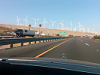
February 6th, 2007 08:05 PM #30Wrong way to use hazard lights. This was done in Skyway, South Expressway.
-
Benzaholic
- Join Date
- Jul 2006
- Posts
- 3,600
February 6th, 2007 08:13 PM #31You assumed that the car is moving? How foolish can you be? He's already using his hazard lights, the least you could do is avoid him dahil di mo alam kung nakatigil o hindi. Like I said nagkakaroon ng double standard dyan kaya mabuti na yung magbabaka-sakali kaysa sa mag-akala. Alam mo naman yung kasabihan na marami namamatay sa akala, and this is very true on the road! Originally Posted by pup2
Paano kung natirikan siya sa gitna ng daan? Paano kung nalubak siya't naipit at hindi makaalis (di nakita yung lubak dahil sa tubig)? Paano kung nasiraan siya't hindi makababa dahil sa lakas ng ulan at di niya maitabi? And you're saying that driver is the idiot? Mabuti sana kung totoong umaandar siya, eh paano kung hindi?
Di ka nga sasantuhin ng truck sa likod mo, pero at least ginawa mo yung tama't nag hazard ka. Kaya pag naaksidente ka stay in the vehicle dahil they are equipped with safety devices to at least keep you safe or minimize the impact of sudden deceleration/acceleration thru crumple zones.
Kahit walang ganyan na driver dito sa US masmatindi rin ang weather dito when it's snowing or when there are hurricanes in other states. Nakakita ka na ba ng sasakyan na hindi makatigil dahil frozen yung kalye?
-
 KTV Bar Bouncer
- Join Date
- Aug 2005
- Posts
- 994
-
 Tsikot Member Rank 3
- Join Date
- Sep 2005
- Posts
- 939
February 6th, 2007 11:15 PM #33turn on your hazard lights pag nakakasagabal ka:
1.) nasiraan sa daan habang naka park ang sasakyan sa shoulder lane.
2.) life and death situation, may kailangan i-rush sa hospital.
di na kailangan mag hazard pag malakas ang ulan, nabasa ko dati sa motoring section ng inquirer ang sumulat either iyong isang kapartner ni Pocholo Ramirez or si Pocholo Ramirez mismo di ko matandaan. Basta kilala sa driving dito sa Pinas matanda na.. Ang pagkakatanda ko sa article mas nakakalito daw pag may hazard. Ok na ang red light.
-----------------
OT: Buksan ang ilaw maski 5:30pm at sa mga enclosed parking lot maski nasisinagan pa ng araw yan ng mga 25%.
-
 Dolor en el Culo
- Join Date
- Aug 2005
- Posts
- 1,619
February 7th, 2007 04:13 AM #34 Originally Posted by pup2
What's so being practical with that? At sinong IDIOT sa inyo eh nakita mo nang naka HAZARD sya so COMMON SENSE iwasan na yung car. You can see the car infront but they can't see you right?
And how do you know na walang ganung klaseng driver at ULAN dito? have you driven/stayed/been here before para sabihin ang mga ganyang ASSumptions mo? like mbeige said the weather here is so severe makakapaglagay ka pa ba ng EWD or even pull to the side of the road?
You ASSumed again :nono:Last edited by HyBrideVo; February 7th, 2007 at 04:41 AM.
-
 technicons
- Join Date
- Feb 2006
- Posts
- 1,635
February 7th, 2007 07:32 AM #35to all my fellow tsikoters, thank for all the info..
at least ngayon, i know the proper use of hazard light.
sa mga nakasabayan ko that morning, pasensya na po sa inasal ko sa daan... :peace:
-
Dolor en el Culo
- Join Date
- Aug 2005
- Posts
- 1,619
-
 Darker and Bigger
- Join Date
- Oct 2002
- Posts
- 40,599
February 7th, 2007 01:16 PM #37dude, mali yan ginagawa mo dahil since umuulan baka akalain ng nakasunod saiyo nakastop ka...just turn on your headlight enough na yun...AFAIK ang hazzard light is kung naka stop ka to let others know na nakahinto ka ang iwasan na nila habang malayo pa... Originally Posted by BRROOOMMMM
-
 Cheap Mechanic
- Join Date
- Jan 2005
- Posts
- 6,107
February 7th, 2007 03:04 PM #38+1 Hazard lights are not meant to be used during heavy downpours. As long as your lights are working properly it'll be enough. Originally Posted by Alpha_One
-
 Tsikot Member Rank 3
- Join Date
- Nov 2005
- Posts
- 827
February 8th, 2007 02:18 AM #39-When claiming the parking slot that a car is pulling out of at SM parking lots, i definitely put on my hazard lights to let others know that the parking slot is MINE!
-
Tsikot Member Rank 3
- Join Date
- Sep 2005
- Posts
- 939
February 8th, 2007 03:02 AM #40actually it makes sense using hazard pag nakastop ang isang vehicle sa isang alanganin or medyo alanganin na lugar. tignan mo iyong mga road hazards like constructions, diba standard ang ilaw nun ay dilaw at nagbiblink?

 Reply With Quote
 Originally Posted by space invader


