
What's the best engine configuration?
flat/horizontally-opposed/boxer engines (used by Subaru and Volkswagen);straight/inline engines (most common among 4-cylinder engines);
or V-type engines (most common among 6 & 8-cylinder engines)?
[SIZE=1]Note: the H, X, and W engines[/SIZE] [SIZE=1]were not included because they are not commonly used in our country.[/SIZE]

The Largest Car Forum in the Philippines
- Forums
- Discussions
- Events
- Community
Results 1 to 20 of 27
-

 Tsikoteer

- Join Date
- Mar 2009
- Posts
- 994
September 30th, 2009 09:41 PM #1Last edited by jjmd3_787; September 30th, 2009 at 09:46 PM. Reason: tao lang po ...
-
BANNER BANNER BANNER
- Join Date
- Jun 2008
- Posts
- 1,439
-
Tsikoteer
- Join Date
- Aug 2003
- Posts
- 9,720
September 30th, 2009 10:08 PM #3i think all these configs have their own pros and cons.
the flat results in a more balanced engine, and results in an engine with a lower profile compared to inlines -- resulting in a lower center of gravity for the car
the inline seems the most efficient in terms of space, and probably the easiest to build
you forgot the rotary, c/o mazda/ford.
-
 Verified Tsikot Member
- Join Date
- Jun 2009
- Posts
- 288
October 1st, 2009 08:46 AM #4for me i'd go for v-type because as far as i know it gives better torque. correct me if i'm wrong
the more torque you have the more load/weight you can put in the vehicle
-
 Tsikot Member Rank 2
- Join Date
- Mar 2004
- Posts
- 10,309
October 1st, 2009 09:20 AM #5Inline provides more torque than V. V design minimizes vibration. Originally Posted by ramledi

-
 Tsikot Member Rank 2
- Join Date
- Nov 2006
- Posts
- 473
October 1st, 2009 09:46 AM #6formula 1 cars have V8's... i've never read nor heard that they ran on flats..
-
 Tsikot Member Rank 2
- Join Date
- Nov 2005
- Posts
- 394
October 1st, 2009 09:56 AM #7power and torque is dependent on the engine's displacement and over-all power to weight ratio... not configuration. i also thought f1 cars have V8's. Originally Posted by ramledi
-
 SobrangBilisMagType!
- Join Date
- Aug 2004
- Posts
- 22,702
October 1st, 2009 10:37 AM #8Torque is inherent in the stroke and number of cylinders... not the configuration.
Boxer engines are the smoothest engines there are, as the pistons are opposed. Having the strokes cancel each other out at both extremes of the powerstroke gives an engine that has less vibration... though boxers are known for their warbly exhausts, due to their unique firing order.
And by being flat, they give a lower center of gravity than regular engines, which does good things for the handling.
The big issue with boxers is maintenance. It's a pain in the butt to change anything on a boxer... and simple jobs that would take a few minutes on a conventional engine sometimes require you to unbolt the boxer and remove it.
-
V-engines give some of the smoothness advantages of a boxer, but match it with better packaging ability and modularity. Where a boxer's intake is long, complicated and convoluted, a V-engine allows you to use a single intake manifold, much like an inline engine. A V-engine is still shorter than an inline engine of the same number of cylinders, and is easier to package for longitudinal (front-back) installations. A 90-degree V is desirable for racing engines, but many street engines have a narrower V angle for easier packaging. Unlike a boxer, a V-engine is easy to mount transversely (side-to-side, as in front-wheel drive cars), and it has benefits for front-drive cars, as well.
V-engines are still more complicated and more costly to build than inline-engines... though... and with some transverse-mounted V-engines, the intake manifold has to be removed before you can reach the spark plugs.
-
The inline engine is the simplest one you can build. One casting for the block, one casting for the head... one set of camshafts... one intake manifold. An inline engine is easy to bolt turbos onto (only need one turbo... single turbo Vs and boxers require more complicated exhaust designs)... easy to package and quite robust.
The big problem with inline engines is vibration. Inline 3's are bad... inline 4's pretty so-so... Inline 6's... well... they're actually pretty good... I love BMW's inline-6 series... some of the best driving and sounding engines... ever. And anything more than 5-6 cylinders on an inline engine make it pretty long and hard to package into a car. That's why you never see straight-8s, anymore...
-
The best? It's not the layout, per se... but the engine itself. Lots of engines come to mind as possibly the best for their size and number of cylinders... Subaru's boxer-four... BMW's inline 6... Audi's RS4 V8... andaming pagpipilian.
Ang pagbalik ng comeback...
-
BANNER BANNER BANNER
- Join Date
- Jun 2008
- Posts
- 1,439
October 1st, 2009 11:08 AM #9My mistake, older LM cars have 'em. Originally Posted by roberto_minosa
-
Verified Tsikot Member
- Join Date
- Jun 2009
- Posts
- 288
October 1st, 2009 11:24 AM #10ahhh so di pala sa configuration ang torque.
thanks for the detailed info sir niky
-
SobrangBilisMagType!
- Join Date
- Aug 2004
- Posts
- 22,702
October 1st, 2009 11:35 AM #11I think one team experimented with a boxer 12 in F1 before... di lang naging successful... and again... the packaging was problematic. Originally Posted by roberto_minosa
Ang pagbalik ng comeback...
-
Verified Tsikot Member
- Join Date
- Sep 2009
- Posts
- 118
October 1st, 2009 11:36 AM #12I agree with niky, especially on the first line.
And just to pick my choice (but not necessary an answer to TS), I select flat because it's not common at yun ang binabayaran, he he (although madami na ang subarista dito sa Pinas).
All engine configurations are good since they are designed to meet some requirements and these vary from one configuration to another.
-
 speed Unlimited
- Join Date
- Jul 2009
- Posts
- 4,078
October 1st, 2009 11:54 AM #13Agree pag V type engine mo mas malakas ang Torque. Pero sa rekta mas mahina iyon pagkakaalam ko parang ubos power agad niya .Pero kung rear wheel drive may paraan pa naman change gearing. Originally Posted by ramledi
-
 Tsikoteer
- Join Date
- Jan 2007
- Posts
- 1,036
October 1st, 2009 12:35 PM #14each has its pro and cons. inlines have durable blocks, Vees are more compact, flats are flat
 . Torque is dependent on fuel type, displacement specifically stroke etc.
Inlines are commonly found in economy cars, buses, trains etc. Vees are used in performance cars gt-r,F1 etc. Boxers in porsche, subaru, old volkwagen models, and many light aircrafts( subaru ej20/ej25). Wankels in mazdas rx- series.
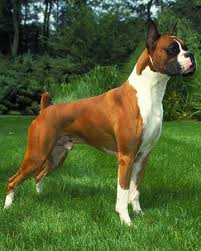
i like boxer powered cars porsche, subaru, volks. parang yun pic ng aso sa taas. pangit itsura pero iba tindig. tsaka lovable,loyal and dependable. pero minsan nangangagat din
-
Tsikoteer
- Join Date
- Aug 2003
- Posts
- 9,720
October 1st, 2009 01:25 PM #15i've never seen a v-type engine na lower than 5.0L. The hatak you mentioned could be because of this rather than the engine/piston config. Originally Posted by speed unlimited
going back to the rotary, i think it's one of the more efficient engines ever built. Ewan ko lang sa serviceability, but i think the 1.3L rotary (on the mazda RX-8) produces something like 130hp ? Unheard of in an inline 1.3LLast edited by badkuk; October 1st, 2009 at 01:32 PM.
-
 Dalek
Dalek
- Join Date
- Dec 2006
- Posts
- 17,314
October 1st, 2009 01:32 PM #16I love the analogy Originally Posted by jaymd
Mahal din ba yang boxer doggy mo pag nagkasakit?
-
 Tsikoteer
- Join Date
- Nov 2005
- Posts
- 1,985
October 1st, 2009 01:55 PM #17I had a Mazda MX-3 GS with a 1.8L V6, Mazda Millenia witha 2.5L V-6, Dodge Magnum 2.7L V-6, and a Nissan Xterra with a 4.0L V6 all those are under 5.0L. As far as the rotary engine the displacement is misleading because it's a rotary and the 1.3L is the equivalent of almost 3.0L piston engine. Originally Posted by badkuk
Horsepower and torque are determined more by the bore and stroke of the engine rather than the configuration of the engine. You can make an engine have more horsepower than torque or one with more torque than horsepower depending on the bore and stroke of the engine.
Originally Posted by speed unlimited
Engines mentioned above revved quite well the 1.8L would go up to 8500rpm 130hp/115 lb ft, 2.5L 170hp/160 lb ft(6000rpm), 2.7L 190hp/190lb ft(6500rpm), and 4.0L 265hp/284lb ft(6000 rpm). Those don't look like engines that run out of breath. Two are FWD and two are RWD. The 1.8L was a manual and compared by one of my friends that rides a sportbike to his motorcycle engine in the speed it goes up the RPM range. The others AT and the 2.7L will not shift until 6500rpm if you mash the pedal.
The best and smoothest engines are an inline 6 engine according to a book I read and the next would be the inline 12 because somehow the amount of cylinders are enough that each cancel the vibration during the combustion cycle. Personally I don't like any inline 4 engine over 2.0L because it has a tendency not be as smooth and the ideal would be 1.8L with that configuration.Last edited by redorange; October 1st, 2009 at 02:04 PM.
-
SobrangBilisMagType!
- Join Date
- Aug 2004
- Posts
- 22,702
October 1st, 2009 04:41 PM #18Yup... that's why BMW uses inline sixes... again... wonderful engines, those.
-
Vees don't have inherently more torque than inlines.
Compare two engines of the same size and horsepower... the Mitsubishi FTO 2.0 V6 and the Honda K20... the Honda K20 has more torque at the same horsepower... just because it's better, with a longer stroke and more efficient head... not because of the layout. (in fact the way the K20 can make such high revs with a relatively long stroke never ceases to fascinate me).
-
Interesting to note... the highest specific output (meaning: horsepower per liter) for road-legal vehicles available from a major manufacturer, are about 120 hp per liter on the 240 hp Civic Mugen Type RR (for naturally aspirated engines) and 200+ hp per liter on the 400 hp Mitsubishi Evo FQ400 (for turbo). Both are only limited editions (Mugen RR in Japan only... FQ400 in the UK only) but they come with full warranties.
And they're both inline fours.
Last edited by niky; October 1st, 2009 at 04:56 PM.
Ang pagbalik ng comeback...
-
Tsikoteer
- Join Date
- Jan 2007
- Posts
- 1,036
October 1st, 2009 05:29 PM #19 Originally Posted by jut703
bihira sya sir magkasakit kumpleto sa bakuna
-
Tsikoteer
- Join Date
- Nov 2005
- Posts
- 1,985
October 1st, 2009 06:50 PM #20I think the hp per liter measurement for NA engines is easier to achieve with the smaller displacement engines than the bigger displacement. Because a 5.0L engine would need to make 600hp just to make that same 120 per liter, that (5.0L)wouldn't work with a 4 cylinder as it would need bigger cylinders and pistons so it would have to be a V8 and it would mean more reciprocating parts. Also the high hp per liter engines make most of their power in the upper rpm range and having high displacement 4 cylinder would make that less likely because of the vibration it would have at high rpm.


 Reply With Quote
 Originally Posted by ramledi


