
newbie langbibili kami ng 2nd hand car.. ano ba mas okay? EFI or Carb? ayaw ng bro ko ng EFI.. mahal daw pag pagawa at sirain daw compare sa carb? kaya ang gusto niya carb yung car na bibilhin pero halos lahat ng kotse ngayon, EFI na.. ang alam ko, mahal talaga yun pag nasira pero hindi naman siguro after ilang months sira agad after ipagawa.. ano naman pinagkaiba pag carb? ano ang advantage at disadvantage ng EFI sa Carb? need your opinion/advice.. tnx!

The Largest Car Forum in the Philippines
- Forums
- Discussions
- Events
- Community
Results 1 to 16 of 16
-
 Tsikot Member

- Join Date
- Jul 2009
- Posts
- 2
July 27th, 2009 06:01 AM #1
-
 Tsikot Member Rank 2
- Join Date
- Sep 2008
- Posts
- 641
July 27th, 2009 06:27 AM #2i don't know much about engines and only know the basics. but when it comes to buying cars, just make sure to have a trusted AND skilled mechanic check the target purchase with you, be it an EFI or Carb.
Also, with the 2011 deadline for RP oil companies to upgrade ALL gas products to be at least an E10 variant, i think best route for you is to go EFI. that's just a year and a half away from now.
-
 Tsikot Member Rank 2
- Join Date
- Jan 2009
- Posts
- 6,452
July 27th, 2009 08:04 AM #3Go with EFI. In my experience, it is much more reliable than the legacy carbureted engine. It is more fuel-efficient and practically removes the "tune-up" part to just replacing the spark plugs and/or changing the oil/oil filter. Besides, the kind of fuel efficiency and significantly lower emissions that you get from EFI more than pays for the system in the long run.
And if you're into performance, EFI is much more easier to work with using modern tools that can remap the ECM to help squeeze out every last bit of power from your enginer.
-
THE AUTO SPECIALIST
- Join Date
- Mar 2006
- Posts
- 606
-
 Tsikot Member Rank 2
- Join Date
- Apr 2004
- Posts
- 1,099
July 27th, 2009 10:48 AM #5it's no longer 1979 dude, so if i were you i'd get an EFi car na.
oh, and front wheel drive cars are also as reliable as rear wheel ones. and even if the newer cars these days are made of "lata" (tin?), they're about 100x safer than the old school's thicker metal shells.
-
Tsikoteer
- Join Date
- Jun 2009
- Posts
- 325
July 27th, 2009 11:21 AM #6 EFI equipped engines are more fuel efficient and responsive compared with carburated ones. It is not sirain as long it is properly maintained and serviced by a competent shop equipped with scan tool to diagnose any trouble codes. Just don't bring it to an ordinary mechanic who has no experience and training on diagnosing EFI engines just like you encounter side walk mechanics along Banaue area. Chances are your car will encounter more trouble than solutions just in case. Besides, EFI engines are E10 fuel ready compared with carburated ones.
-
 Tsikoteer
- Join Date
- Oct 2002
- Posts
- 29,354
July 27th, 2009 11:25 AM #7Not all EFI engines are E10 compatible. Originally Posted by nickriingen

E10 related discussion threads:
http://tsikot.yehey.com/forums/showthread.php?t=59295
http://tsikot.yehey.com/forums/showthread.php?t=52659
-
Tsikot Member Rank 2
- Join Date
- Jan 2009
- Posts
- 6,452
July 27th, 2009 11:29 AM #8Agree. That's a common misconception. Early Honda PGM-FI are as vulnerable to ethanol as most carbureted engines. Originally Posted by ghosthunter
-
 Tsikot Member Rank 5
- Join Date
- Aug 2005
- Posts
- 7,186
July 27th, 2009 11:35 AM #9Carburated engines has much less parts that it's EFI counter parts so it is easier to repair.
But the technology of EFI engines is already matured and these engines last as long as carburated ones. The advantage of EFI engines are it more powerfull and efficient than a carburated counterpart.
-
 SobrangBilisMagType!
- Join Date
- Aug 2004
- Posts
- 22,702
July 27th, 2009 03:09 PM #10If we're comparing brand-new to brand-new replacement parts... EFi, hands-down.
You save a lot on fuel with EFI... about 10-25%, probably, depending on traffic and engine condition. With the carburetor, you're constantly checking the choke, cleaning it out (to keep economy up) and worrying about the jets... eventually, you'll have to overhaul it... probably more than once... and then finally replace it. A carb replacement, brand new, is 20-30k pesos.
EFI systems cost more than that... but you'll never replace the ECU, unless it's been flooded... you'll hardly ever have to service the injectors, either... the most you'll have to do is replace the sensors... a MAF sensor doesn't cost more than 5k pesos... and you don't often have to replace one... just clean it from time to time. O2 sensors can also go bad, but they also cost around 5k or less to replace. And those are the only two common maintenance items for EFI.
I used to bemoan how EFI was harder to maintain than a carburetor... but eventually, I got over it. With electronics parts becoming easier and easier to source, EFI is becoming more and more attractive than carbs. It's like the difference between an old analog telephone and a digital phone... Analog is technically cheaper to produce and maintain, but now that digital phones are so cheap and common, why bother? (except, of course, if you like collecting old school stuff)
Ang pagbalik ng comeback...
-
Tsikoteer
- Join Date
- Jan 2005
- Posts
- 443
August 6th, 2009 12:08 PM #11EFI saves fuel , but carb is a simple, stable tech.
EFI has less moving parts , but a lot of sensor.
A lot of sensors means a lot of point of failure.
A carb can last more than an efi can!
At consider mo na bahain d2 sa atin, pag nabaha ang ecu, todas.
-
Tsikot Member Rank 2
- Join Date
- Jan 2009
- Posts
- 6,452
August 6th, 2009 01:18 PM #12But also consider that all those sensors are there to: 1. Protect the environment and 2. Protect the engine. Old carb'ed engines have no way to detect engine knocking, nor did it have flexibility to do real-time engine timing and A/F ratio adjustments. Originally Posted by reym
As with most parts of the engine, sensors are also consumable items (especially O2 sensors) and are subject to fail eventually, like a light bulb. But it's NOT to say that they're unreliable.
-
Tsikoteer
- Join Date
- Jan 2005
- Posts
- 443
August 6th, 2009 01:44 PM #13Those sensors are to protect the engine from the computers' advance timings.
A stock carrbed car won't advance to its limit if you tune it properly.
If you try to put a regular gasoline in an efi engine, the sensors will not be able to protect the engine from knocking.
EFI is designed by car manufacturers for maximum profitability, because carbs and distributors last for a very long time. Here is the olderst car that is still running : http://www.waleg.com/cars/archives/010383.html
As for the vapor pressure problem for the carb, the carb has no problem with vapor pressure, the problem lies with the fuel pump, adding a return to tank line from the fuel pump would solve the problem.
-
Tsikot Member Rank 2
- Join Date
- Jan 2009
- Posts
- 6,452
August 6th, 2009 07:45 PM #14Most EFI engines have knock sensors that will retard the ignition when it detects knocking. Of course, the ECM can only do so much (ie. it can't infinitely retard the ignition) so you still need to use the prescribed fuel.
I agree that there's also the commercial motivation behind switching to EFI. However, no one can discount the fact that this technology is used to make engines more efficient and environmentally-friendly. No free lunch. :D
If I understand correctly, the vapor pressure line goes from the fuel tank EVAP can to the purge valve on or near the intake manifold and its purpose is to keep negative pressure in the tank to prevent gasoline vapors from venting into the atmosphere as pollutants.
-
Tsikoteer
- Join Date
- Jul 2009
- Posts
- 3,604
August 6th, 2009 08:16 PM #15Yung ECU nasa banda taas ng engine bay in most (well-designed) cars. Originally Posted by reym
By the time inabutan yung ECU mo ng tubig, lunod na rin makina mo.
Pareho lang ang EFI and Carb engines - bumibigay din ang distributor and other parts just like fuel injectors.
Masirain or not depends on HOW you maintain the engine and its components. Kung di mo alagaan, di yan tatagal - EFI o Carb.
Here's an example of a well-maintained EFI engine:
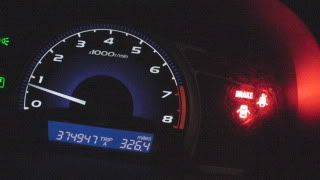
The odometer is in miles btw, translating to about 600,000 km traveled. Wala pang sira. That car probably did more km than our cars will see in their lifetime with us.
-
 UST ENT-HNS
- Join Date
- Oct 2002
- Posts
- 22,658
August 6th, 2009 08:24 PM #16EFI engines are almost idiot proof. Just set and forget. Unlike carb engines that require adjustments every now and then.
EFI is more fuel efficient, more environment friendly.
ECU's are located high up in the engine compartment or inside the passenger cabin to protect them from the elements. We have an EFI car from the 1980's. Less problematic than our carb equipped unit which is 10 years younger.
http://docotep.multiply.com/
Need an Ambulance? We sell Zic Brand Oils and Lubricants. Please PM me.

 Reply With Quote
 Originally Posted by nickriingen
